Mini 1998 GT Edition Gets JCW Brakes And Looks, But It Has Nothing To Do With The ’90s


Mini has officially unveiled the Cooper C 1998 GT Edition, the sixth installment in its ongoing "Icon Drops" campaign. This strategic series of limited-run models is designed to sustain market interest in the brand’s hatchback lineup while bridging the gap between historical nostalgia and modern manufacturing. While the name might suggest a tribute to the late 20th century, the designation is purely technical, referencing the displacement of the vehicle’s 2.0-liter turbocharged engine.
The release of the 1998 GT Edition serves as a calculated expansion of Mini’s heritage-inspired sub-brand. By blending the aesthetic and braking components of the high-performance John Cooper Works (JCW) line with the approachable, moderate power output of the standard Cooper C, Mini is targeting a demographic that desires a track-ready appearance without the aggressive performance characteristics—or the high-strung suspension—typically associated with a full-blown JCW model.
Chronology of the GT Lineage
The "GT" nomenclature holds significant weight within the Mini ecosystem, tracing its roots back to the 1969 Mini Cooper 1275 GT. That original model was marketed not as a dedicated racer, but as a "Grand Tourer," intended to provide a more refined, long-distance driving experience than the standard Mini Cooper. At the time, it featured unique instrumentation and specific trim levels that prioritized driver comfort, even while using a powertrain that was technically subordinate to the contemporary Cooper S.
The current iteration follows the precedent set by the 2020 Cooper 1499 GT. That model established the modern "GT" formula: taking a base-engine architecture, applying a distinct visual package characterized by black metallic paint and vibrant accent decals, and labeling the car based on the cubic-centimeter displacement of its internal combustion engine. The 1499 GT served as a test bed for this strategy, proving that consumers were willing to pay a premium for limited-production aesthetics that evoke the spirit of the original 1960s and 70s touring models.
Technical Specifications and Performance Metrics
Under the hood, the 1998 GT Edition utilizes the standard Cooper C powertrain. This engine is a 2.0-liter turbocharged unit capable of generating 161 horsepower and 184 lb-ft of torque. Unlike the Cooper S, which features a more aggressive state of tune, the 1998 GT maintains the standard power curve. The inclusion of JCW-sourced components, however, significantly alters the vehicle’s dynamic footprint.
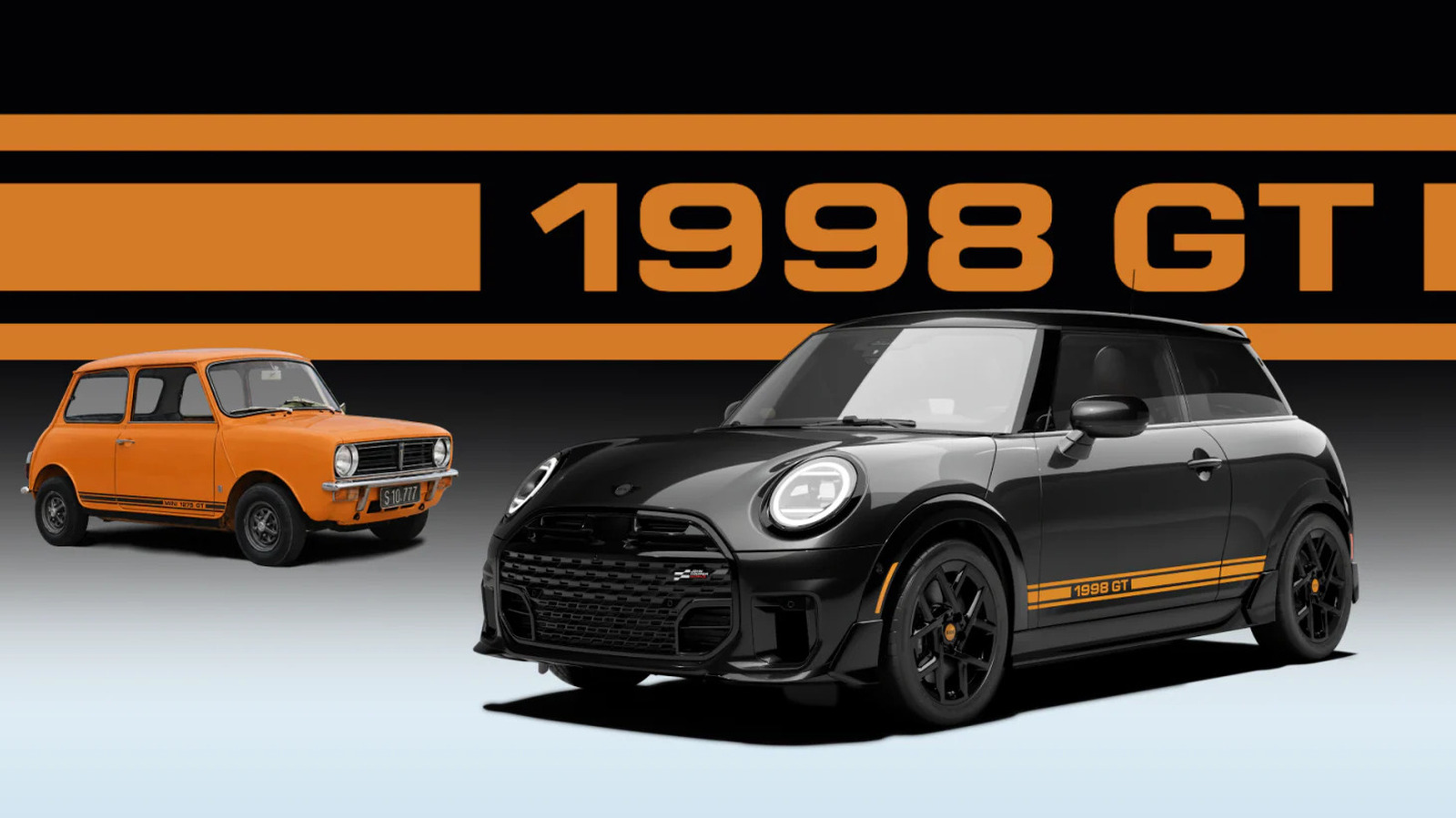
The 1998 GT package includes:
- Braking System: Upgraded JCW-spec brakes, offering improved heat dissipation and stopping power compared to the standard Cooper C.
- Aerodynamics: A comprehensive JCW body kit including front and rear bumper enhancements and rear aerodynamic winglets.
- Rolling Stock: 17-inch alloy wheels finished in gloss black, paired with a sport-tuned wheel setup.
- Interior Appointments: A heated, three-spoke steering wheel with paddle shifters, GT-specific floor mats, bespoke door sill plates, and a branded center console badge.
The choice to retain the base engine while upgrading the chassis components highlights a shift in market strategy. By focusing on the "Grand Tourer" aspect—a comfortable, stylish, and usable daily driver—Mini is positioning the 1998 GT as an alternative to the high-performance enthusiast segment. However, this creates a unique pricing paradox. In the U.S. market, the 1998 GT carries an MSRP of $38,225, including destination fees. This price point is approximately $4,075 higher than the base MSRP of the more powerful, factory-standard Cooper S two-door.
Market Context and Strategic Implications
The "Icon Drops" campaign is a critical component of Mini’s current marketing roadmap. As the automotive industry transitions toward electrification, manufacturers are increasingly leveraging their historical portfolios to maintain brand identity and foster consumer loyalty. By releasing eight special editions in a single calendar year, Mini is creating a sense of urgency and exclusivity that drives showroom traffic.
The 1998 GT Edition, however, invites scrutiny regarding its value proposition. From a purely performance-based metric, the vehicle occupies an unusual space: it is effectively a "look-fast" model. While the JCW brakes provide a tangible safety and longevity benefit, the absence of an engine performance boost means the car does not compete with the Cooper S in terms of straight-line acceleration or power-to-weight ratio.
Industry analysts suggest that this strategy is designed to maximize margins on platform-sharing. By using existing JCW aesthetic components on the mass-market Cooper C architecture, Mini can offer a "bespoke" product without the R&D costs of developing a new engine or chassis calibration. This allows the company to reach customers who appreciate the iconic Mini silhouette and the JCW visual aggression but prefer the lower maintenance and insurance costs associated with the entry-level engine.
Official Positioning and Design Philosophy
Mini’s design language for the 1998 GT pays homage to the 1970s era of the original 1275 GT, which famously used orange and black color schemes to signal sportiness. The modern execution—Midnight Black Metallic paint contrasted with vibrant orange decals—is a direct nod to this legacy. By utilizing the 1998 cc displacement figure as the name, the company aims to emphasize the connection to its engineering roots, grounding the "GT" label in mechanical reality rather than just marketing hyperbole.
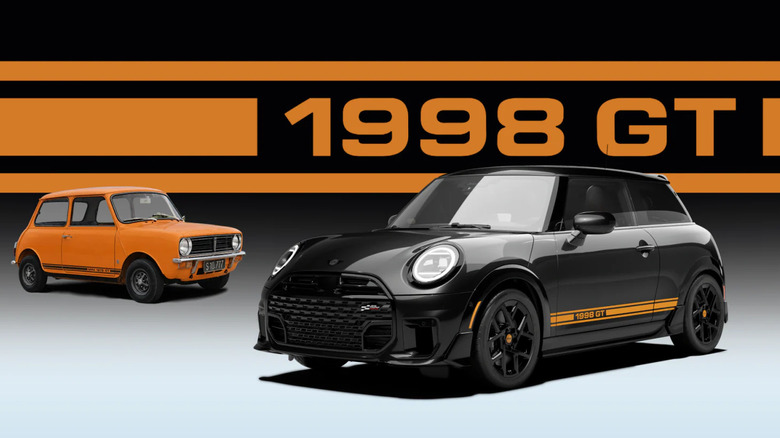
For the purist, the 1998 GT might appear to be a case of style over substance. For the brand, however, it represents a successful synthesis of heritage marketing and modern modular production. The model is intended to capture the attention of younger buyers who prioritize aesthetic customization and brand history, providing them with a vehicle that feels unique on the road without the harshness of a dedicated performance car.
Broader Impact on the Mini Lineup
The introduction of the 1998 GT comes at a pivotal time for the brand. As Mini prepares for the next generation of its vehicles, the "Icon Drops" series serves to keep the current platform relevant. The success of these limited editions—specifically those that lean into the brand’s racing pedigree—will likely dictate the design language for future electric Mini models.
There has been no official word from Mini regarding the total production volume for the 1998 GT, though such editions are typically limited to a few hundred units per market. This scarcity is likely to drive interest among collectors who have been tracking the "Icon Drops" series.
Ultimately, the 1998 GT Edition serves as a case study in modern automotive branding. It proves that a nameplate can be successfully repurposed, provided the aesthetic execution is strong enough to justify the price premium. While it may not be the fastest Mini in the stable, it is arguably one of the most calculated, designed to satisfy the consumer’s desire for a distinct, limited-edition identity while keeping the manufacturer’s assembly line efficient. Whether the market will continue to absorb these premium-priced "appearance" packages remains to be seen, but as the sixth entry in the series, the 1998 GT underscores that for Mini, the future of the brand is inextricably linked to its ability to repackage the past.
Related posts: