Rare Bronze Signet Ring Depicting the Lighthouse of Alexandria Discovered Off the Coast of Egypt

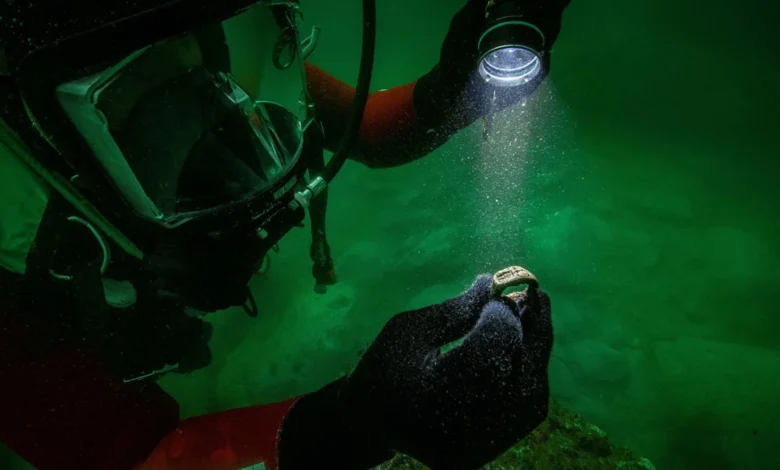
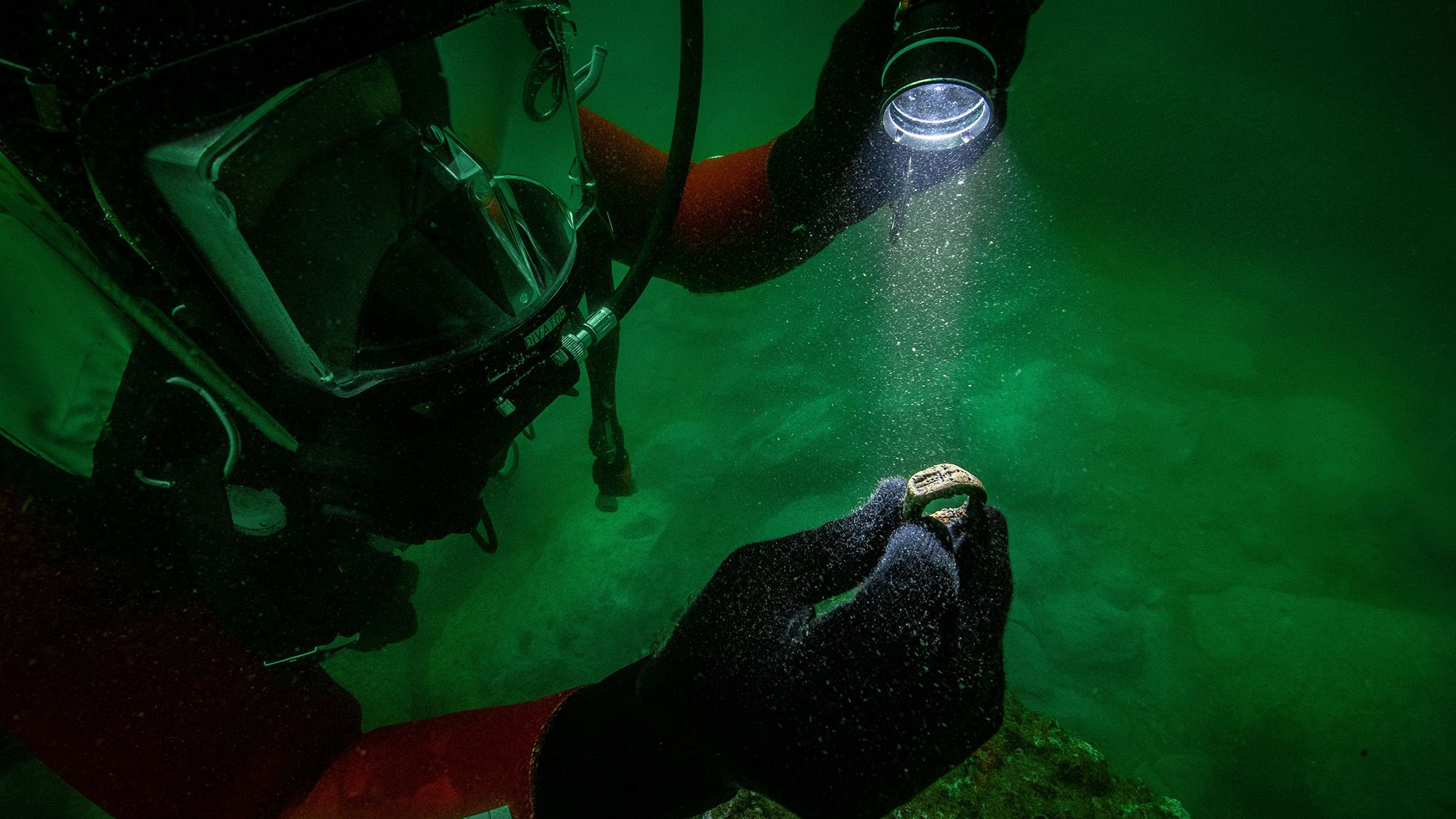
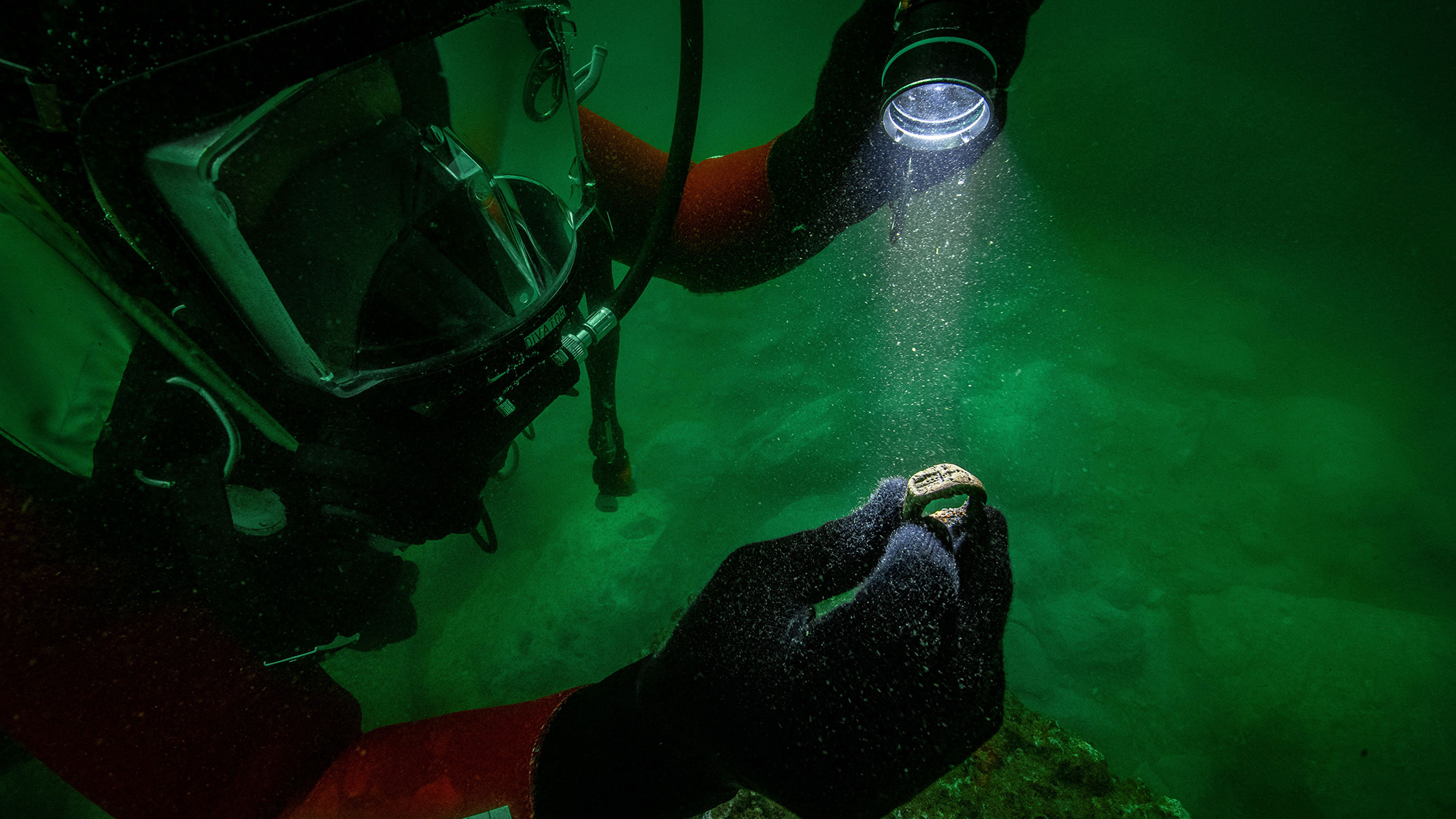
A significant archaeological breakthrough has occurred beneath the waters of the Mediterranean Sea, where a joint expedition led by the European Institute for Underwater Archaeology (IEASM) and the Egyptian Ministry of Tourism and Antiquities has recovered a rare bronze signet ring. The artifact, discovered within the submerged ruins of a royal palace on the island of Antirhodos, features a distinct engraving of the Lighthouse of Alexandria, one of the Seven Wonders of the Ancient World. This find represents a unique intersection of artistic craftsmanship and historical documentation, providing researchers with a tangible connection to the architectural legacy of the Ptolemaic Kingdom.
The Submerged Realm of Antirhodos
The island of Antirhodos was once a bustling center of political and social life in ancient Alexandria. During the Ptolemaic period, it housed royal palaces, grand structures, and private quarters for the ruling elite. Following a series of cataclysmic seismic events and subsequent tsunamis during the 4th century A.D., large portions of the royal quarter, including Antirhodos, subsided and were swallowed by the Mediterranean.
For centuries, these treasures remained hidden under layers of silt and seawater. The work of the IEASM, spearheaded by renowned marine archaeologist Franck Goddio, has been instrumental in mapping and excavating this submerged landscape since the 1990s. The recovery of the signet ring is the latest success in a decades-long effort to reconstruct the layout of the royal district and understand the material culture of the Alexandrian elite.
Chronology of the Expedition and Discovery
The excavation project, which has been ongoing for several years, focuses on the "Portus Magnus," or the Great Harbor of ancient Alexandria. The discovery of the signet ring was part of a systematic survey of the palace grounds.
- 1992–1996: Initial mapping of the sunken city begins under the direction of Franck Goddio, revealing the submerged royal quarters and the harbor area.
- 2000s: Continued excavation yields artifacts ranging from colossal statues of Ptolemaic rulers to intricate pottery and gold jewelry, confirming the site’s status as the epicenter of Hellenistic luxury.
- 2023–2024: During recent underwater surveys, the joint team identified a localized area within the palace remains that yielded several small, high-value objects.
- The Discovery Moment: A diver recovered the bronze signet ring from the seabed, noting its specific iconographic detail—an engraving that clearly mirrors the structure of the legendary Pharos (Lighthouse) of Alexandria.
The lighthouse, commissioned by Ptolemy I Soter and completed during the reign of his son Ptolemy II Philadelphus, stood as a beacon of maritime navigation for over 1,500 years. Its inclusion on a personal signet ring suggests it was not merely a functional structure but a powerful symbol of state identity and pride among the Alexandrian aristocracy.
Supporting Data: The Significance of the Pharos
The Lighthouse of Alexandria was one of the tallest man-made structures in the world for centuries, estimated to have stood between 330 and 450 feet (100–140 meters) tall. Its collapse, largely attributed to the severe earthquakes of 956, 1303, and 1323 A.D., left a void in the historical record that historians and architects have long attempted to fill.
The signet ring provides a rare, near-contemporary artistic representation of the lighthouse. While many depictions of the Pharos exist on coins minted in Alexandria, finding it on a personal signet ring is unprecedented. The material—bronze—indicates that while the owner was likely a person of status, the ring may have been a common, albeit specialized, accessory used for sealing official documents or correspondence, effectively marking the owner’s connection to the city.
Official Statements and Expert Perspectives
Representatives from the Egyptian Ministry of Tourism and Antiquities have lauded the discovery as a testament to the ongoing success of the national effort to reclaim Egypt’s underwater heritage. "Each object recovered from the Portus Magnus serves as a puzzle piece," stated a spokesperson for the Ministry. "Finding an artifact that so clearly bears the emblem of the Pharos underscores the immense cultural and historical wealth still resting on the seafloor of our Mediterranean coast."
The IEASM, in its official communication, emphasized the technical challenges of the recovery. "The marine environment is incredibly hostile to organic materials, yet metals often survive if the conditions are right," the team noted. "The signet ring is well-preserved, and the clarity of the lighthouse engraving suggests that it was worn or held in high regard before it was lost to the sea."
Archaeological Implications and Broader Impact
The discovery of the signet ring carries significant implications for our understanding of Hellenistic society. Firstly, it confirms the lighthouse’s status as a central icon of Alexandrian identity. Its use on a signet ring—a tool meant for personal identification and the authorization of private or state business—suggests that the Pharos was more than just a monument; it was a brand, a symbol of the intellectual and maritime reach of the Ptolemaic dynasty.
Secondly, the find validates the meticulous methodology used by the IEASM in their sub-surface excavations. By focusing on specific zones of the palace, researchers are moving beyond general survey work toward a more granular understanding of daily life. This ring provides a rare, intimate look at the belongings of those who walked the halls of the royal quarter before the sea claimed them.
Furthermore, this discovery underscores the critical need for continued investment in underwater archaeology. As global climate change and coastal erosion continue to threaten submerged sites worldwide, the work being done in Alexandria serves as a global benchmark. The protection and systematic study of these ruins are not just about recovering gold or bronze; they are about preserving the narrative of human history that would otherwise vanish.
Historical Context: The Seven Wonders of the Ancient World
The Pharos of Alexandria was the only one of the Seven Wonders of the Ancient World that served a purely utilitarian purpose. While the Great Pyramid of Giza was a tomb and the Statue of Zeus was an icon, the lighthouse ensured the safety of the world’s most important trade hub. Its influence on later architecture—including the design of minarets and medieval lighthouses—cannot be overstated.
By analyzing the specific artistic rendering on this ring, scholars can compare it with other known depictions found on Roman-era coins or artistic friezes, potentially refining our understanding of the lighthouse’s structural evolution over the centuries. Was the ring created during the early height of the lighthouse’s operation, or does it represent a later, stylized version? These are the types of questions that will keep researchers occupied for years to come.
Conclusion
The recovery of this bronze signet ring is more than a mere curiosity; it is a profound link to the past. As researchers clean, stabilize, and study the object, it will undoubtedly provide new insights into the material culture of Alexandria. It serves as a reminder that beneath the waves, there remains an entire world waiting to be rediscovered, a world that once shone as brightly as the lighthouse that now rests, in miniature, on the face of this ancient ring. As the Egyptian Ministry continues its collaborative work with the IEASM, the world waits to see what other secrets of the Antirhodos palace may soon be brought back into the light.