14,000-Mile 1970 AMC AMX Is A 360 4-Speed Car Perfect For Muscle Car Fans Heading Off The Beaten Path

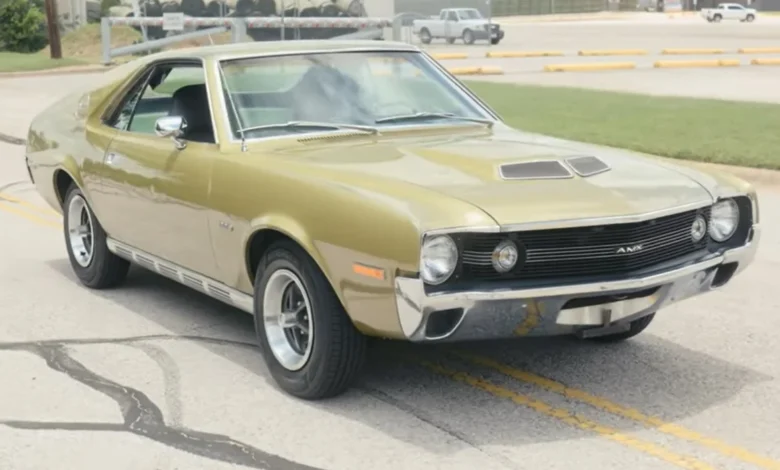
The automotive market frequently celebrates the high-volume icons of the muscle car era—the Chevelle SS, the GTO, and the Mach 1 Mustang—but rarely does it acknowledge the outliers that defined the niche competition of the late 1960s and early 1970s. Currently, a 1970 American Motors Corporation (AMC) AMX, boasting an exceptionally low odometer reading of just 14,900 miles, has surfaced in Austin, Texas. Listed by Motors Corner USA for $34,900, the vehicle represents a rare "survivor" status, offering a unique opportunity for collectors to acquire a piece of automotive history that has largely escaped the ravages of time and excessive road use.
Historical Context: The Rise and Fall of the AMX
To understand the significance of this specific vehicle, one must look at the climate of the American automotive industry in 1970. The AMX was born out of a desire by AMC to shed its reputation for producing utilitarian, somewhat conservative family vehicles. Debuting in 1968, the AMX was a bold experiment: a two-seater, short-wheelbase sports car that offered V8 performance at a price point significantly lower than the Chevrolet Corvette.
The 1970 model year served as the final chapter for the AMX as a standalone, dedicated two-seater model. Following this year, the AMX nameplate was relegated to a performance trim package for the AMC Javelin. Because the company produced only 4,116 units for the 1970 model year—a sharp decline from the 8,293 units produced in 1969—the 1970 iteration has become one of the most sought-after variations for AMC enthusiasts. In contrast, Ford moved over 40,000 units of the Mustang Mach 1 in that same calendar year, underscoring the relative scarcity of the AMX in the contemporary market.
Technical Specifications and Performance
The vehicle currently for sale is configured with the highly desirable 360-cubic-inch V8 engine. By 1970, AMC had refined its power plants to compete with the escalating "Horsepower Wars." This engine was factory-rated at 290 horsepower and a robust 395 pound-feet of torque. This represented a substantial performance increase over the previous year’s offerings.
Perhaps the most significant aspect of this specific unit is its drivetrain configuration. While many AMXs of the era were equipped with the "Shift Command" three-speed automatic transmission, this vehicle features an all-synchromesh four-speed manual transmission paired with a classic Hurst shifter. This combination suggests that the car was originally marketed to the enthusiast driver rather than the casual commuter, a rarity for the brand at the time.
Maintenance and Survivor Status
The vehicle’s "survivor" status is defined by its preservation of original factory components. Unlike a restored vehicle, which may hide the history of its use behind new paint and aftermarket parts, this AMX retains its factory instrumentation, original leather upholstery, and wood-grain interior trim. Documentation accompanying the vehicle includes the original operating record booklet and the owner’s manual, providing a verified paper trail that is essential for provenance in the collector car market.
Recent mechanical interventions have been performed to ensure the vehicle remains operational. According to the seller, the 360 V8 has undergone a comprehensive service, which included a full rebuild of the OEM four-barrel carburetor, a complete brake system bleed, and the installation of new spark plugs. These actions are designed to ensure the car can be driven immediately, addressing the common issues associated with vehicles that have sat for extended periods, such as fuel system degradation and hydraulic fluid oxidation.
Market Analysis and Financial Implications
The asking price of $34,900 sits at an intriguing intersection of affordability and exclusivity. According to data provided by industry trackers like Classic.com, the average market value for a 1970 AMC AMX currently hovers near $68,091. This average is heavily influenced by the condition and level of restoration of the units sold.
While project-grade AMXs—those requiring complete mechanical and cosmetic overhauls—can be found for approximately $20,000, they often require an investment of time and capital that can quickly exceed the $70,000 mark. The Austin-based unit occupies a "sweet spot": it is priced significantly below the market average for high-end examples, yet it does not require the extensive structural restoration associated with cheaper "barn finds." This creates a value proposition for an investor or a driver who values historical integrity over absolute concours perfection.
The Challenges of Preservation
Despite its low mileage, the vehicle is not without its imperfections. Potential buyers must account for the natural aging of materials over the last 54 years. The current listing notes minor cosmetic issues, including slight dents on the trunk lid, localized dimpling on the passenger door, and signs of corrosion beginning to form behind the right rear wheel arch.
These blemishes, while minor, represent the reality of a vehicle that has survived for over half a century. From a restoration standpoint, these items are manageable, but they also serve as a reminder that the car has lived a life, however sheltered. For a serious collector, these "flaws" are often viewed as badges of honor, proving that the vehicle has not been subjected to a complete, identity-erasing restoration.
The Broader Impact on the Collector Car Community
The existence of this AMX raises questions about the future of survivor-grade vehicles. As modern collectors move toward high-performance electric vehicles and hyper-digital automotive interfaces, the appeal of a 1970s analog muscle car grows. The simplicity of the 360 V8, the tactile nature of a manual gearbox, and the absence of complex electronic management systems offer a driving experience that is increasingly rare.
Furthermore, the AMX serves as a case study in corporate ambition. AMC’s attempt to challenge the dominance of the Big Three (General Motors, Ford, and Chrysler) remains one of the most interesting narratives in American industrial history. By choosing to preserve or drive a vehicle like this, owners are participating in the maintenance of a legacy that defined the American automotive identity during a period of immense social and technological change.
Conclusion: A Call to Drive
The narrative surrounding this AMX suggests a shift in how collectors approach such vehicles. There is a growing consensus among automotive historians that keeping a car in a static, non-running state is ultimately a disservice to the machine. With 14,900 miles, the car is technically "broken in," yet it has decades of potential service remaining.
Whether the next owner chooses to perform a light cosmetic restoration to address the minor body imperfections or chooses to drive the car in its current, authentic condition, the vehicle remains a testament to a unique moment in AMC’s history. As it currently stands in Texas, the car represents not just an asset, but a functional piece of history—a machine designed to be operated, not merely observed from behind a velvet rope. For the right buyer, the $34,900 entry price is not just a cost, but an invitation to keep the spirit of the 1970 AMC AMX alive on the open road.
Related posts: