Tom Cruise Champions the Irreplaceable Value of Human Craftsmanship Amid the Rising Tide of Artificial Intelligence in Cinema

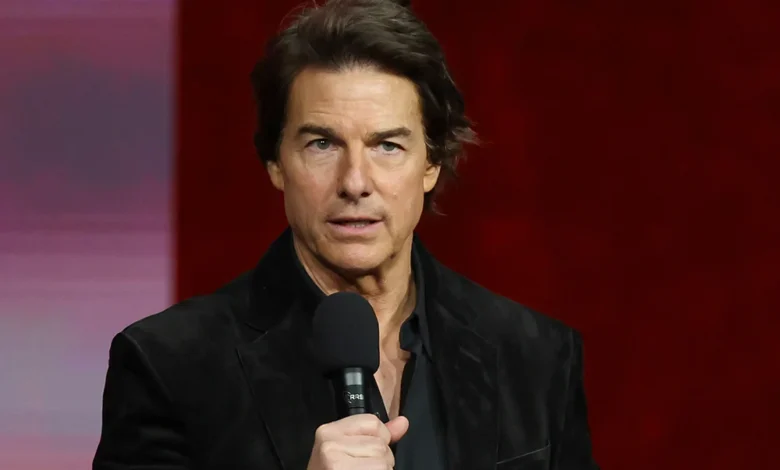
The enduring debate surrounding the role of artificial intelligence in the creative arts reached a high-profile stage in London this week as industry titan Tom Cruise addressed the shifting landscape of global filmmaking. During an intimate "Life in Pictures" conversation hosted by BAFTA, the veteran actor and producer articulated a steadfast belief in the primacy of the human experience, arguing that despite the rapid integration of advanced algorithmic tools into production pipelines, audiences possess an innate, unchanging hunger for authentic, tangible storytelling.
A Legacy of Technical Innovation
Tom Cruise’s perspective carries significant weight, given his four-decade career marked by a consistent push toward the bleeding edge of cinematic technology. From his breakout roles in the 1980s to the gravity-defying practical stunts of the Mission: Impossible franchise, Cruise has long championed the use of cutting-edge innovation to serve, rather than replace, human performance.
The Mission: Impossible series, in particular, has become a barometer for the industry’s relationship with technology. The upcoming 2025 installment, The Final Reckoning, explicitly tackles the existential threat of AI, positioning it as a central antagonist. This narrative choice reflects a broader industry anxiety: the fear that generative models could automate the creative process, from screenwriting to visual effects, potentially diluting the "human" element that gives cinema its cultural resonance.
However, Cruise maintained during the BAFTA event that his focus remains on the theatrical experience as an irreplaceable art form. While he acknowledged that streaming has its place in the modern distribution ecosystem, he distinguished it from the communal, sensory-rich environment of a cinema. "There is nothing like human," he remarked, underscoring that the act of gathering in a darkened room to witness a shared narrative is a fundamental social ritual that digital interfaces cannot replicate.
Examining the Box Office Renaissance
Cruise’s optimism regarding the theatrical model is backed by a robust resurgence in ticket sales. The summer of 2026 shattered historical industry records, with a total box office gross of $4.76 billion between May 1 and Labor Day. This data point serves as a powerful counter-narrative to the prevailing skepticism that the streaming era has permanently eroded the viability of the big screen.
Industry analysts suggest that this record-breaking period was driven by a combination of high-quality tentpole releases and a renewed audience desire for "spectacle"—the very thing Cruise has spent his career perfecting. The success of the 2026 summer season provides empirical support for Cruise’s claim that people are not merely looking for content to consume in isolation, but are actively seeking the heightened emotional experience that only a theater can provide.
The Evolution of the Actor: A New Transformation
Beyond his advocacy for the theatrical model, the London event provided a glimpse into the star’s next major creative pivot. Cruise discussed his upcoming film, Digger, directed by Alejandro G. Iñárritu, which represents a stark departure from the action-heavy roles that have defined much of his recent work.
In Digger, Cruise portrays a wealthy oil tycoon, a role requiring an extensive physical transformation. The process of becoming the character—which involved the application of heavy prosthetics and a fat suit—reportedly required six hours of preparation per day. This commitment to the physical craft of acting serves as a microcosm of the very human labor that Cruise advocates for. In an era where "digital de-aging" and AI-generated avatars are becoming common, Cruise’s dedication to traditional, arduous practical transformation stands as a deliberate artistic statement.
"I’ve never read a movie like this," Cruise said of the project. "It’s the most original film and one of the most moving films I’ve ever seen." By leaning into a transformative, character-driven performance, Cruise is signaling that his future lies not in replicating his past successes, but in challenging himself through the human-centric art of character study.
The Intersection of AI and Creativity
The broader industry implications of Cruise’s comments are significant. As major studios grapple with the integration of AI in screenwriting, editing, and VFX, the conversation has moved from a niche technical discussion to a central pillar of contract negotiations and artistic philosophy.
Critics of AI in film often cite the loss of "intent"—the idea that a story is only as good as the human perspective behind it. Cruise’s stance aligns with this school of thought. He suggested that rather than fearing the inevitable advancement of AI, creators should view it as an inevitability that must be managed, not by retreating, but by doubling down on what humans do best: emotional resonance and unique craftsmanship.
"It is coming and it’s going to happen," Cruise noted regarding the proliferation of AI. However, his conclusion remained defiant: "People want to see real things." This philosophy suggests that the market for human-led, authentic content may actually grow more valuable as the market becomes saturated with algorithmic, synthetic media.
Broader Implications for the Future of Film
The tension between digital efficiency and human artistry will likely define the next decade of entertainment. From a production standpoint, the use of AI has already begun to lower the barrier to entry for independent filmmakers, allowing for sophisticated visual effects at a fraction of the cost. However, the premium placed on the "human touch"—the specific, often idiosyncratic choices made by directors, actors, and writers—appears to be increasing.
Cruise’s influence as an executive producer and star gives him a unique platform to steer these trends. By choosing to work with auteurs like Iñárritu and prioritizing stories that demand physical and emotional vulnerability, he is setting a benchmark for the industry. His insistence that theatrical exhibition is a distinct art form is not merely a nostalgic appeal to tradition; it is a strategic recognition of the economic and cultural necessity of the theatrical experience.
A Chronology of Influence
The evolution of Cruise’s career trajectory highlights his adaptability.
- The 1980s and 90s: Cruise established himself as a dominant box office force, balancing commercial hits like Top Gun with high-art collaborations such as Magnolia.
- The 2000s and 2010s: He pioneered the modern action franchise model with Mission: Impossible, proving that practical stunts and real-world locations were viable business strategies in an age of increasing CGI dominance.
- The 2020s: As the pandemic and the rise of streaming disrupted traditional models, Cruise became a vocal advocate for the survival of the theatrical window, culminating in his efforts to revitalize the box office with major, high-budget, "real-world" spectacles.
Conclusion: The Human Imperative
As the film industry stands at the precipice of a technological shift as significant as the transition from silent film to "talkies," the voices of its most influential figures serve as a guide. Tom Cruise’s assertion that "people want to see real things" is a testament to the belief that the audience’s appetite for human connection is a constant.
While AI may fundamentally alter the mechanics of film production—making the impossible more affordable and the complex more accessible—the core of the medium remains rooted in the human capacity for empathy and the shared experience of witnessing a story unfold. As Cruise continues to push into new territory with Digger, his career remains a case study in how to navigate change without losing the fundamental essence of the art form. For the industry at large, the message is clear: the tools may change, but the audience’s demand for the human spirit remains the only true commodity that cannot be replicated.