Hollywood’s Fight for Survival: Unions Court Gubernatorial Candidates to Preserve and Expand Film Subsidies

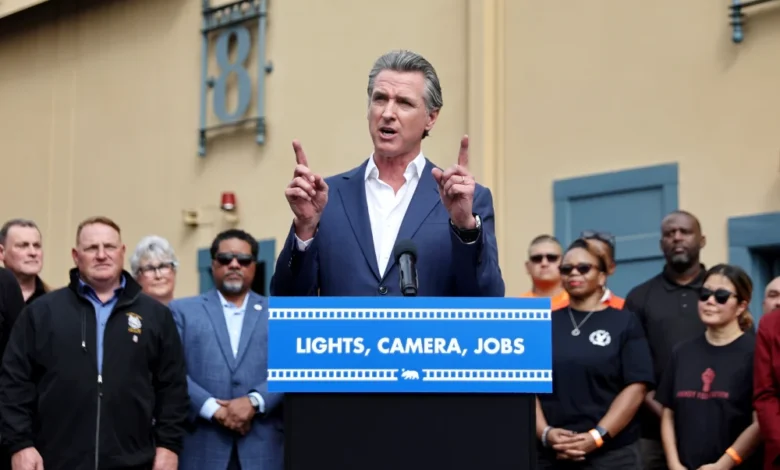
The entertainment industry, a cornerstone of California’s economy, is actively engaging with potential gubernatorial candidates, seeking to secure the future of vital film and television production subsidies as Governor Gavin Newsom’s tenure nears its end. A coalition of powerful Hollywood unions has embarked on an intensive outreach campaign, meeting with a broad spectrum of contenders to underscore the critical importance of maintaining and enhancing the state’s $750 million production incentive program. This proactive strategy reflects a deep-seated concern within the industry about ongoing economic headwinds and the fierce global competition for film and television projects.
The Stakes: Preserving a Vital Economic Engine
For the past eight years, California’s film and television production sector has benefited from significant state support, largely under Governor Newsom’s administration. This has included substantial investments in tax credits designed to lure and retain productions within the state, thereby safeguarding thousands of jobs and bolstering the robust creative ecosystem that has long defined Southern California. However, with the upcoming gubernatorial election, the industry is acutely aware of the need to build strong relationships with whoever emerges victorious, ensuring a continued commitment to its economic well-being.
The Entertainment Union Coalition, representing a diverse array of workers from actors and directors to grips and electricians, has taken the lead in this crucial advocacy effort. Rebecca Rhine, President of the Entertainment Union Coalition and Western Executive Director of the Directors Guild of America, articulated the industry’s precarious position. "There are a lot of headwinds," Rhine stated, highlighting the challenges facing production. "What we really need is for a structure that really allows us to fight for this work that every other country in the world seems to want." This sentiment underscores the global nature of the competition, with countries worldwide offering increasingly attractive incentives to capture lucrative production dollars.
A Sweeping Outreach to Gubernatorial Aspirants
In recent months, the union coalition has engaged in a comprehensive series of meetings with nine candidates vying for the governorship. This proactive approach demonstrates a commitment to engaging with the full spectrum of political ideologies, including discussions with one of the two leading Republican contenders. The primary objective of these meetings has been to educate candidates on the tangible benefits of the existing $750 million film and TV production subsidy and to advocate for its expansion.
The response from the candidates, in general, has been reportedly receptive. Prior to his withdrawal from the race on Sunday, U.S. Representative Eric Swalwell publicly pledged to bolster the state’s incentive program. He expressed his commitment via social media, stating, "it’s time to bring the industry back where it belongs," a clear indication of his support for revitalizing California’s production landscape.
Similarly, Tom Steyer, a prominent environmentalist and philanthropist who has also been a candidate, penned a Substack post last month detailing his commitment to expanding the film incentive. Steyer emphasized the program’s effectiveness, noting, "The expanded California Film and Television Tax Credit program is working – it helped keep local production afloat late last year – but we’ve got to do more to reverse the devastating loss of entertainment jobs in Los Angeles and around California." His remarks highlight the program’s recent successes while acknowledging the persistent need for further action to combat job attrition.
The union coalition’s engagements have included meetings with a wide array of candidates. Beyond Swalwell and Steyer, the group has met with prominent figures such as Katie Porter, Antonio Villaraigosa, Xavier Becerra, Matt Mahan, Betty Yee, and Ian Calderon. It is noteworthy that both Swalwell and Calderon have since suspended their campaigns. On the Republican side, the coalition held discussions with Steve Hilton, a significant contender. An invitation was extended to the other leading Republican candidate, Chad Bianco, though a meeting had not yet been secured at the time of reporting.
The Coalition’s Strategy: Building Relationships, Not Endorsements
While the Entertainment Union Coalition does not officially endorse candidates, its strategic objective is clear: to cultivate relationships with whoever ultimately wins the governorship. This approach ensures that the industry’s concerns are heard and understood at the highest levels of state government, regardless of party affiliation.
Rhine, who also serves as the Western Executive Director of the Directors Guild of America, underscored the coalition’s narrative-driven approach. "We have a story to tell," she explained. "When we tell it, there is really universal support and understanding of what the value is of having this work and this industry centered here." This narrative focuses on the economic multiplier effect of the film and television industry, encompassing not only direct employment but also the vast network of supporting businesses and services that contribute to California’s economic vitality.
The broader labor landscape within Hollywood also reflects this strategic engagement. The Teamsters union, for instance, publicly backed Katie Porter in the fall, signaling their alignment with specific candidates whose platforms resonate with their members’ interests. The International Alliance of Theatrical Stage Employees (IATSE), another influential union, has historically made endorsements, but has yet to declare its support in the current gubernatorial race, suggesting a careful and deliberative process.
Beyond State Incentives: A Multi-Pronged Advocacy Approach
The unions’ efforts extend beyond simply securing state-level support. Lawmakers within California are already actively exploring ways to enhance the state’s film incentive program. These considerations include expanding eligibility to underwrite post-production activities and extending support to the production of commercials, sectors that also contribute significantly to the state’s economy.
Furthermore, the Hollywood unions are championing the development of a federal incentive program. The aim is to create a more robust and competitive landscape that can effectively counter the generous subsidies offered by international rivals such as the United Kingdom, various European nations, and Canada. The elected governor of California is expected to play a crucial advocacy role in this federal initiative, leveraging their position to champion the industry’s needs on a national stage.
"We are willing to look for partners on this issue in the governor’s office, in the Legislature, and at the federal level," Rhine affirmed. This statement encapsulates the coalition’s comprehensive strategy, recognizing that sustained success requires a collaborative effort across multiple levels of government.
The Economic Context: A Global Competition for Creative Capital
The push for enhanced incentives is rooted in a global race for creative capital. Production companies are increasingly mobile, able to choose filming locations based on a multitude of factors, with financial incentives playing a pivotal role. States and countries that offer attractive tax credits, robust infrastructure, and a skilled workforce are better positioned to attract high-budget film and television projects.
Historically, California has been the undisputed leader in film and television production. However, in recent decades, other regions have emerged as formidable competitors. The advent of streaming services, with their insatiable demand for content, has further intensified this competition. These platforms often have the financial capacity to leverage incentives from various jurisdictions, leading to a complex bidding war for production.
Data from organizations like the Motion Picture Association (MPA) consistently highlight the economic impact of the film and television industry. In California alone, the industry directly and indirectly supports hundreds of thousands of jobs and generates billions of dollars in economic activity annually. The loss of production to other states or countries represents not only a decline in jobs but also a diminishment of California’s cultural and economic influence.
Looking Ahead: The Impact of Gubernatorial Choices
The outcome of the gubernatorial election will undoubtedly have significant implications for the future of Hollywood in California. Candidates who embrace the industry’s concerns and commit to robust support mechanisms are likely to find themselves with strong allies in the entertainment labor unions and beyond. Conversely, those who do not prioritize these issues may face a more challenging path in engaging with a sector that is vital to the state’s identity and prosperity.
The ongoing dialogue between Hollywood unions and gubernatorial hopefuls is a testament to the industry’s resilience and its proactive approach to safeguarding its future. By engaging directly with political leaders and advocating for tangible policy changes, these unions are working to ensure that California remains a vibrant and competitive hub for film and television production for years to come. The success of these efforts will be a critical determinant in the state’s ability to continue to attract and retain the creative talent and economic investment that have long defined its entertainment landscape. The coming months will be crucial as candidates articulate their visions for California’s economic future, and the entertainment industry watches closely to see where their priorities lie.