Verizon CEO Dan Schulman Warns of Impending Artificial Intelligence Earthquake and the Urgent Need for Workforce Adaptation

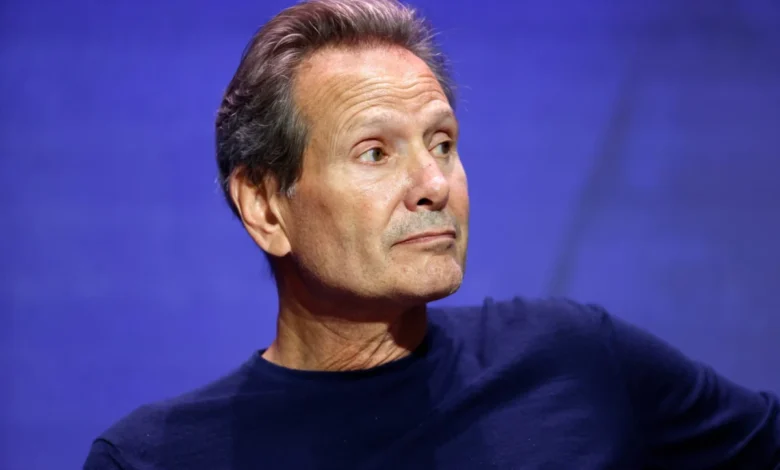
The rapid evolution of artificial intelligence is not merely a technological trend but a seismic event that will fundamentally reshape the global economic landscape over the next decade. Speaking at the Ford Pro Accelerate event in Detroit, Verizon CEO Dan Schulman delivered a stark assessment of the current AI trajectory, warning that the tools businesses rely on today represent the most primitive versions of the technology that will ever exist. His remarks underscored a growing consensus among corporate leaders that the pace of AI advancement is poised to outstrip traditional mechanisms for societal and economic adjustment, including labor markets, education systems, and regulatory frameworks.
Schulman’s forecast suggests an accelerated timeline for technological maturation. He predicts that the industry will reach a meaningful iteration of Artificial General Intelligence (AGI)—systems capable of broad, human-like reasoning across diverse domains—within the next six to 18 months. Beyond this, he anticipates an "era of quantum" computing arriving within two years, promising a thousand-fold increase in processing power, followed by the proliferation of sophisticated humanoid robotics by 2030 or 2035. According to Schulman, the world is entering a decade of change so profound that the progress typically expected over a century will be condensed into the next five to ten years.
The Mechanism of Disruption and the AGI Horizon
Artificial General Intelligence remains the "holy grail" of the sector. Unlike narrow AI, which excels at discrete, repetitive tasks such as image recognition or data categorization, AGI is characterized by its ability to perform broadly across multiple domains, mirroring human cognitive flexibility. Schulman’s prediction that AGI is "right on us" reflects the industry’s recent breakthroughs in Large Language Models (LLMs) and multi-modal neural networks.
The economic implications of such a rapid deployment are significant. When machines can perform complex cognitive and physical tasks better or more efficiently than humans, the traditional labor model—centered on static job descriptions and defined hierarchies—becomes unsustainable. Schulman noted that at Verizon, a company with a massive workforce of over 250,000 employees and contractors, the strategy is already shifting toward a "much more fluid organization." This transition is intended to prioritize adaptability, allowing the company to integrate new technologies while maintaining operational continuity.
A Chronology of Technological Shifts
To understand the scale of the transition Schulman describes, it is necessary to view the development of AI through a chronological lens. The last five years have seen a transition from experimental deep learning to the widespread deployment of generative AI.
- 2019–2022: The era of "narrow" AI, where machine learning models were optimized for specific industrial or consumer applications, such as predictive maintenance in manufacturing or recommendation engines in retail.
- 2023–2024: The "Generative" inflection point, marked by the widespread adoption of large-scale models capable of creating content, writing code, and synthesizing vast datasets.
- 2025–2026 (Projected): The emergence of AGI, where systems begin to demonstrate cross-functional reasoning and autonomy.
- 2027–2028 (Projected): The "Era of Quantum," where current computational limits are shattered, enabling complex simulations and optimizations previously deemed impossible.
- 2030–2035 (Projected): The normalization of humanoid robotics, bringing AI-driven physical labor into the manufacturing, logistics, and service sectors.
Corporate Responses and the Infrastructure Gap
While Schulman’s warnings focus on the speed of disruption, fellow executives on the Ford Pro panel highlighted the practical, physical constraints of this AI-driven future. The expansion of AI requires an immense physical footprint, including robust data centers, advanced power grids, and high-speed fiber-optic connectivity.
Patti Poppe, CEO of Pacific Gas and Electric (PG&E), pointed out that the digital revolution is inherently dependent on physical infrastructure. For a utility company, the challenge is not just the deployment of software but the modernization of the electrical grid to support the massive energy demands of AI data centers. Poppe emphasized that the future of the grid will rely on a hybrid workforce: technicians who can manage advanced predictive sensors and remote-edge computing while simultaneously performing traditional, high-stakes physical work on transmission lines. "The same guys who hang on the end of the rope are going to have to get smarter about those technologies," Poppe remarked, noting that even with automation, human intervention remains essential.
Similarly, Dave Regnery, CEO of Trane Technologies, provided a historical perspective on the current anxiety surrounding AI. He likened the current sentiment to the skepticism that greeted the arrival of the personal computer four decades ago. By reviewing historical articles from that era, one finds the same fears regarding job displacement and societal upheaval. Trane Technologies is currently utilizing AI to optimize building energy efficiency, a move that is projected to reduce waste—which accounts for nearly 30% of energy usage in commercial buildings—without necessarily reducing headcount.
Bridging the Skills Gap: Training as a Strategic Priority
A central theme of the discussion was the necessity of proactive investment in human capital. Verizon has already initiated a $70 million program aimed at providing free AI training to American workers, extending support beyond its own payroll to include community-based professional development.
This initiative is indicative of a broader shift in corporate responsibility. Rather than assuming that the labor market will naturally rebalance, executives are increasingly viewing workforce training as a prerequisite for technological success. Chris Nelson, CEO of Stanley Black & Decker, described the role of AI on construction sites as that of a "companion" rather than a replacement. The company has developed autonomous drilling robots designed to handle repetitive, high-precision tasks, which in turn frees up skilled tradespeople to focus on complex problem-solving and high-value electrical work.
Nelson’s perspective provides a counterweight to the narrative of total displacement. He argues that by delegating the "drudgery" of certain tasks to machines, firms can create more engaging career paths for workers, potentially attracting a new generation to skilled trades that were previously viewed as physically punishing or monotonous.
The Macro-Economic Implications: A Call for Guardrails
The overarching message from the panel was a call for rigorous scenario planning. As AI capabilities evolve, the risk of a "skills-to-speed" mismatch grows. If technological capability advances faster than the ability of workers to reskill and for institutions to adapt, the resulting economic friction could be severe.
The policy implications are equally profound. Governments and regulatory bodies are under pressure to establish guardrails that mitigate risk without stifling innovation. This includes addressing issues such as algorithmic bias, data privacy, and the potential for market concentration. However, the panelists agreed that the most effective response is not to halt development but to foster a culture of resilience.
For large-scale enterprises, this means shifting from a static employment model to one of continuous learning. It requires building organizational structures that can pivot as quickly as the underlying technology changes. As Schulman emphasized, the goal is to prepare for the "disruption" by fostering a workforce that is technically literate and adaptable.
Conclusion: The Decade of Intense Change
The transition described by the executives at the Ford Pro event represents a fundamental shift in the relationship between humans and machines. Whether the result is a massive augmentation of human potential or a painful period of displacement depends largely on the actions taken in the next five years.
The consensus among industry leaders is clear: the "earthquake" of AI is inevitable, but its trajectory is not entirely predetermined. Through strategic investment in infrastructure, a commitment to broad-based workforce retraining, and a proactive approach to scenario planning, corporations and policymakers can navigate the transition. The era of quantum and the rise of AGI will undeniably demand a more sophisticated, agile, and skilled workforce. As Schulman noted, the responsibility of today’s leadership is to ensure that the disruption serves as a foundation for a more efficient and productive future, rather than an unmanageable crisis. The "collapse" of the 21st century’s traditional norms is already underway; how we build within the resulting landscape will define the economic reality for the next century.
Related posts: