The Evolution and Market Dominance of Men’s Work Jackets in Contemporary Fashion

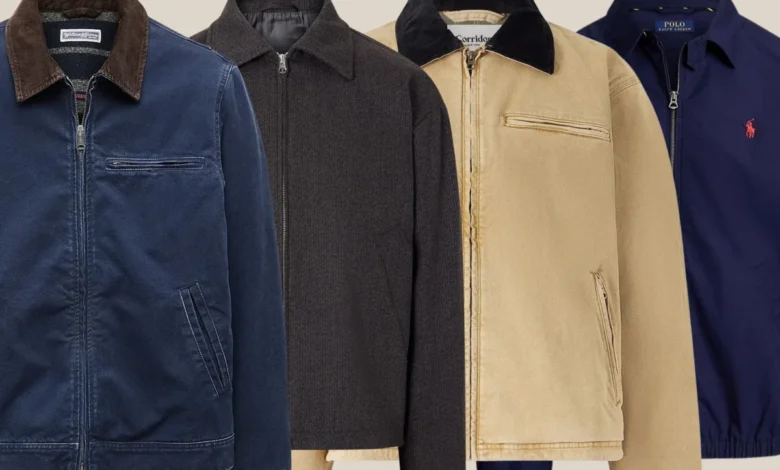
The men’s work jacket has officially completed its migration from industrial garages, factory assembly lines, and shipping loading docks to the forefront of mainstream luxury and everyday menswear. Once worn strictly for utility and manual labor protection, heavy-duty canvas, denim, and twill outerwear has been embraced by style icons like Paul Mescal and Austin Butler—the latter of whom notably reported wearing his preferred work jacket continuously for a year straight. Today, the classic work jacket represents an accessible, highly versatile entry point into semi-rugged personal styling.
The modern silhouette offers a distinct aesthetic advantage, effortlessly injecting weekend utility and structured masculinity into casual wardrobes. From a tailoring and proportion perspective, these garments naturally flatter the wearer by defining the shoulder line and drawing the waist inward, whether layered over slim-cut denim or paired with relaxed, wide-leg trousers. Furthermore, the market proves that consumers do not need to exhaust their finances to achieve this look. Heritage mainstays like Dickies and Carhartt continue to offer durable, dependable options, while independent labels provide cotton-forward alternatives well within reach of standard budgets.
Historical Context and Chronological Evolution
To understand the current cultural footprint of the work jacket, one must examine its historical trajectory through the twentieth century. The archetype of the modern work jacket largely traces its roots to the mid-1940s, heavily influenced by military standardization during World War II. Then-U.S. Army General Dwight D. Eisenhower popularized a cropped, boxy jacket design for military forces that prioritized mobility and minimal fabric waste. This silhouette laid the groundwork for civilian industrial wear.
By the 1950s, American manufacturers such as Carhartt and Dickies began mass-producing heavy cotton-duck jackets outfitted with rivet reinforcement, corduroy collars, and blanket linings designed to withstand harsh weather conditions. Over the next seven decades, these garments transitioned from blue-collar necessities to countercultural symbols. Skaters, musicians, and artists adopted them for their indestructible nature and unpretentious aesthetic. By the early 2020s, high-end luxury fashion houses recognized this enduring appeal, introducing pre-distressed, runway-ready iterations at multiples of the original retail price and cementing the garment’s status as a staple of modern menswear.
Top Work Jacket Selections for the Modern Wardrobe
The Carhartt Blanket-Lined Detroit Jacket remains the undisputed benchmark for overall quality. Retailing between $120 and $130, this iconic piece utilizes a hardy 12-ounce cotton duck canvas, an insulating blanket lining, and a warm corduroy top collar. Having survived over seventy years of production, the Detroit jacket is celebrated for its rigid durability and timeless cropped cut, though traditionalists note that its prominent logo patch remains a distinct branding element. For a sleeker, unlined streetwear aesthetic, the Carhartt WIP variant offers a refined alternative.
For budget-conscious consumers, the Dickies Insulated Eisenhower Jacket, priced around $70, provides exceptional value. Mirroring the durability of the brand’s famous 874 work trousers, the Eisenhower jacket incorporates a water-repellent polyester-cotton blend that delivers weather resistance without excessive bulk. Its understated branding and classic collar make it a quieter, highly versatile option for everyday wear.
Those seeking an upscale interpretation can look to the Wallace & Barnes Lined Canvas Work Jacket from J.Crew, priced at $268. This piece marries heritage workwear aesthetics with a premium wool-blend blanket lining and sturdy cotton canvas, satisfying the demand for sophisticated cold-weather layering. Similarly, Buck Mason’s Italian Doeskin Station Jacket, retailing at $298, reinterprets mid-century utility wear using a soft, plush Italian doeskin cotton fabric, complemented by shoulder pleats, real horn buttons, and a polished point collar.
For severe winter conditions, the Filson Mackinaw Wool Cruiser Jacket, priced at $599, represents the pinnacle of heritage cold-weather gear. Based on a design introduced in 1914, the jacket is constructed from 24-ounce Mackinaw wool, a tightly woven twill that naturally repels wind and moisture while retaining thermal insulation even when wet. Designed for multi-generational durability, it serves as an heirloom-quality investment.
Additional notable entries in the market include the Ralph Lauren Bayport Poplin Jacket ($185) for lightweight versatility, the Mfpen Wool Blend Mail Jacket ($690) featuring dense multi-tonal yarn construction, and the Tom Beckbe Stanley Jacket ($495) for those requiring a waterproof waxed-cotton finish. Specialized options such as the FrizmWorks Leather-Trimmed Canvas Jacket ($385) and the Stan Ray Roughneck Collared Bomber ($221) further demonstrate the broad stylistic range available to modern consumers.
Industry Analysis and Market Implications
The sustained popularity of workwear in contemporary fashion reflects a broader sociological shift in consumer preferences. Market analysts observe that the embrace of utilitarian apparel by office-based professionals and style enthusiasts represents a form of sartorial escapism—a desire to project authenticity, durability, and practical capability through clothing.
Furthermore, the economic implications of this trend favor brands with deep manufacturing legacies. While fast-fashion retailers attempt to replicate the weathered look of vintage workwear through artificial distressing, heritage brands benefit from a built-in narrative of longevity. Consumers increasingly prioritize cost-per-wear metrics, driving demand for garments that improve with age rather than degrade after a single season. As long as designers continue to balance traditional utility with modern tailoring, the work jacket will remain a resilient cornerstone of the men’s apparel industry.
Related posts: