Smart speakers have evolved from simple voice-activated novelties into the central nervous system of the modern domestic environment. As of September 2026, these devices function as sophisticated hubs that bridge the gap between high-fidelity audio, artificial intelligence, and the rapidly expanding Internet of Things (IoT). Choosing the right speaker today is less about finding the loudest hardware and more about selecting the most compatible entry point into a broader ecosystem of interconnected sensors, security systems, and entertainment platforms.
The market landscape has shifted significantly since the early 2020s. With the widespread adoption of the Matter connectivity standard—a royalty-free home automation connectivity standard—smart speakers are finally beginning to shed their reputation for being "walled gardens." However, distinct advantages remain for users who align their hardware choices with the software ecosystems they already utilize, whether that is Amazon’s vast Alexa infrastructure, Google’s Gemini-powered intelligence, or Apple’s privacy-centric HomeKit.
The Evolution of Smart Audio and AI Integration
The current generation of smart speakers represents a milestone in voice-assistant technology. Historically, voice assistants were limited to basic command-and-response patterns: "Set a timer," "What is the weather," or "Play jazz." The 2026 product cycle, however, is defined by the integration of Large Language Models (LLMs). This transition, particularly evident in the latest Google Home lineup, allows for multi-turn conversations, contextual awareness, and the ability to interpret nuanced, non-linear commands.
The shift toward AI-native speakers has necessitated better onboard processing. Modern devices are increasingly equipped with neural processing units (NPUs) capable of handling voice recognition and basic command logic locally, which reduces latency and improves privacy by limiting the amount of data sent to the cloud.
The Versatile Contender: Amazon Echo Dot Max
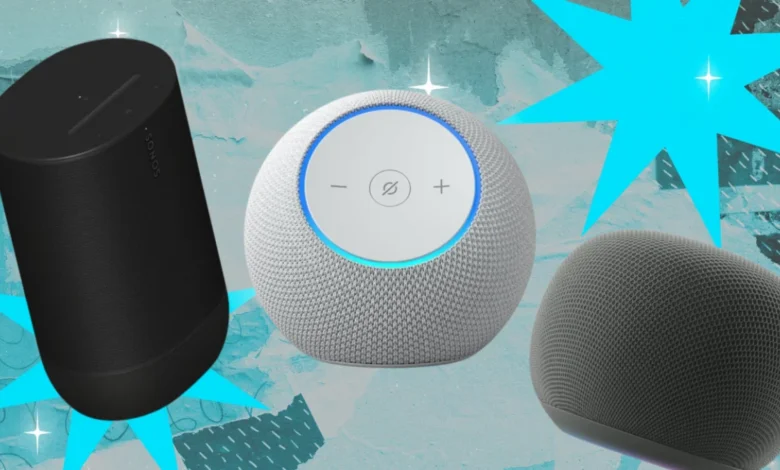
For the average consumer, the Amazon Echo Dot Max remains the most pragmatic choice. Positioned as a mid-tier offering, it provides a balance of acoustic performance and broad compatibility that high-end or budget-restricted speakers often lack.
The Echo Dot Max distinguishes itself through its support for the Matter, Thread, and Zigbee protocols. This hardware-level integration allows it to act as a universal bridge for thousands of third-party smart devices, ranging from Philips Hue lighting to Schlage smart locks. By incorporating Wi-Fi 6E and Bluetooth 5.3, Amazon has ensured that the device maintains stable connectivity even in homes with high concentrations of wireless traffic.
From a performance standpoint, independent testing confirms that the device offers a balanced sound signature capable of filling medium-sized rooms without the harsh distortion often associated with smaller form-factor speakers. While it lacks the immersive directional audio of dedicated home theater systems, its inclusion of temperature, light, and ultrasonic sensors makes it a potent tool for home automation routines. For instance, a user can program the Echo Dot Max to automatically lower smart blinds when the ambient light sensor detects peak afternoon sun, or turn on a heater when the internal temperature sensor drops below a specific threshold.
Google’s Strategic Shift: The Gemini-Powered Home
Google’s 2026 refresh of the Google Home line marks a pivot from the company’s previous reliance on the legacy Google Assistant. The new Google Home is built from the ground up to leverage the Gemini AI model. This integration changes the user experience from transactional to conversational.
The technical implications of this shift are profound. Users can now string together complex requests, such as asking for a summary of their calendar, a traffic update for their commute, and a request to start a specific smart-home scene simultaneously. Google’s move to gate the most advanced analytical features—such as deep integration with security camera footage for historical analysis—behind a subscription model reflects the industry’s broader trend of monetizing AI intelligence.
Despite the paywall, the hardware itself remains highly competitive. With a 58mm internal driver, the current Google Home offers a richer low-end frequency response than its predecessors. Analysts have noted that for users already heavily invested in the Google ecosystem—specifically those utilizing Google TV and Nest security products—the seamless interoperability provided by the Google Home app remains the gold standard in the industry.

The Premium Ecosystem: Apple HomePod Mini
Apple’s approach to the smart speaker market continues to prioritize integration, security, and computational audio over raw hardware specs. The HomePod mini occupies a unique space, catering almost exclusively to users who operate within the Apple "Walled Garden."
The primary advantage of the HomePod mini is its deep, native integration with iOS, macOS, and tvOS. Features like "Handoff," which allows a user to move audio from an iPhone to the speaker by simply bringing the device into proximity, remain unmatched in terms of user experience fluidity. Furthermore, Apple’s focus on privacy—including on-device processing for Siri requests—appeals to a demographic increasingly concerned with the data collection practices of major tech firms.
The HomePod mini utilizes "computational audio," a process by which the speaker’s internal processor adjusts the sound output in real-time to optimize for the room’s acoustics. While it is limited by its physical size, the sound stage it creates is surprisingly expansive, making it an ideal choice for a multi-room audio system. For those who require higher fidelity, the ability to link two units into a stereo pair offers a performance-to-cost ratio that, while still higher than Amazon or Google equivalents, provides a significant upgrade in sound quality for music enthusiasts.
Portability and Performance: The Sonos Move 2
The demand for portable smart audio has driven the success of the Sonos Move 2. Unlike the stationary smart speakers that require a permanent connection to a wall outlet, the Move 2 provides a bridge between a high-end smart home speaker and a ruggedized portable Bluetooth speaker.
The Move 2 is built to withstand environmental hazards, boasting an IP56 rating for protection against dust and water ingress. This makes it a versatile solution for outdoor environments, from patios to beaches. Its internal battery provides up to 24 hours of playback, a notable improvement over previous iterations.
From an engineering perspective, the Move 2’s dual-tweeter array creates a wide stereo soundstage, a rarity in portable units. However, its value proposition is nuanced. It supports both Sonos Voice Control and Amazon Alexa, but its reliance on Bluetooth 5.0 is a point of contention for tech purists, as it lacks the advanced features found in newer Bluetooth versions. Nevertheless, for users who already have an existing Sonos multi-room setup, the Move 2 is the logical extension, allowing for the same high-fidelity audio experience to be moved from the living room to the backyard without a break in the software interface.
Broader Implications and Future Outlook
The smart speaker market is currently in a state of consolidation. The initial "gold rush" of the early 2020s, characterized by a flood of low-cost, single-purpose devices, has given way to a focus on long-term sustainability and interoperability.
The industry’s adoption of Matter is arguably the most significant development of the past three years. By allowing devices to communicate across platforms, the pressure on consumers to choose one ecosystem over another has diminished. Future iterations of these devices will likely focus on "ambient intelligence"—the ability for a home to anticipate user needs without explicit voice commands, utilizing sensors and predictive AI models.
As these devices become more central to home life, concerns regarding data security and the "always-on" nature of microphones will continue to be a subject of intense regulatory and consumer scrutiny. Manufacturers are responding by moving more processing to the "edge" (the device itself), minimizing the transmission of raw audio data to remote servers.
Ultimately, the choice of a smart speaker in 2026 is an extension of the user’s broader digital identity. Whether it is the ecosystem-agnostic flexibility of the Amazon Echo Dot Max, the AI-centric intelligence of the Google Home, the secure integration of the HomePod mini, or the portable high-fidelity of the Sonos Move 2, the current market offers a level of specialization that allows for a truly personalized smart home experience. As technology continues to integrate into the fabric of daily life, the smart speaker will remain the primary interface through which we interact with our digital environment.