Inside the Human Cortex, Traveling Brain Waves Reveal How We Think, Remember, and Predict the Future

The human brain is a marvel of biological efficiency, capable of waking up, navigating a familiar environment, retrieving distant memories, and assessing metabolic states within the span of a few seconds. Achieving these feats requires an enormous amount of computational power, half of which is dedicated entirely to maintaining electrochemical gradients. These gradients keep billions of neurons poised and ready to fire at a moment’s notice, granting the mind extraordinary flexibility in responding to the fluid demands of everyday life.
For nearly a century, neuroscientists have studied this electrical symphony by measuring oscillations through electroencephalography (EEG) and other recording methods. Traditionally, these electrical rhythms—commonly categorized by frequency bands such as alpha, beta, gamma, and theta—were viewed as little more than the hum of a running engine. They signaled that the brain was active, but researchers assumed the real computational work was handled strictly by individual neuronal connections, or synapses, firing in isolation.
However, a sweeping paradigm shift is currently underway in cognitive neuroscience. Cutting-edge research leveraging high-resolution intracranial recordings in humans and advanced animal models is revealing that the brain’s electrical activity is far more sophisticated than previously imagined. Rather than mere background noise, large-scale electrical waves propagating across the cortex are now recognized as a fundamental architectural motif of information processing. These traveling waves act as a dynamic, real-time operating system that reorganizes neural networks on the exact timescale required for human behavior.
A Historical Retrospective: From Basic Oscillations to Complex Dynamics
The journey toward understanding neural oscillations began in the 1920s when scientists first recorded electrical activity from the surface of the scalp. As human subjects engaged in cognitive tasks, paid attention, or transitioned through various stages of sleep, the frequency and amplitude of these waves shifted noticeably. Yet, recording electrical activity from outside the skull severely limited the fidelity of the data, as the skull and scalp act as natural filters, blurring the underlying signals.
To overcome this limitation, specialized researchers began working with clinical populations, such as patients with severe epilepsy undergoing intracranial monitoring to locate seizure foci. With informed consent and roughly 100 high-density electrodes placed directly onto specific regions of brain tissue, scientists gained unprecedented, high-resolution windows into human cognition across both space and time.
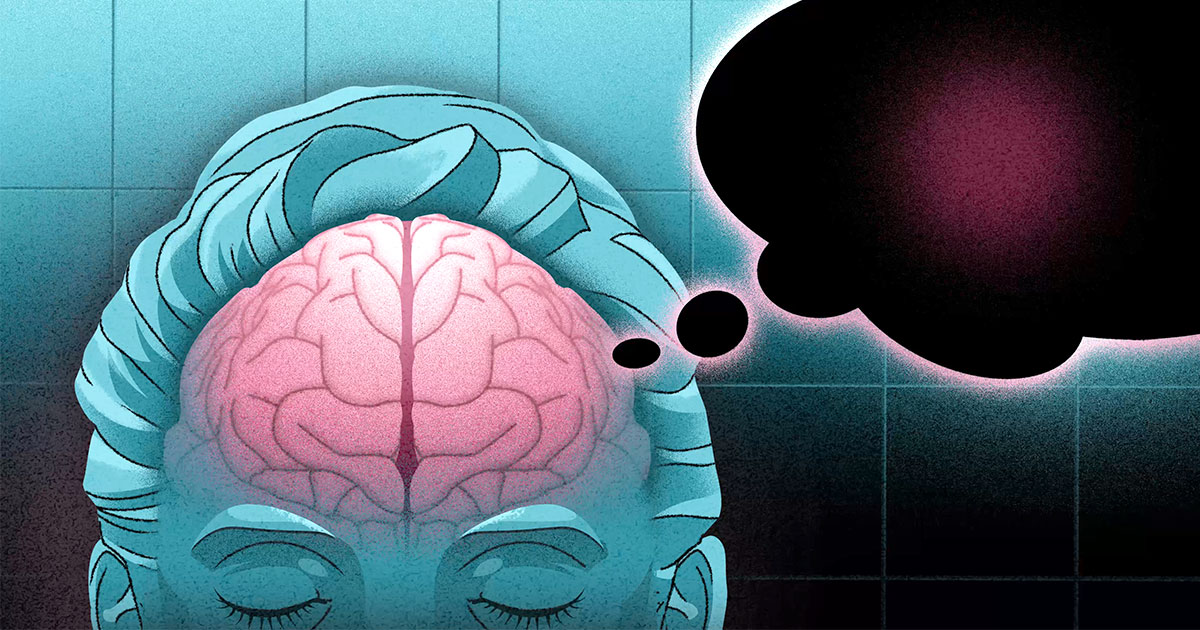
A landmark study published in Nature Human Behavior in 2024 by neuroscientist Joshua Jacobs of the University of Chicago, alongside neuroengineer Uma Mohan (now at the National Institutes of Health), demonstrated that electrical waves travel in opposite directions across the cortex—moving either from back-to-front or front-to-back. The researchers realized these directional shifts corresponded directly to the flow of cognitive information. Sensory processing occurs in the visual regions at the back of the brain, while higher-level reasoning and memory storage occur in the prefrontal cortex at the front. When a person pays attention to their environment, signals travel backward from visual receptors, while waves moving from back to front help encode and retrieve memories. This discovery suggested that the brain exploits physical wave propagation to rapidly switch between memory encoding and recall functions.
Decoding the Menagerie: Source, Sink, and Spiral Waves
The complexity of these neural dynamics deepened significantly with a study published in April 2026 in Nature Communications. Led by Joshua Jacobs and Anup Das from the University of Chicago, alongside mathematical biologist Bard Ermentrout of the University of Pittsburgh, the research team utilized high-resolution intracranial electrodes to observe a diverse menagerie of wave patterns in awake human subjects.
During the investigation, participants performed distinct cognitive tasks, including verbal memory exercises and complex spatial navigation in virtual environments. The high-density data revealed that brain waves are not limited to simple up-and-down planar movements. Instead, researchers identified source waves emanating outward from a specific cortical location, sink waves converging onto a central point, and rotating spiral waves swirling in clockwise or counterclockwise directions.
Intriguingly, the data showed a correlation between specific cognitive tasks and wave morphologies. Rotating spiral waves appeared more frequently during spatial navigation tasks, whereas verbal memory tasks elicited simpler planar structures. This stark difference indicates that complex topological wave shapes are better suited for managing intricate cognitive behaviors.
Until recently, scientists studying individual electrodes often missed these larger spatial patterns, misinterpreting the outer edges of complex vortices as basic planar waves. Ermentrout likens observing these phenomena to standing in the outer bands of a hurricane: an observer feels wind moving in a single direction and remains entirely unaware of the spinning vortex unless they are standing near the eye of the storm.
Parallels in Animal Models and Sensory Prediction
Corroborating these human findings, independent studies published in mid-2026 have expanded the scope of traveling wave research into mammalian models. In June 2026, a study published in Science by neuroscientists Zhiwen Ye of the Shenzhen Medical Academy of Research and Translation and Nicholas Steinmetz of the University of Washington documented circular, rotating waves in the brains of mice. These waves were mirrored and synchronized across both the left and right hemispheres. Furthermore, anatomical analysis of the somatosensory cortex—where sensory input integrates with body movement—revealed that axonal neurons are wired together in circular, spiraling arrangements explicitly capable of mediating these hurricane-like patterns.
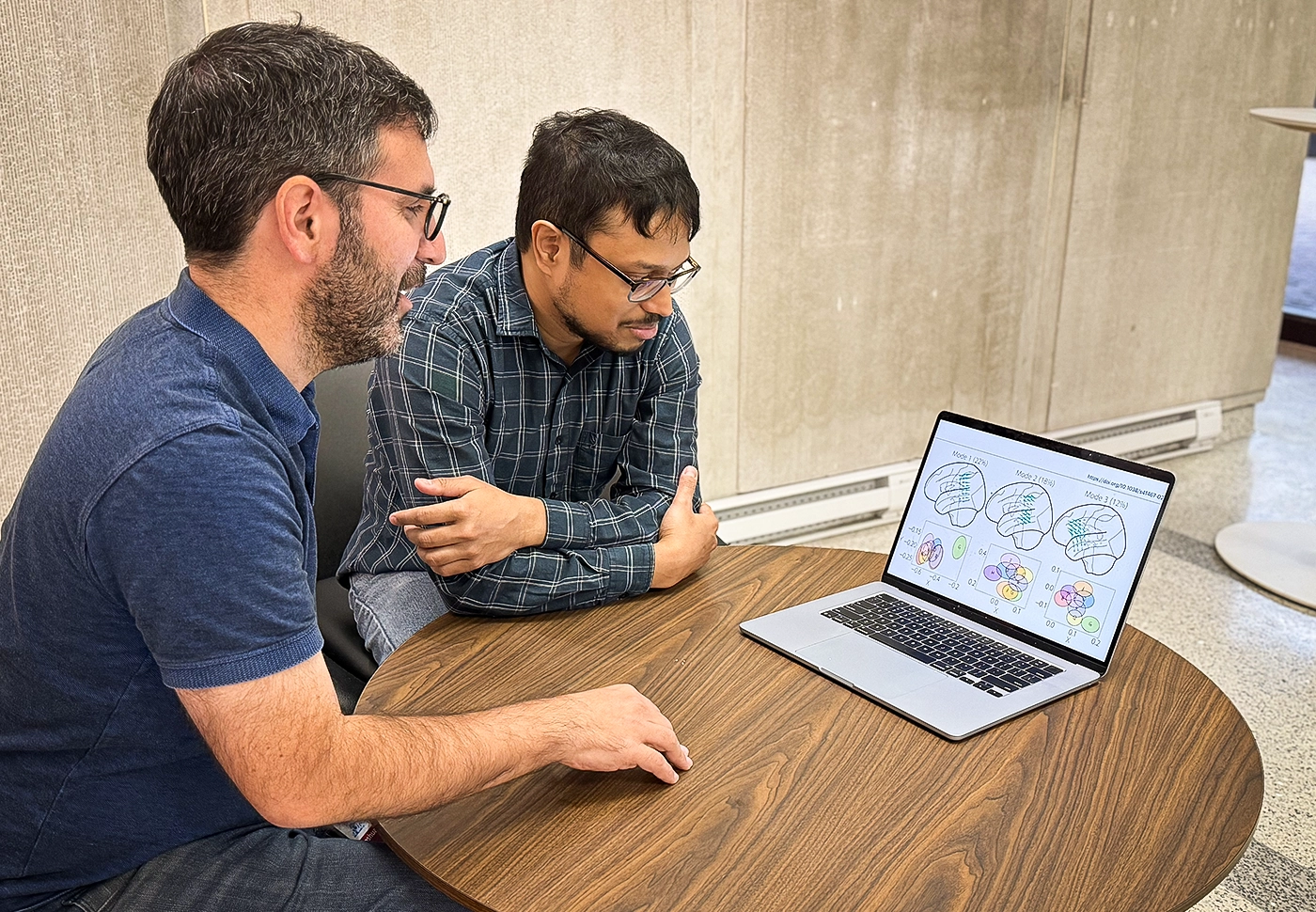
Building upon these anatomical insights, a comprehensive review published in September 2026 in Neuron by Lyle Muller of the University of Texas at Dallas and John Reynolds of the Salk Institute for Biological Studies synthesized decades of visual cortex research. They argued that traveling waves serve a vital predictive function. By concurrently carrying information about immediate past experiences and current sensory inputs, these evolving wave patterns enable the brain to generate short-term predictions about forthcoming sensory information.
According to Earl K. Miller, a cognitive neuroscientist at the Massachusetts Institute of Technology, this biophysical layer of organization operates on the exact timescale required for behavior. While the anatomical architecture of the brain provides long-term structural connectivity—akin to permanent data storage—traveling waves represent the dynamic expression of that information into active thought. By altering the voltage gradients at synaptic junctions, these electrical fields can rapidly modulate the underlying excitability of cortical neurons, making them more or less likely to fire when called upon.
Scientific Skepticism and Ongoing Debate
Despite mounting empirical evidence, the hypothesis that local electric field waves actively drive cognitive processing remains a subject of intense debate within the neuroscience community.
Prominent systems neuroscientist György Buzsáki of New York University argues a more conservative interpretation. Buzsáki maintains that traveling waves are merely epiphenomena—passive byproducts reflecting underlying synaptic activity. From this perspective, as millions of neurons fire synchronously, they naturally generate macroscopic electrical fields and oscillations. While these patterns offer valuable diagnostic insights into underlying neural circuitry, Buzsáki contends they play no causal role in computation. In his view, all computational processing and communication occur intracellularly and intercellularly via synaptic currents and action potentials, rendering extracellular electrical dynamics functionally irrelevant.
Implications and Future Horizons
As laboratories around the world continue to map the intricate geometries of cortical electrical activity, the broader implications for neurology, artificial intelligence, and cognitive science are profound. If the brain genuinely relies on complex traveling waves to coordinate large-scale computations and memory retrieval, understanding these mechanisms could transform treatments for neurological and psychiatric disorders characterized by disrupted neural synchronization, such as epilepsy, schizophrenia, and major depressive disorder.
While questions regarding the precise causal nature of traveling waves remain unsettled, the convergence of high-resolution human intracranial data, advanced animal imaging, and mathematical modeling has irrevocably altered our understanding of the mind. Biology consistently harnesses regularity and predictability; as empirical support for structured wave dynamics accumulates, neuroscientists are moving closer to fully decoding the physical language of human thought.