Genesis GV90 Redefines Automotive Luxury with a Pop-Up Cinematic OLED Display and Flagship Electric Architecture

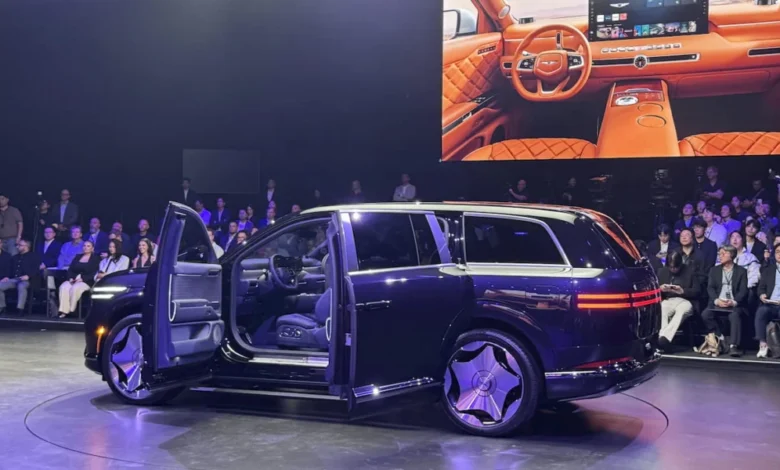
The automotive landscape is undergoing a profound transformation, shifting away from traditional definitions of mobility toward an era where vehicles function as sophisticated living spaces, mobile power units, and personalized entertainment hubs. At the forefront of this evolution is the Genesis GV90, the flagship all-electric sport utility vehicle from Hyundai Motor Group’s luxury division. Initially revealed to the public at an exclusive event at the historic Palace of Fine Arts in San Francisco on August 19, the GV90 has quickly established a new benchmark for ultra-luxury electric mobility. While much of the initial public acclaim focused on its striking exterior aesthetics, such as the B-pillarless Neolun Arch Gate coach doors and flexible swiveling seating configurations, the vehicle’s interior technology package represents a monumental leap forward. Chief among these technological innovations is a dynamic, extendable pop-up OLED cinematic display paired with an acoustic environment designed to rival commercial movie theaters. As automakers compete fiercely in the high-end electric vehicle segment, the Genesis GV90 emerges not merely as a mode of transportation, but as a comprehensive lifestyle statement engineered to challenge established European luxury giants.
Genesis Raises the Bar at the San Francisco Global Debut
The unveiling of the Genesis GV90 in late August marked a watershed moment for the brand, which has steadily transitioned from an ambitious automotive challenger to a dominant force in the global luxury market. Held at San Francisco’s iconic Palace of Fine Arts, the debut event drew international attention, showcasing a vehicle designed to sit comfortably above existing offerings in both the Hyundai and Genesis lineups. Industry analysts and early observers noted that the production model faithfully translates the daring design language previously seen in concept vehicles into a road-ready reality.
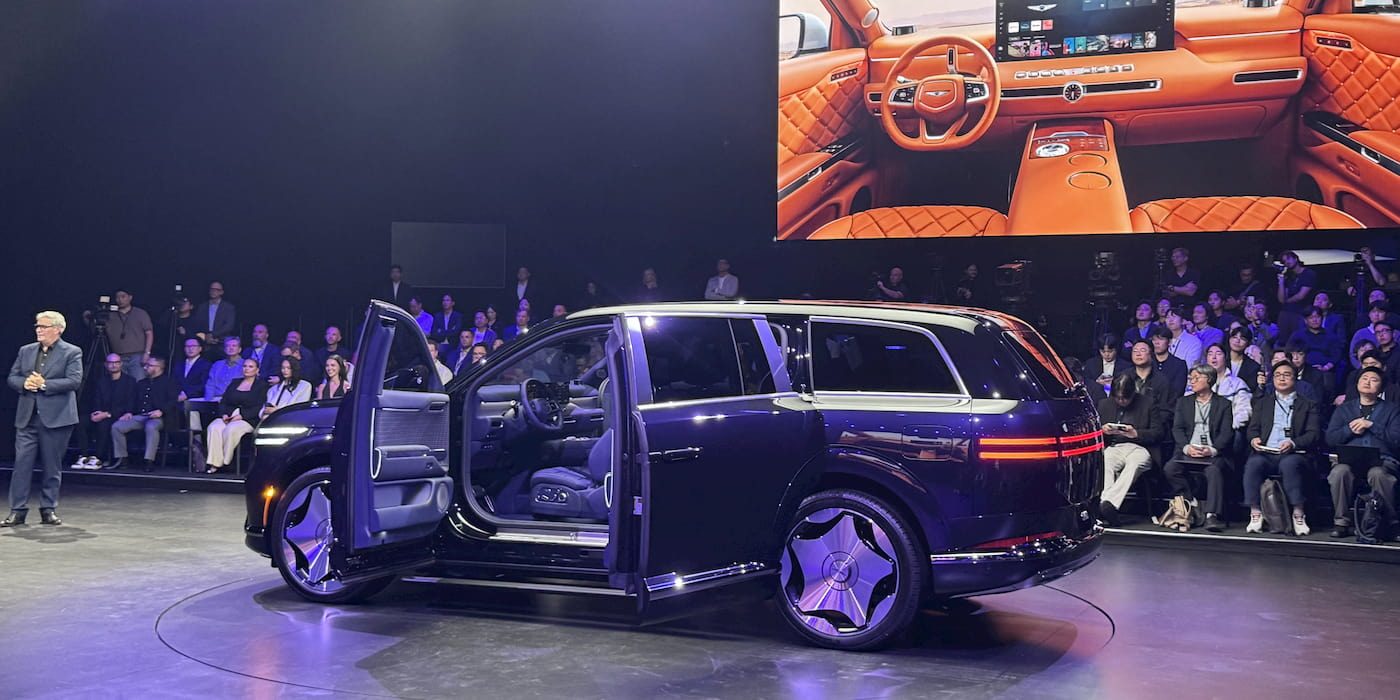
In person, the GV90 commands a formidable presence. Measuring 208.1 inches in length, 79.9 inches in width, and standing 71.5 inches tall (or 71.4 inches when outfitted with optional 24-inch wheels), the flagship SUV dwarfs corporate siblings like the Hyundai IONIQ 9 and the Kia EV9. Its expansive 127.8-inch wheelbase not only provides a commanding road stance but also creates a cavernous interior environment. The exterior design is offered in two distinct configurations: the standard variant featuring traditional swing doors, and the ultra-exclusive GV90 Neolun trim, which incorporates pillarless coach doors that swing open to reveal an immaculate, lounge-like cabin. This architectural choice eliminates structural barriers to entry, emphasizing accessibility and supreme elegance.
Innovative Engineering: The Extendable OLED Cinematic Display
Beneath the opulent surface lies a sophisticated digital architecture anchored by the Pleos Connect infotainment system. The GV90 holds the distinction of being the first vehicle within the broader Hyundai Motor Group to utilize this advanced software architecture, as well as the inaugural Genesis model to feature the proprietary interface. While variations of Pleos Connect are slated for deployment in other group products—such as the IONIQ 3—engineers developed an exclusive, highly customized iteration tailored specifically for the flagship dimensions and luxury ethos of the GV90.
The crown jewel of this digital ecosystem is the vehicle’s motorized, pop-up OLED cinematic display. According to Inho Yoon, the lead designer and developer responsible for the GV90’s Pleos Connect system, the inspiration behind the technology stems from changing consumer habits. Modern drivers and passengers increasingly utilize stationary time in vehicles for relaxation, digital consumption, and workspace activities. Consequently, the GV90 was engineered to adapt physically and digitally to its operational state.
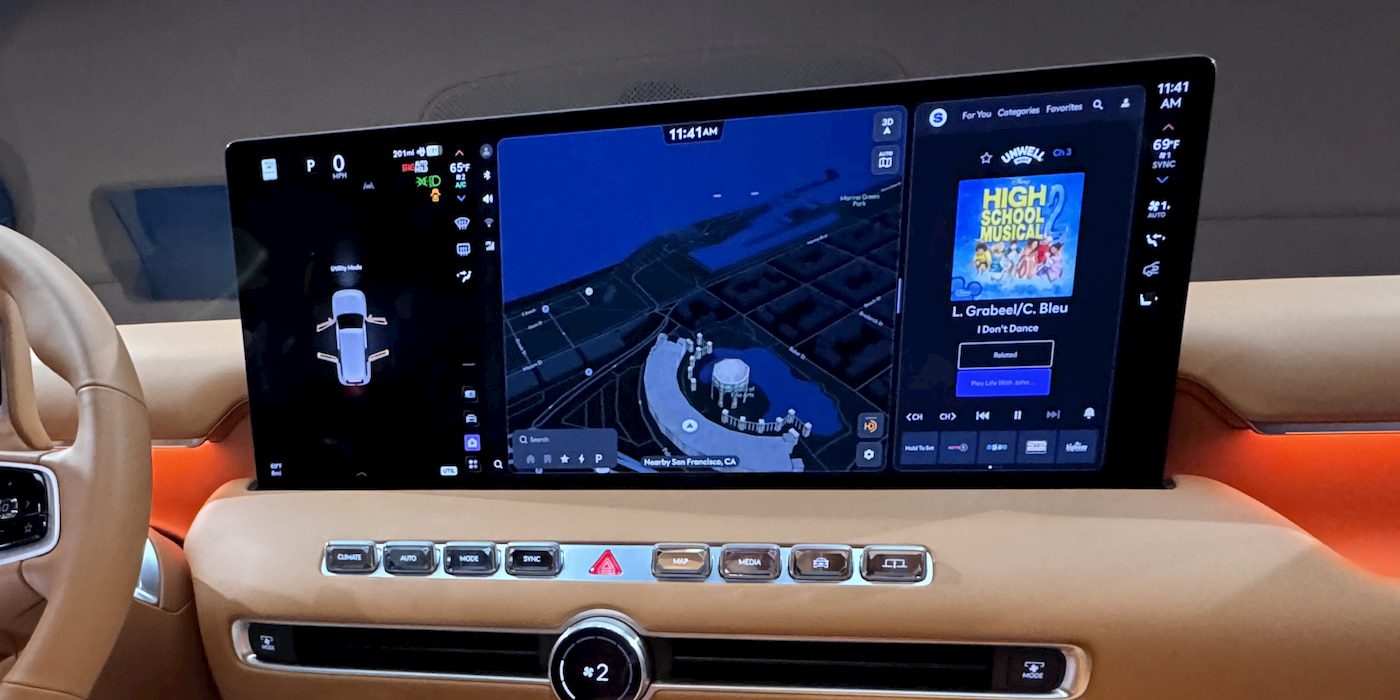
When the vehicle is in motion, the interface operates on a 23.6-inch screen configuration, strategically positioned to minimize driver distraction while maximizing usability. However, once the vehicle is brought to a complete stop and parked, occupants can activate the expansion mechanism at the touch of a button. The OLED display physically extends to a staggering 24.6 inches, transitioning the cabin into "Media Home Mode." In this configuration, users gain access to native third-party entertainment applications, including major streaming services like Netflix, live television broadcasts, and high-definition music streaming platforms.
To complement the visual fidelity of the massive OLED screen, Genesis partnered with high-end audio specialist Bang & Olufsen to install a Premier 3D Sound System. Featuring 25 strategically placed speakers and integrated Dolby Atmos support, the acoustic arrangement transforms the cabin into an immersive concert hall or private cinema, ensuring that sound quality matches the high-resolution picture.
Advanced User Experience and Pleos Connect Architecture
Designing an infotainment system that balances high-end entertainment with critical driving controls requires meticulous user experience (UX) engineering. Lee Min-ah, a Senior Researcher on the Infotainment UX Development Team who oversaw the interface design for the GV90’s Pleos Connect, emphasized the deliberate focus on smartphone-like familiarity combined with automotive-grade reliability.
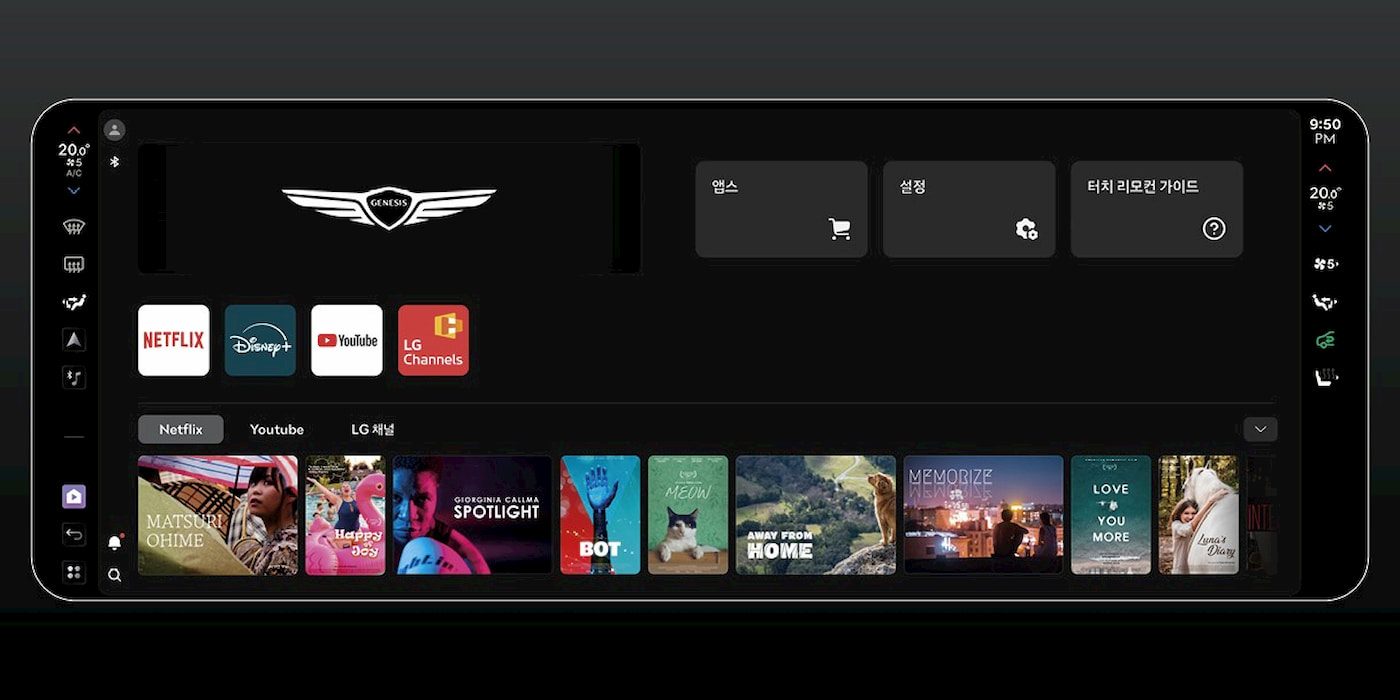
"I devoted considerable effort to designing the display’s app screen policies so that the experience of using navigation and other apps simultaneously could flow seamlessly," Lee noted during technical briefings following the vehicle’s unveiling.
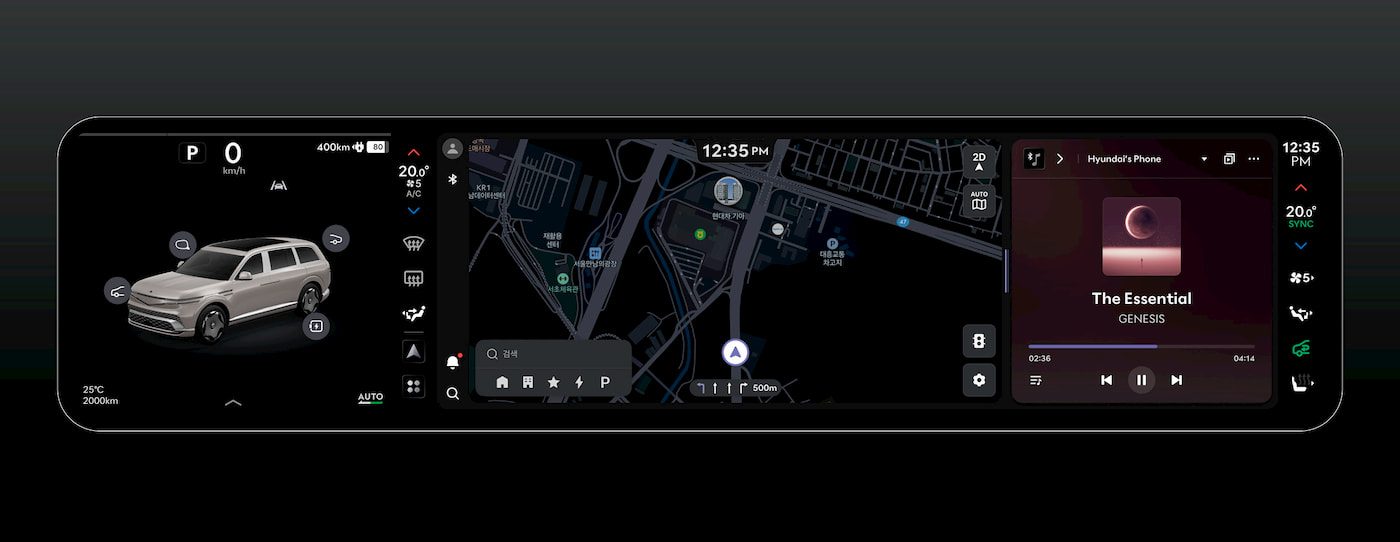
To achieve this fluidity, the GV90 deviates from standard Pleos Connect layouts by incorporating dedicated menu bars along each side of the screen. These sidebars are equipped with individual seat control buttons, allowing occupants to adjust their seating posture, heating, ventilation, and massage functions directly through the digital interface without navigating through deep sub-menus. The screen’s real-estate is intelligently partitioned: the driver’s side is dedicated to critical driving data, navigational routing, vehicle performance parameters, and climate controls, while the passenger side serves as an independent hub for media playback and third-party applications.
Further enhancing the digital cockpit is Gleo AI, Hyundai Motor Group’s proprietary in-car artificial intelligence companion. Designed to process natural language queries efficiently, Gleo AI allows occupants to control cabin functions, adjust climate settings, query real-time news, check sports scores, or search for points of interest such as nearby restaurants using conversational commands.
Complementing the central display is a custom 25-inch Head-Up Display (HUD) projected directly onto the windshield. This expansive HUD delivers essential driving metrics—including current speed, speed limits, battery status, and turn-by-turn augmented reality navigation prompts—directly into the driver’s line of sight, minimizing the need to look away from the road. Despite the heavy emphasis on touchscreens and digital controls, Genesis retained a thoughtful complement of physical tactile buttons positioned beneath the main display for frequently adjusted settings such as climate control fan speeds and primary media volume.
Powertrain Performance, Battery Capacity, and Range Specifications
Underpinning the opulent interior and advanced electronics is a robust, high-voltage electric vehicle architecture designed for long-distance grand touring. The Genesis GV90 is powered by a massive 123.5 kWh battery pack, representing the largest energy storage unit ever deployed in a production electric vehicle by the Hyundai Motor Group.
Given the vehicle’s substantial physical dimensions and luxurious appointments, efficiency has been a primary engineering objective. Official estimates provided by Genesis indicate an expected driving range of approximately 310 miles (500 kilometers) on a single charge for the standard seven-seater variant. While final EPA certification figures are pending closer to the vehicle’s commercial release, the combination of a high-capacity battery and advanced thermal management systems positions the GV90 competitively within the luxury EV tier. Furthermore, leveraging Hyundai Motor Group’s established 800V electrical architecture, the SUV supports ultra-fast DC fast charging, allowing drivers to replenish significant battery capacity during long-distance journeys in a matter of minutes.

Market Implications and the Evolution of Genesis
The arrival of the Genesis GV90 carries significant implications for the luxury automotive market. For years, heritage European manufacturers—such as Mercedes-Benz, BMW, and Audi—have dominated the upper echelon of full-size luxury SUVs. However, the rapid electrification of the automotive sector has disrupted traditional brand loyalty, creating an opening for aggressive, technologically agile disruptors.
Industry analysts observe that the GV90 acts as a definitive proof point of the brand’s maturation. Having established its design language and engineering credibility through smaller models like the GV60, G80 Electrified, and GV70, Genesis is now demonstrating its capability to compete at the absolute apex of the market. By integrating avant-garde design choices like the Neolun coach doors, state-of-the-art OLED expanding display technology, and bespoke artificial intelligence integration, Genesis is positioning itself not as an alternative to traditional luxury, but as a technological and stylistic leader.
As production ramps up and global market rollouts approach, the success of the Genesis GV90 will likely serve as a bellwether for consumer appetite regarding ultra-luxury electric flagships. By redefining the cabin experience around leisure, connectivity, and acoustic immersion, Genesis has signaled that the future of luxury motoring will be judged as much by what a vehicle can do when parked as by how it performs on the open road.
Related posts: