Tesla and SpaceX Announce Direct Integration of Starlink Satellite Internet into Autonomous Cybercab Robotaxi

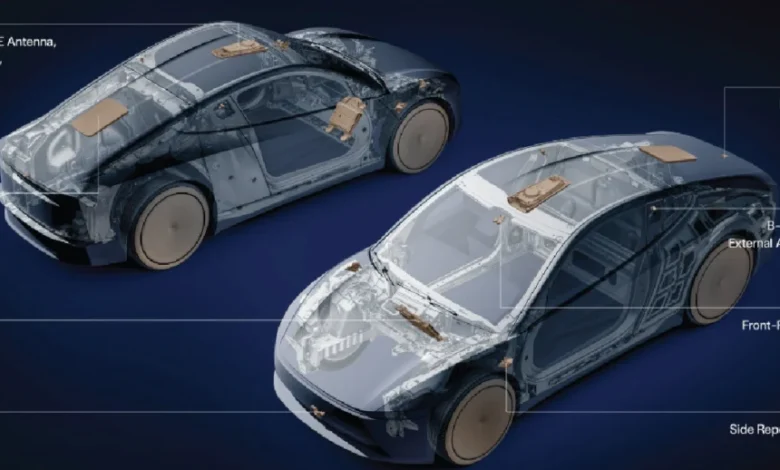
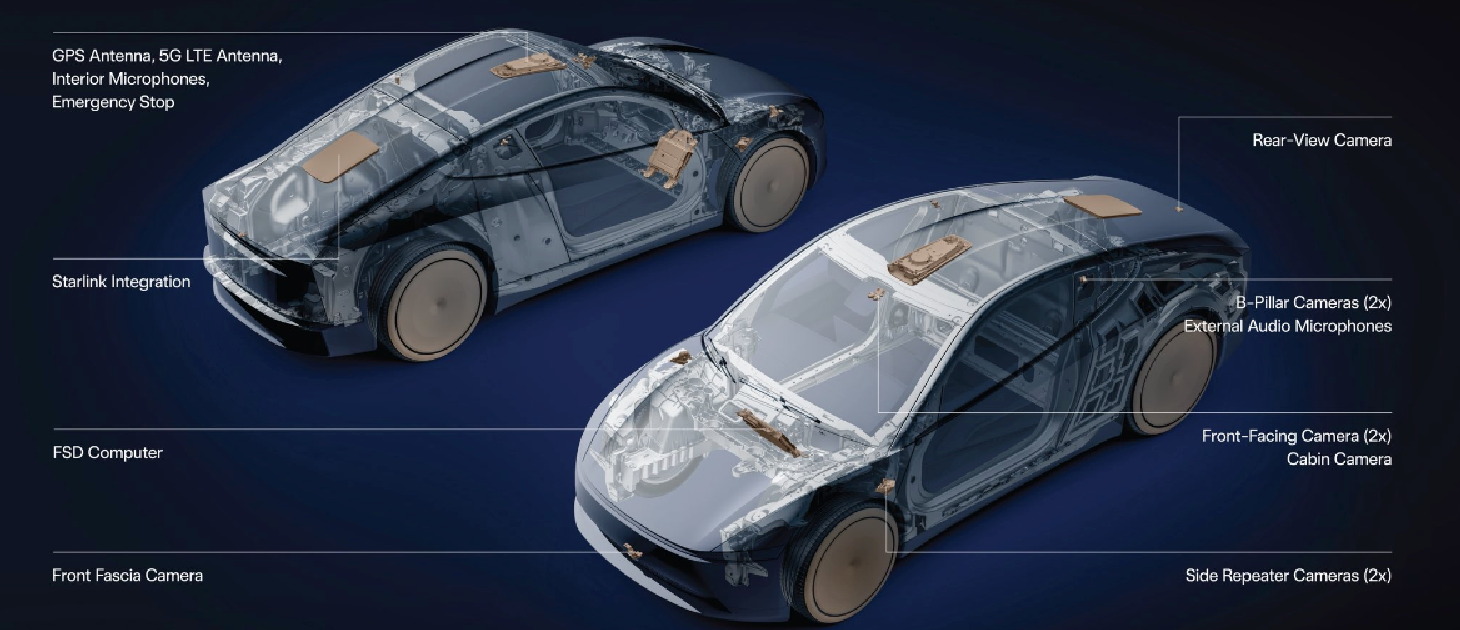
Tesla and Starlink have officially confirmed that SpaceX’s satellite internet technology is now directly integrated into the Cybercab, Tesla’s purpose-built autonomous robotaxi. The announcement, made through a series of technical disclosures on the social media platform X on July 20, 2026, marks a significant deepening of the technical and corporate relationship between Elon Musk’s primary ventures. A detailed cutaway diagram released by the companies illustrates a Starlink V5 antenna embedded directly into the roof structure of the Cybercab, positioned alongside the vehicle’s primary camera housing and sensor suite. This hardware integration suggests that every production Cybercab will possess the native capability to communicate with SpaceX’s low-Earth orbit (LEO) satellite constellation, providing a high-speed data link independent of terrestrial cellular networks.
While the reveal provides a clear look at the physical placement of the hardware, it has raised significant questions regarding the necessity of satellite connectivity for a vehicle designed to operate using localized artificial intelligence. Historically, Tesla’s Full Self-Driving (FSD) philosophy has centered on "edge computing," where the vehicle’s onboard computer—specifically the AI4 hardware suite—processes all environmental data and makes driving decisions in real-time without requiring an active internet connection. The integration of Starlink V5 represents a shift in how Tesla envisions the operational redundancy and fleet management of its autonomous taxi service.
Technical Specifications and Hardware Integration
The Starlink V5 hardware, as depicted in the official schematics, is a specialized, low-profile phased-array antenna designed specifically for automotive integration. Unlike the consumer-grade "Starlink Mini" or the larger "Flat High Performance" dishes used in maritime and aviation sectors, the V5 unit appears to be a bespoke solution tailored for the aerodynamic and aesthetic requirements of the Cybercab. It is situated in a dedicated "Starlink Integration" block at the highest point of the vehicle’s chassis, ensuring a clear line of sight to the sky.
The integration of high-speed satellite internet serves several potential technical functions. While the driving logic remains onboard, the Cybercab requires massive data throughput for non-driving tasks. This includes the streaming of high-definition entertainment for passengers—who, in a car without a steering wheel or pedals, will be focused entirely on infotainment—as well as the constant uploading of "anomalous" driving data to Tesla’s training supercomputers. Furthermore, a persistent, low-latency connection is critical for fleet dispatching and remote teleoperation. In scenarios where the autonomous system encounters a situation it cannot navigate, such as a complex construction zone or a novel traffic pattern, remote human monitors may need to provide high-level guidance. Satellite connectivity ensures that these "remote interventions" can occur even if the vehicle enters a cellular dead zone.

Chronology of the Cybercab and SpaceX Partnership
The journey toward the integrated Cybercab has been marked by several years of hardware evolution and corporate maneuvering.
- October 2024: Tesla officially unveils the Cybercab prototype during the "We, Robot" event. The vehicle is presented as a two-seater with inductive charging and no physical controls.
- Early 2025: SpaceX begins testing Starlink "Direct-to-Cell" technology, aimed at providing basic connectivity to unmodified smartphones. However, the bandwidth requirements for autonomous vehicle fleets necessitate a dedicated terminal rather than a simple cellular link.
- February 2026: Reports emerge of a "mega-deal" between SpaceX and xAI, Musk’s artificial intelligence firm, which signaled a consolidation of resources across the Musk ecosystem.
- May 2026: Speculation regarding a formal merger or deep-tier partnership between Tesla and SpaceX intensifies as Tesla begins utilizing SpaceX’s Starshield infrastructure for its internal logistics and factory communications.
- July 2026: The current announcement confirms that the Starlink V5 terminal is a standard production feature of the Cybercab, moving the technology from the experimental phase into the manufacturing pipeline.
The timing of this announcement is particularly notable given Tesla’s current production status. The company has begun manufacturing Cybercab units at its Texas and Nevada facilities, despite the fact that unsupervised autonomous driving remains legally restricted to specific geofenced zones in select U.S. cities.
The Connectivity Paradox: Urban Geofencing vs. Satellite Reach
A point of contention among industry analysts is the discrepancy between the Cybercab’s current operational zones and the strengths of the Starlink network. As of mid-2026, Tesla’s unsupervised robotaxi service is limited to dense metropolitan areas, including Austin, Houston, Dallas, and a highly mapped corridor in Miami. These urban environments are characterized by robust 5G and LTE coverage provided by traditional telecommunications carriers.
Satellite internet, by contrast, is most effective in rural or remote areas where terrestrial infrastructure is sparse or non-existent. In dense urban "canyons" with tall buildings, satellite signals can often be obstructed, making cellular networks the more reliable option for city-based robotaxis. This has led to two schools of thought regarding the Starlink integration:
- Global Scalability: Tesla may be future-proofing the Cybercab for a global rollout where it cannot rely on the inconsistent cellular infrastructure of various international markets. By having Starlink built-in, a Cybercab could theoretically operate in remote tourist destinations, rural highways, or developing regions with the same level of connectivity as a car in downtown Austin.
- Redundancy Requirements: For a vehicle with no human driver, any loss of connectivity is a liability. If a robotaxi loses its cellular signal in a tunnel or a signal "dead spot," the fleet operator loses the ability to track the vehicle or provide remote assistance. Starlink provides a secondary, independent layer of communication that ensures the vehicle is never truly "offline."
Economic and Corporate Implications
The integration of Starlink V5 into the Tesla fleet represents a significant cross-company revenue stream. By embedding the hardware into every Cybercab, Tesla effectively creates a massive captive market for SpaceX’s Starlink subscription services. If Tesla successfully deploys a fleet of hundreds of thousands—or millions—of robotaxis, the recurring monthly service fees paid by Tesla (or the vehicle owners) to SpaceX would amount to billions of dollars in annual revenue.
Critics have pointed to this as another example of "self-dealing" within the Musk-led conglomerate. Similar concerns were raised when Tesla invested $2 billion in xAI and when SpaceX absorbed certain AI-related assets in late 2025. From a shareholder perspective, the arrangement ensures that Tesla’s capital remains within the Musk ecosystem, though it also raises questions about whether Tesla is paying for a service (satellite internet) that may currently be redundant for its urban-focused fleet.
However, from a strategic standpoint, the move allows Tesla to verticalize its connectivity in the same way it verticalized its battery production and software stack. By owning both the vehicle and the satellite network it communicates with, Tesla avoids reliance on third-party telecom providers like AT&T or Verizon, who may have different priorities regarding data caps, latency guarantees, and infrastructure deployment.
Official Responses and Market Reaction
While Tesla and SpaceX have limited their official communications to technical diagrams and brief statements on X, the broader industry has reacted with a mix of intrigue and caution. Representatives from competing autonomous firms, such as Waymo and Zoox, have traditionally relied on multi-carrier cellular redundancy (using multiple SIM cards from different providers) to ensure connectivity. Tesla’s move to a dedicated satellite link is a first for the industry.
Industry analysts suggest that this integration may also be a play for the "Premium Connectivity" market. Tesla currently charges a monthly fee for features like live traffic and video streaming in its consumer vehicles. In a Cybercab, where the passenger’s primary activity is expected to be digital consumption, a high-speed Starlink connection could be marketed as a superior service compared to the cellular-based entertainment systems of rival ride-share platforms.
Broader Impact on the Autonomous Landscape
The integration of Starlink into the Cybercab could set a new standard for the "Internet of Vehicles" (IoV). As autonomous vehicles move from the testing phase to mass-market adoption, the demand for data will grow exponentially. A fleet of self-driving cars acts as a massive mobile sensor array, constantly mapping the world and feeding that data back to a central "brain."

If Tesla’s vision of a Starlink-powered fleet proves successful, it may force other automakers to seek similar satellite partnerships. We could see future collaborations between companies like Amazon (via Project Kuiper) and traditional OEMs like Ford or General Motors.
Ultimately, the Cybercab-Starlink integration is about more than just internet access; it is about establishing a proprietary, global infrastructure for the next generation of transportation. While the "why" remains debated in the context of today’s urban testing, the "how" is now clear: Tesla is building a car that is as much a part of the sky as it is the road. The Starlink V5 terminal represents a bet that the future of autonomy is not just about local intelligence, but about a constant, unshakeable link to the global data grid, regardless of where the road leads.
Related posts: