House Speaker Mike Johnson Sends Lawmakers Home Early to Avoid Contentious Impeachment Vote on Pentagon Chief Pete Hegseth


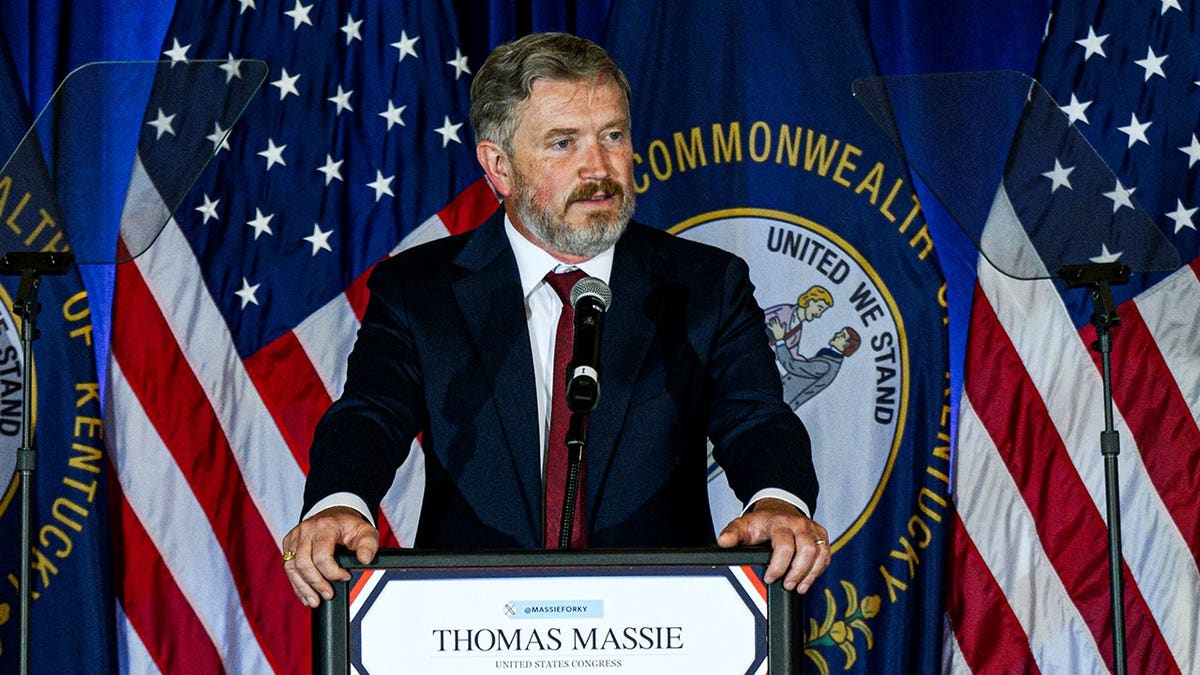
WASHINGTON — In a high-stakes legislative maneuver that has abruptly upended the final days of the congressional calendar, House Speaker Mike Johnson, R-La., has opted to send lawmakers home early, effectively dodging an impending and potentially explosive showdown over the leadership of the Pentagon. The decision comes directly on the heels of Representative Thomas Massie, R-Ky., filing eight formal articles of impeachment against Defense Secretary Pete Hegseth, a move that under strict House rules would have forced the chamber to consider the matter on the legislative floor.
Instead of addressing the constitutional crisis and high-profile intra-party dispute, the House abruptly wrapped up its business, leaving a scheduled session vacant and ensuring that the lower chamber will not reconvene to conduct official business until after the conclusion of the midterms in mid-November. The maneuver has immediately ignited a fierce debate among political analysts, congressional insiders, and lawmakers regarding the lengths to which congressional leadership will go to shield vulnerable members from difficult votes ahead of an election cycle.
The Anatomy of an Impeachment Gambit
The parliamentary drama began when Representative Massie, known for his fiercely independent streak and willingness to challenge institutional norms from both sides of the aisle, introduced eight distinct articles of impeachment targeting War Secretary Pete Hegseth. Under the standing rules of the House of Representatives, privileged resolutions—such as those dealing with the impeachment of a civil officer of the United States—carry high procedural priority. Once introduced by a member, the leadership cannot simply sweep them under the rug indefinitely; the chamber is generally required to address them within a specific legislative timeframe, typically by the next legislative day.
For Speaker Johnson and the House Republican leadership team, this procedural requirement presented a severe political dilemma. Had the chamber remained in session to take up Massie’s resolution, the standard parliamentary playbook for the majority party would have been to introduce a "motion to table."

A motion to table is a procedural tool designed to kill a measure outright without debating its merits or taking a direct, up-or-down vote on the underlying issue. In practical terms, voting to table Massie’s resolution would have meant lawmakers were voting merely to set aside the impeachment push, rather than recording a definitive "yes" or "no" on whether Pete Hegseth should be impeached.
Even with this procedural safety valve, however, leadership was clearly wary of the political fallout. Taking any roll-call vote associated with the removal or censure of a high-profile cabinet official like the Defense Secretary carries significant risk. It forces lawmakers—particularly moderates and those in competitive swing districts—to go on the record regarding executive branch accountability, a vote that political opponents can readily weaponize on the campaign trail.
Massie’s Accusations and Leadership’s Calculus
In interviews following the sudden adjournment, Representative Massie made no secret of his belief that Speaker Johnson engineered the early recess explicitly to shield the caucus from a deeply uncomfortable procedural vote.
When pressed by congressional reporters on whether the impeachment articles or the subsequent motion to table would have actually survived a floor vote, Massie offered a candid assessment. "A vote on a motion to table. He may not have survived that vote," Massie suggested, implying that enough Republican dissenters and unified opposition lawmakers might have broken ranks to defeat the motion to table.
If the motion to table had failed, the House would have been forced to proceed directly to a substantive debate and subsequent vote on the articles of impeachment themselves. Such an outcome would have represented a catastrophic loss of control for the Speaker’s office, thrusting the military leadership directly into the center of a bitter congressional trial just weeks before voters head to the polls for the midterm elections.

By pulling the plug on the legislative week and sending members back to their districts ahead of schedule, Johnson effectively short-circuited the procedural clock. Without a quorum or an active legislative session tomorrow, the clock pauses, the resolution stalls, and the immediate crisis is averted—at least until Congress returns to Washington after the midterms.
Background and Context: Tensions at the Pentagon
The decision to file articles of impeachment against Defense Secretary Pete Hegseth marks a dramatic escalation in tensions between the legislative branch and the executive branch’s national security apparatus. Since taking office, Hegseth has remained a polarizing figure at the helm of the Department of Defense, navigating a complex landscape of defense policy reforms, personnel shifts, and intense congressional oversight.
Critics, including Massie, have targeted Hegseth over a series of operational decisions, policy implementations, and administrative actions that they argue cross constitutional or statutory lines. While details of the eight specific articles range across various grievances, the overarching thrust of the impeachment push focuses on allegations of executive overreach and maladministration within the Pentagon.
The Department of Defense has consistently defended Hegseth’s leadership, pointing to ongoing efforts to streamline military readiness, refocus the armed forces on core strategic deterrents, and implement the administration’s broader defense agenda. Allies of the Defense Secretary within the House have dismissed Massie’s impeachment articles as a theatrical distraction orchestrated by a perennial legislative outlier rather than a serious constitutional inquiry.
Procedural Mechanics and the Power of the Speaker
The events underscore the immense power wielded by the Speaker of the House in controlling the legislative calendar. Under the rules of the House, the Speaker holds primary authority over recognizing members and scheduling when the House convenes and adjourns.
While privileged resolutions are designed to prevent leadership from completely burying measures favored by individual members, they are not entirely immune to strategic scheduling. By utilizing routine adjournment motions—which require only a simple majority of members present to pass—leadership can effectively clear the board and reset the legislative environment.
However, utilizing an early recess to sidestep a high-profile controversy is not without political risk. Critics from both the progressive left and the populist right have seized upon the early departure as evidence of institutional cowardice. Opponents argue that by sending lawmakers home early, leadership is actively dodging accountability and denying the American public a transparent debate on the conduct of top-tier executive branch officials.
Broader Implications for the Midterms and Beyond
As lawmakers disperse across the country to campaign in the final stretch of the midterm elections, the shadow of the aborted impeachment vote will undoubtedly follow them. For vulnerable incumbents, the avoidance of a recorded vote on Hegseth’s tenure provides temporary relief, insulating them from immediate attack ads funded by opposing political action committees.
At the same time, the maneuver keeps the issue alive as a narrative point. Challengers are likely to frame the early adjournment as proof of a dysfunctional Congress incapable of handling serious oversight responsibilities, pointing to the shelved articles of impeachment as an example of leadership shielding political allies from scrutiny.
When Congress eventually returns to Washington in mid-November for the post-election lame-duck session, the political landscape will have fundamentally shifted depending on the outcome of the midterms. Whether Representative Massie chooses to reintroduce his eight articles of impeachment against Defense Secretary Pete Hegseth in a newly composed or returning Congress remains to be seen. What is certain, however, is that the fundamental tension between executive authority and congressional oversight—magnified by the procedural mechanics of the House floor—will continue to serve as a central battleground in American politics.