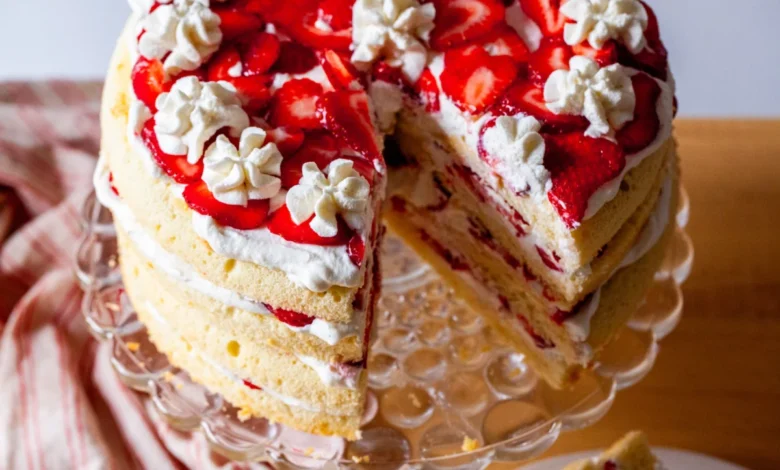
The culinary landscape of home baking has witnessed a significant evolution in technique and accessibility over the past two decades, a trend exemplified by the recent release of a refined Strawberry Chiffon Shortcake recipe by influential food authority Deb Perelman. Originally introduced in 2007 during the early stages of the digital food media movement, the recipe has undergone a rigorous nearly 20-year modernization process. The 2026 iteration addresses long-standing technical challenges associated with foam-based cakes, streamlining complex procedures while enhancing structural integrity and shelf life. This update marks a shift in contemporary pastry philosophy, moving away from the rigid, "fussy" protocols of mid-century baking toward more resilient, "real-life" methodologies that prioritize both flavor and logistical feasibility for the domestic kitchen.

The Evolution of the Chiffon Cake: A Historical Context
To understand the significance of the 2026 refinement, one must consider the origins of the chiffon cake itself. Invented in 1927 by Harry Baker, a Los Angeles insurance agent turned caterer, the chiffon cake was the first new cake category in 100 years. Baker kept the recipe a secret for two decades, serving the light, airy dessert to Hollywood royalty at the Brown Derby restaurant. In 1947, he sold the recipe to General Mills, and Betty Crocker subsequently marketed it as "the first new cake in 100 years," praising its unique combination of the lightness of an angel food cake with the richness of a butter cake.
The secret to Baker’s success was the substitution of vegetable oil for solid shortening or butter. Because oil remains liquid at room temperature and even when chilled, chiffon cakes possess a moistness and "melt-in-the-mouth" quality that traditional sponges often lack. However, the technical requirements—meticulous egg white aeration, precise sifting, and the use of specialized flours—often intimidated home bakers. The 2007 version of the Strawberry Chiffon Shortcake followed these traditional, somewhat rigid lines, utilizing cake flour, superfine sugar, and an uneven ratio of egg components that required multiple mixing bowls and high levels of precision.

Technical Innovations and Structural Refinements
The 2026 "perfected" model introduces several key departures from traditional chiffon preparation. Perelman’s updated methodology addresses the common "dip" or "shrinkage" that plagues foam cakes as they cool. By implementing a "counter-drop" technique—physically dropping the cake pans from a height of several inches immediately upon removal from the oven—the baker forces a release of steam and stabilizes the crumb structure. This prevents the internal air cells from collapsing as the temperature fluctuates.
Furthermore, the cooling process has been optimized. Traditional wisdom dictates that chiffon cakes must be cooled upside down to prevent the weight of the cake from crushing its own delicate structure. The updated recipe reinforces this by utilizing sprayed cooling racks to prevent the cake from adhering too aggressively to the cooling surface, while still maintaining the necessary suspension.

In terms of ingredient composition, the 2026 recipe simplifies the pantry requirements. While the original 2007 version relied on specialized superfine sugar and cake flour, the refined version demonstrates that a high-quality result can be achieved through superior mixing techniques rather than exclusive ingredients. The inclusion of sour cream or crème fraîche in the whipped cream assembly serves a dual purpose: it provides a sophisticated tang that cuts through the sweetness of the strawberries and acts as a chemical stabilizer, allowing the cream to hold its shape for several days without weeping or losing volume.
Chronology of Recipe Development
The development of this perfected shortcake follows a clear timeline of professional growth and consumer feedback:

- June 2007: The original Strawberry Chiffon Shortcake is published. It is characterized by its "towering, featherweight" nature but criticized for being "stiff and lean" and overly complex to prepare.
- 2007–2025: The recipe remains a staple of the "Smitten Kitchen" archives, though it is often viewed as a "project cake" due to the requirement for three separate mixing bowls and specialized sifting.
- Early 2026: The recipe enters a "Refresh Queue," a process where older digital content is re-evaluated against modern baking standards and feedback from a global community of home cooks.
- June 2026: The "Perfected" version is released, featuring a 4-layer 9×13-inch supersized option, simplified mixing steps, and a focus on longevity.
Data-Driven Results and Longevity Analysis
One of the most notable findings in the 2026 update is the cake’s exceptional shelf life. Data collected during the testing phase indicates that the chiffon layers remain fresh at room temperature for five to six days. This is a significant improvement over traditional sponge cakes, which typically begin to staling within 24 to 48 hours.
The fully assembled cake, including the stabilized whipped cream and fresh strawberries, also maintains its integrity for nearly a week when refrigerated. This longevity is attributed to the oil-based crumb, which does not harden in the cold, and the addition of acidic stabilizers (lemon juice in the cake and sour cream in the frosting) which inhibit certain types of structural degradation.

| Attribute | 2007 Original Version | 2026 Perfected Version |
|---|---|---|
| Complexity | High (Multiple bowls, sifting) | Moderate (Streamlined mixing) |
| Texture | Stiff, Lean | Weightless, Melt-in-mouth |
| Shelf Life | 2-3 Days | 5-6 Days |
| Stability | Prone to center-dipping | Stabilized via counter-drop |
| Whipped Cream | Standard (Prone to weeping) | Stabilized with Sour Cream/Crème Fraîche |
Public Reception and Social Impact
The release of the perfected recipe has been met with immediate enthusiasm within the culinary community. During a recent high-profile social gathering, witnesses reported that a supersized version of the cake was "devoured frantically" by guests, who bypassed traditional plating in favor of consuming the dessert directly from the serving platters.
Testimonials from those present describe the experience as a "weightless" dessert that defies the typical heaviness of summer shortcakes. One guest noted that the cake’s texture was so light that "thirds" were necessary to satisfy the palate, suggesting a high level of "craveability" and consumer satisfaction. This reaction underscores a broader trend in the 2020s toward "comfort-glamour"—desserts that look spectacular and professional but retain a homemade, approachable soul.

Broader Implications for the Baking Industry
The success of the Strawberry Chiffon Shortcake update reflects a larger movement in the food industry toward "evergreen content optimization." As digital archives grow, creators are finding that refining existing masterpieces is often more valuable to the consumer than constantly generating new, unproven concepts.
Moreover, the "Chiffon Cake Era" signaled by Perelman suggests a return to classic American pastry but through a lens of modern efficiency. By removing the barriers of "fussy" baking—such as the need for specialized sugars or an excessive number of bowls—the recipe democratizes high-end pastry. It proves that the "science" of baking, such as the physics of the counter-drop or the chemistry of stabilized cream, can be translated into simple, actionable steps for the average person.

In conclusion, the Strawberry Chiffon Shortcake, Perfected, is more than a mere recipe update; it is a case study in the maturation of home baking. It acknowledges that while the foundational principles of pastry remain constant, the methods by which we achieve them must adapt to the "real life" constraints of the modern cook. As we move further into the mid-2020s, this balance of technical excellence and practical simplicity is likely to become the gold standard for culinary content. The enduring popularity of this "weightless" dessert serves as a reminder that in the world of food, the most successful innovations are often those that make the extraordinary feel achievable.