The modern culinary landscape is perpetually searching for the intersection between comfort food and efficiency, a balance that frequently eludes busy households during peak autumn and winter scheduling crunches. As families navigate the overlapping demands of the academic calendar, professional obligations, and seasonal transitions, traditional cooking methods often fall by the wayside. In response to these perennial time constraints, home economics and culinary publishing have increasingly emphasized one-pan meal preparation as a viable strategy for maintaining nutritional and sensory standards without incurring burdensome cleanup. A notable addition to this genre is the streamlined skillet pierogi preparation, which inverts conventional cooking wisdom to deliver a complex, multidimensional meal in under thirty minutes utilizing minimal kitchen hardware.
Main Facts and Culinary Methodology
The conventional preparation of pierogi—a traditional Central and Eastern European dumpling typically filled with potatoes, cheese, sauerkraut, or meat—usually dictates a two-step process: boiling the unleavened dough parcels until cooked through, followed by a secondary sauté in butter or oil to achieve a crisp exterior. While effective, this methodology requires multiple vessels, including a large stockpot for boiling and a separate skillet for frying, thereby increasing the volume of post-meal sanitation.

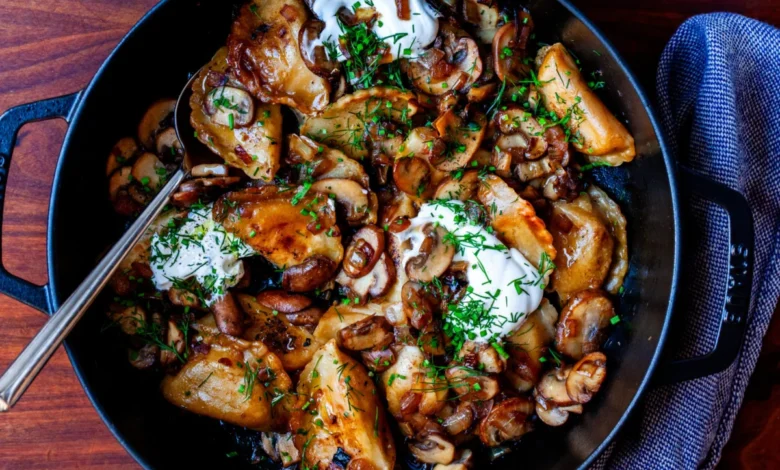
The revised skillet technique bypasses the boiling stage entirely by leveraging the thermal capacity of a single, deep, lidded frying pan. By initiating the cooking process with the aromatic components—specifically, onions caramelized to golden edges and garlic-infused mushrooms—the pan develops a foundational layer of savory depth. Once the vegetables are removed temporarily, frozen pierogi are introduced directly to the heated fat in a single layer, allowing the base to achieve a distinct golden crust.
Water is then introduced to the hot pan to generate a controlled steam environment, covered tightly to cook the interior potato filling thoroughly without requiring a separate boiling phase. The vegetables are subsequently reunited with the dumplings, and the dish is finished with a measured application of acidity via white vinegar, cooling dairy in the form of sour cream, and fresh herbaceous notes from dill and chives. This method yields a textural contrast characterized by a partially crispy and chewy exterior encasing a soft, stuffy potato center, all accomplished within a single vessel requiring only a cutting board, a knife, a fork, and the pan itself for cleanup.
Chronology of the One-Pan Cooking Movement
The evolution of one-pan and one-pot cookery as a dominant mainstream culinary trend can be traced through the systematic acceleration of modern domestic schedules over the past two decades.

In the early 2000s, the proliferation of work-from-home arrangements and dual-income households began to erode the traditional hours allocated for evening meal preparation. Culinary media initially responded with slow-cooker recipes, which shifted the time investment to the morning hours. However, the subsequent demand for immediate, same-night solutions spurred the development of sheet-pan dinners in the 2010s.
By the mid-to-late 2010s, food writers and recipe developers began applying the sheet-pan methodology to stovetop skillets, yielding viral successes such as crispy tortellini with peas and prosciutto in 2016 and skillet ravioli variations by 2019. These recipes challenged the dogma that stuffed pasta products must undergo preliminary boiling, demonstrating that direct pan-frying combined with controlled steaming could successfully hydrate and cook commercial frozen or fresh pasta products simultaneously. The current iteration of the skillet pierogi represents the maturation of this technique, extending the application from Italian-style pasta to traditional Slavic dumplings, thereby broadening the scope of global comfort foods adaptable to rapid weeknight execution.
Supporting Data and Nutritional Metrics
Analyzing the economic and temporal efficiency of single-skillet meal preparation reveals distinct advantages for household resource management. Market analyses of grocery expenditure indicate that frozen commercial pierogi remain among the most cost-effective shelf-stable carbohydrate sources available in mainstream supermarkets, frequently retailing at a significantly lower cost per serving compared to fresh artisanal pastas or specialized grains.

From a temporal perspective, empirical kitchen tests demonstrate that the traditional boil-then-sauté method for pierogi requires an average active preparation and cleanup time of 45 to 55 minutes, largely due to the time required to bring large volumes of water to a rolling boil and the subsequent washing of multiple pots, colanders, and pans. Conversely, the single-skillet method reduces active and passive preparation time to a window of 25 to 30 minutes.
Furthermore, water consumption is reduced by nearly 95 percent compared to traditional pot-boiling methods, aligning with broader consumer trends toward resource conservation in domestic routines. Nutritional profiles of the dish maintain a balance of complex carbohydrates from the potato and dough casing, micronutrients and dietary fiber from the mushroom and onion matrix, and lipids from butter, olive oil, and sour cream, providing sustained caloric density suitable for active autumn and winter months.
Industry Perspectives and Expert Commentary
Culinary professionals and food editors note that the adaptation of ethnic comfort foods into rapid, accessible formats reflects a broader democratization of home cooking. By removing intimidation factors associated with traditional techniques—such as monitoring multiple burners or managing precise boiling times—cooks of varying skill levels are more inclined to incorporate culturally diverse ingredients into their regular meal rotations.

Food historians observe that pierogi and similar filled dumplings have historically functioned as utilitarian peasant fare designed to utilize available, inexpensive pantry staples such as potatoes, flour, and stored root vegetables. The modern skillet adaptation honors this utilitarian ethos while recalibrating it for contemporary time constraints. Rather than diluting the integrity of the dish, the reduction of operational steps preserves the essential textural elements—crisp pan-fried skins paired with yielding fillings—while eliminating systemic kitchen friction.
Furthermore, culinary experts emphasize the importance of sensory balance in rapid weeknight cooking. The inclusion of acidic agents, such as white vinegar, alongside rich dairy components like sour cream, addresses a common pitfall of quick-assembly meals: the tendency toward one-dimensional richness. By introducing sharp acid and fresh herbs at the final juncture, the dish achieves a dynamic flavor profile typically associated with longer, multi-stage cooking processes.
Broader Impact and Domestic Implications
The mainstream adoption of simplified, single-vessel cooking techniques carries notable implications for domestic labor distribution, household economics, and nutritional habits. As time poverty continues to affect modern families, the reduction of post-dinner cleanup time—restricted in this instance to a single skillet, a cutting board, and basic eating utensils—directly mitigates the cognitive load associated with daily meal management.

By demonstrating that convenience does not necessitate reliance on ultra-processed, pre-assembled convenience meals or expensive takeout options, streamlined recipes empower households to maintain control over ingredient sourcing, sodium intake, and budgetary expenditures. The successful translation of traditional foods like pierogi into efficient weekday formats underscores the adaptability of global culinary traditions to the rhythms of contemporary life, ensuring that heritage recipes continue to find a functional place on modern dining tables.