Downturn in the Chinese Industry Leads Automotive World to Revise 2026 Global Production Forecast Downward by 3.1 Percent

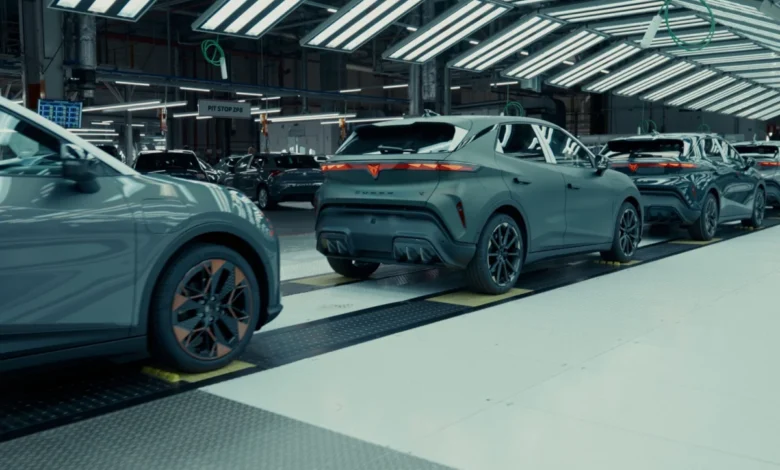
The global automotive landscape is facing a significant recalibration as the industry’s primary growth engine of the last two decades, China, begins to cool under the weight of domestic saturation and shifting economic priorities. According to the latest light vehicle production forecast released by Automotive World, the anticipated global output for the year 2026 has been revised downward to 76.5 million units. This represents a 3.1% reduction from previous estimates, a figure that, while seemingly modest in percentage points, translates to a massive shortfall of approximately 2.5 million vehicles. Analysis of the data reveals a striking geographical concentration for this decline: nearly the entirety of the global production deficit originates from the Chinese market, signaling a profound transition in how the world’s largest automotive sector operates.
The Chinese Contraction: A Market Reaching Its Limits
For years, the Chinese automotive industry was characterized by exponential growth, fueled by aggressive government subsidies, a rapidly expanding middle class, and an ambitious transition toward New Energy Vehicles (NEVs). However, the July update from Automotive World suggests that this era of unbridled expansion has hit a structural ceiling. Chinese production for 2026 is now expected to top out at 18.7 million units, marking a sharp 17% reduction from earlier, more optimistic projections.
This bearish outlook is not merely a reflection of temporary economic headwinds but points to a deeper issue of market saturation. Domestic automakers and industry associations are increasingly vocal about the "involution" of the Chinese market—a term used locally to describe intense, cutthroat competition that yields diminishing returns. Currently, China’s manufacturing capacity far exceeds what its domestic consumers can absorb. With the "first-time buyer" wave largely concluded in major urban centers, the market has shifted toward a replacement cycle, which traditionally sees slower growth rates.
Furthermore, the cooling of the Chinese economy, characterized by a struggling real estate sector and cautious consumer spending, has dampened the appetite for big-ticket purchases. For major domestic players such as BYD, Chery, and Geely, this revision serves as a stark warning. While these companies have successfully dominated the domestic EV space, the surplus of production means they must either aggressively scale back their manufacturing targets or find international outlets for their excess inventory—a task made increasingly difficult by rising geopolitical tensions.
Regional Rebalancing: India and North America as Growth Pillars
While China’s downturn drags the global aggregate into negative territory, the Automotive World report highlights a significant regional rebalancing. Production forecasts for other key markets have been revised upward, suggesting that the global automotive center of gravity is shifting toward emerging economies and resilient Western markets.
India stands out as the most significant beneficiary of this realignment. The forecast for Indian light vehicle production has been revised upward by a staggering 18%. This surge is driven by a combination of a burgeoning domestic middle class and the government’s Production Linked Incentive (PLI) scheme, which has encouraged both local and foreign manufacturers to establish deeper footprints in the country. India is increasingly seen not just as a consumer market, but as a viable alternative export hub to China.
In North America, the outlook remains cautiously optimistic. Production estimates for Mexico have been raised by 6.1%, while the United States has seen a 4.4% upward revision. The growth in Mexico is largely attributed to the "nearshoring" trend, as manufacturers seek to shorten supply chains and mitigate the risks associated with trans-Pacific logistics. The U.S. increase reflects a resilient consumer base and the legislative tailwinds of the Inflation Reduction Act (IRA), which has incentivized the domestic assembly of electric vehicles and batteries.
Europe, despite facing high energy costs and a complex regulatory transition toward zero-emission vehicles, has managed a modest 0.8% upward revision. This suggests a stabilization of the European market following years of supply chain disruptions caused by the pandemic and the conflict in Ukraine. However, the slim margin of growth underscores the fragility of the European recovery compared to the more robust expansions seen in India and North America.
A Chronology of Volatility: From Pandemic to Saturation
To understand the 2026 forecast, it is essential to view it within the context of the tumultuous half-decade preceding it. The global automotive industry has moved through several distinct phases since 2020:
- The Supply Shock (2020–2022): The COVID-19 pandemic and the subsequent semiconductor shortage decimated production schedules. During this period, demand far outstripped supply, leading to record-high vehicle prices and a backlog of orders.
- The Recovery and EV Surge (2023): As supply chains normalized, production surged to meet pent-up demand. China led this charge, with a massive push into EVs supported by government mandates. This period created an illusion of infinite growth potential.
- The Reality Check (2024): High interest rates globally began to bite, making auto loans more expensive. In China, the price war initiated by major players like Tesla and BYD began to erode profit margins, signaling that the market was becoming oversupplied.
- The Structural Realignment (2025–2026): The current phase, as reflected in the Automotive World update, shows the industry coming to terms with overcapacity in China and the need for geographical diversification.
Geopolitical Headwinds and Trade Barriers
The downward revision of Chinese production is inextricably linked to the geopolitical climate. As Chinese automakers attempted to export their way out of domestic saturation, they encountered significant trade barriers. The European Union’s anti-subsidy investigation into Chinese EVs and the United States’ decision to maintain and increase Section 301 tariffs have created a "Fortress" mentality in Western markets.
Industry analysts suggest that these trade tensions are forcing Chinese brands to rethink their global strategy. Rather than exporting finished units from Chinese factories—which are now subject to high tariffs—brands like BYD and Geely are being forced to invest in localized production in regions like Southeast Asia, South America, and even Europe. This shift naturally reduces the production output within China’s borders, contributing to the 17% downward revision for domestic Chinese manufacturing.
Implications for the Global Supply Chain
The 3.1% global reduction is more than just a number for automakers; it has a cascading effect on the entire Tier 1 and Tier 2 supplier ecosystem. A shortfall of 2.5 million vehicles means millions of fewer tires, semiconductors, seats, and battery cells required.
For suppliers heavily invested in the Chinese market, this forecast is particularly sobering. Many component manufacturers built capacity based on the assumption that China would continue to grow at a high-single-digit pace. The 18.7 million-unit cap for 2026 implies that many of these factories will operate well below their break-even points. Conversely, the 18% jump in India and the growth in Mexico present a scramble for suppliers to relocate or expand facilities in those regions to stay close to the shifting production hubs.
The EV Transition: A Double-Edged Sword
The downturn also highlights a critical inflection point in the transition to electric vehicles. China’s aggressive move toward electrification was the primary driver of its production volume. However, the "EV fatigue" observed in some markets, combined with the removal of purchase subsidies in China, has led to a more pragmatic consumer approach.
While EVs remain the future, the 2026 forecast suggests a "hybrid" reality where internal combustion engines (ICE) and plug-in hybrids (PHEVs) maintain a more significant share of the production mix than previously anticipated. This is particularly true in markets like the U.S. and India, where charging infrastructure has not kept pace with vehicle production capabilities.
Conclusion and Future Outlook
The July update from Automotive World serves as a definitive marker of the end of the "Chinese Hyper-growth" era. The 3.1% downward revision in global production is a direct consequence of a market that over-expanded and is now undergoing a painful but necessary correction.
While the 2.5 million-unit shortfall presents a challenge for the global industry, the growth in India, Mexico, and the U.S. offers a roadmap for a more diversified and perhaps more stable global production network. The automotive industry of 2026 will likely be one characterized by regionalization rather than globalization, as manufacturers prioritize market proximity and political stability over the low-cost, high-volume model that defined the previous decade.
For brands like BYD, Chery, and Geely, the coming years will be a test of their ability to transition from domestic champions to truly global manufacturers with localized footprints. For the rest of the world, the task will be to absorb the lessons of China’s saturation and build a more sustainable growth model that balances production capacity with genuine consumer demand. As the industry moves toward 2026, the focus will shift from "how many" cars can be built to "where" they can be built and sold profitably in an increasingly fragmented world.
Related posts: