
Tech markets face reckoning as midterm election results signal end of AI data center boom

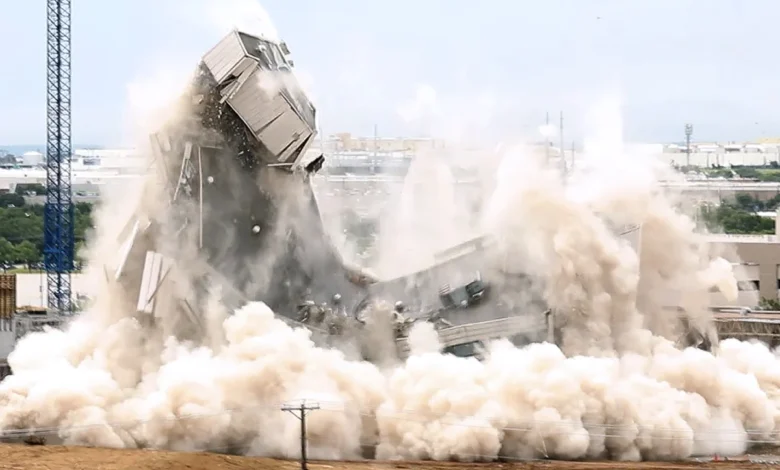
The exuberance that followed Tuesday’s election results proved to be fleeting, as a brutal reality check arrived on Thursday, triggering a massive selloff across the technology sector. While initial market reactions to the Democratic sweep of both the Senate and the House of Representatives were cautiously optimistic, the underlying policy implications regarding artificial intelligence infrastructure quickly soured investor sentiment. By midday Thursday, the tech-heavy Nasdaq had plummeted by more than 1,340 points, a staggering 5.2% decline that wiped out over $3 trillion in market capitalization. This retreat represents the most significant single-day loss for the index since the tumultuous tariff announcements of April 2025, marking a definitive end to the period of unfettered optimism that had propelled AI-linked stocks to record valuations.
The carnage was widespread, sparing few corners of the tech ecosystem. From established hyperscalers and semiconductor titans to the burgeoning gig economy and debt-heavy "neocloud" startups, the selloff functioned as a broad-based repricing of risk. The Philadelphia Semiconductor Sector index, a critical barometer for the health of the hardware industry, cratered by more than 1,000 points. Analysts noted that the index was on track for its worst daily performance since the onset of the COVID-19 pandemic in March 2020, highlighting the depth of the panic currently gripping the chip-manufacturing landscape.
A Rapid Reversal of Sentiment
To understand the volatility, one must look at the 48-hour timeline that defined this market cycle. On Tuesday, investors were focused on the political "Blue Tsunami," which many initially interpreted as a signal of continued fiscal spending. By Wednesday, the narrative shifted toward the specific outcomes of local and regional ballot measures that had been overshadowed by the national legislative results. Voters in several key technology hubs—particularly in Texas and the Southwest—had overwhelmingly approved strict new regulations aimed at curbing the explosive growth of AI data centers.
These facilities, which consume vast amounts of electricity and water, have become lightning rods for local political opposition. The legislative shift has moved beyond rhetoric; it is now becoming embedded in municipal law. By Thursday morning, the realization had fully crystallized: the era of "build-at-all-costs" for AI infrastructure is facing a major regulatory wall. This sentiment shift was underscored by the performance of industry leaders: Nvidia, the primary engine of the AI hardware trade, saw its shares slide by 8%, while Microsoft and Meta faced declines of 2.8% and 3.4%, respectively.
The Capex Mirage and the Regulatory Wall
For the past two years, the global economy has been buoyed by an unprecedented capital expenditure (capex) spree. Companies like Alphabet, Amazon, Oracle, and Microsoft have poured hundreds of billions of dollars into the physical foundations of the AI revolution. This investment cycle included not only the purchase of advanced GPUs and networking gear but also the acquisition of land, the securing of massive energy contracts, and the construction of colossal cooling and server facilities.
However, the political landscape is no longer hospitable to this expansion. During a conference organized by the Wall Street Journal, Meta President Dina Powell McCormick provided a candid assessment of the changing environment. She acknowledged that the friction involved in bringing new data centers online has increased exponentially. "Building data centers in the U.S. is going to be harder," she noted, adding that the uncertainty is forcing a strategic pivot among industry leaders. "Every hyperscaler is now thinking about whether they need to build outside the United States. Because they are enormous investments, hedging those investments is a wise thing to do."
This prospect of "infrastructure flight" is sending shockwaves through the market. If the U.S. domestic buildout slows, the demand for domestically manufactured semiconductors and networking hardware will inevitably decline, creating a secondary ripple effect across the entire supply chain.
Analyst Perspectives and Industry Projections
Dan Ives, the managing director and senior equity analyst at Yorkville Ives, issued a somber note to investors on Thursday that served to quantify the damage. Ives, who has long been one of the most vocal bulls regarding the AI transformation, adjusted his forecast, now predicting that tech industry capex growth will reach its terminal peak next year rather than in the 2028–2029 window as previously projected.
"While Big Tech and hyperscaler capex should still easily exceed $1 trillion in 2027, the growth rate into 2028 will clearly moderate significantly," Ives stated. He cited the shifting political map, specifically calling out Texas—a state that had been the primary destination for data center development—as a site of increasing regulatory difficulty. Ives estimated that at the low end, at least 10% of the planned 800 to 1,000 AI-focused data centers in the U.S. will be removed from the development roadmap entirely. Furthermore, he suggested that another 20% of these projects could face years of permitting delays, effectively stalling the capacity growth needed to sustain the current pace of AI model training.
Hardest Hit: The Semiconductor and Neocloud Sectors
The impact of the selloff was uneven, with those most dependent on the rapid buildout of data center capacity suffering the most severe losses. Micron Technology, a vital player in the memory chip sector, saw its valuation drop by roughly 14%, reflecting fears that demand for high-bandwidth memory (HBM) could soften. Similarly, Advanced Micro Devices (AMD) fell 14%, as investors questioned whether the company’s growth trajectory could withstand a permanent slowdown in U.S. infrastructure development.
The "neocloud" companies—firms that operate as agile, capital-intensive competitors to the traditional cloud giants—are in a particularly precarious position. These companies have financed their rapid expansion through significant debt loads, betting on a long-term, high-growth environment. Coreweave, a bellwether for the neocloud sector, fell 9% on Thursday, putting the firm on track for an 18% loss over a two-day period. Investors are now scrutinizing the balance sheets of these firms, concerned that they may lack the cash reserves to navigate a period of prolonged regulatory stagnation.
Conversely, Alphabet demonstrated relative resilience, finishing the day down only 1.6%. Market analysts attribute this to the company’s diversified revenue streams, particularly its dominant position in search advertising, which provides a buffer against the volatility currently plaguing the pure-play AI infrastructure firms.
Broader Economic Implications
The contraction of the data center buildout poses a broader question for the U.S. economy: What will replace the massive capital inflows that have defined the post-2023 recovery? Over the last two years, the construction, energy, and tech sectors have relied on the "AI engine" to drive job creation and GDP growth. If that engine begins to sputter due to political and regulatory constraints, the resulting vacuum may be difficult to fill.
The current situation is not merely a correction in stock prices but a fundamental reassessment of the "AI-as-a-utility" thesis. For years, the narrative has been that AI infrastructure would grow linearly and indefinitely. The events of this week have introduced a non-linear variable: the capacity for the democratic process to impose limits on industrial expansion.
As the dust settles on this historic selloff, market participants are looking toward the next quarterly earnings calls for clues on how the major hyperscalers intend to reallocate their capital. Will they pivot toward international markets, as suggested by McCormick, or will they attempt to navigate the new U.S. regulatory landscape through increased lobbying and localized community investment?
The answers to these questions will define the next chapter of the tech sector. For now, however, the market remains in a state of high alert, with investors bracing for further volatility as the reality of a constrained AI boom becomes the new baseline. The "sea of red" seen on Thursday may be a temporary panic, but the underlying concerns regarding regulatory hurdles and the sustainability of the capex cycle are likely to persist, keeping the tech sector under intense pressure for the foreseeable future.