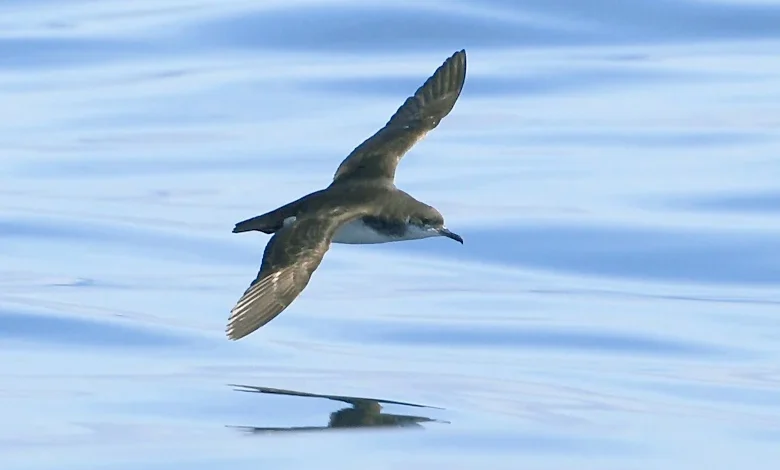
Human travelers crossing multiple time zones are intimately familiar with the physiological disorientation of jet lag—a condition where internal biological rhythms fail to align with local solar time. While this disruption has long been viewed as a uniquely human inconvenience tied to modern air travel, a groundbreaking study published in the journal Science reveals that this phenomenon is a biological reality for the Manx shearwater (Puffinus puffinus). These resilient seabirds, which navigate vast distances across the North Atlantic, effectively "jet lag" themselves during their foraging excursions, leading to measurable deviations in their migratory paths.
The Mechanism of Avian Navigation
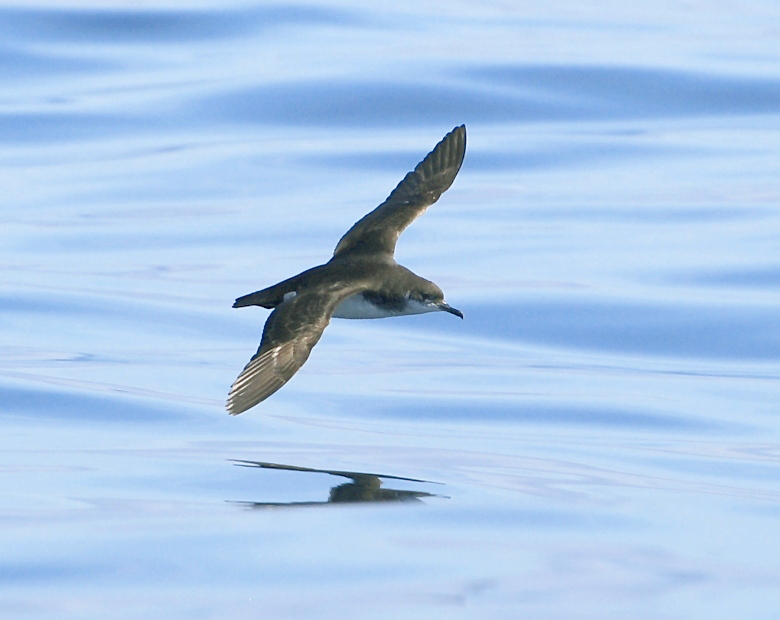
The Manx shearwater is a medium-sized seabird, comparable to a pigeon in stature, characterized by a striking black-and-white plumage and elongated wings adapted for high-efficiency gliding. These birds typically nest in subterranean burrows on coastal islands, with the United Kingdom and Ireland hosting significant portions of the global population, particularly in Wales. During the breeding season, they venture hundreds, and sometimes over 1,000 kilometers, into the open Atlantic to forage.
To return home, shearwaters rely on a sophisticated dual-navigation system. They possess an innate "map sense"—likely utilizing olfactory cues and magnetic field sensitivity—to determine their approximate location. Once the general direction is established, they employ a solar compass to maintain a precise heading. However, this solar-based navigation is inherently dependent on an accurate internal clock. Because the Sun’s position shifts across the sky throughout the day, the bird must account for time to adjust its orientation. If the bird’s internal clock is even slightly out of sync with the local solar time, its perception of the Sun’s position becomes skewed, causing it to veer off course.
A Two-Decade Investigative Timeline
The evidence for this phenomenon was not gathered overnight. The research, led by Patrick Lewin, a behavioral and sensory ecologist at the University of Oxford, builds upon a monumental longitudinal dataset. In 2004, shortly after GPS tracking technology became sufficiently miniaturized to be fitted onto birds of this size without impeding their flight, Tim Guilford and Chris Perrins initiated a long-term monitoring program.
Over the next twenty years, the research team compiled a database of 3,688 individual foraging trips conducted by 1,045 distinct birds from colonies situated along the western coast of the United Kingdom. These excursions ranged in duration from a single day to two weeks. By analyzing the "homing" phase of these trips—where birds abandon their circuitous foraging patterns to fly in a direct, high-speed line back to their burrows—the researchers were able to isolate navigational data from random movement.
The methodology involved calculating the bird’s expected path based on its last known sunrise location. By comparing the calculated trajectory against the actual GPS-recorded tracks, the researchers identified a consistent, small-scale deviation that correlated with the longitudinal distance covered during the trip.
Quantifying the Chronobiological Error
The data revealed that these birds recalibrate their internal clocks primarily at dawn and dusk. Consequently, for every degree of longitude a bird traverses between sunrise and sunset, its internal clock drifts approximately four minutes out of sync with the local solar time.
"The time shifts were tiny, with about an hour being the maximum we observed," noted Lewin. "Most deviations involved 10 to 15-minute differences. For a human, such a small shift would be imperceptible, but for a bird relying on the Sun to maintain a straight line over hundreds of kilometers, it creates a measurable compass error."
When flying east, the birds tended to veer clockwise; when flying west, they drifted anticlockwise. The researchers meticulously accounted for external variables, such as crosswinds, the Coriolis effect, and potential reliance on a magnetic compass. None of these factors accounted for the observed deviations as accurately as the hypothesis of a miscalibrated solar compass. The navigational errors induced by this "avian jet lag" reached approximately 15 degrees, a significant deviation for a long-distance traveler, yet one that the birds seem to manage with remarkable efficiency.
Navigational Resilience and Corrections
Despite the inherent instability of their solar-based navigation, Manx shearwaters rarely fail to reach their destination. The study suggests that birds utilize a secondary correction mechanism. As they near the coast or landmarks with which they are familiar, the reliance on the solar compass appears to be superseded or augmented by visual navigation.
This leads to the hypothesis that birds operate two parallel systems: a global navigation system based on the solar compass and a local, landmark-based system. When the solar compass leads to a drift, the bird’s map sense acts as a corrective feedback loop. Calculations from the study indicate that for a 1,000-kilometer trip, a shearwater might only add roughly five kilometers to its total flight distance due to this drift. This minimal cost suggests that the system, while imperfect, is highly evolved and sufficiently robust for the species’ survival.

Broader Implications for Biology and Technology
The discovery that wild animals experience jet lag has profound implications for both evolutionary biology and the development of autonomous systems. If the phenomenon is prevalent among migratory species, it suggests that many animals have evolved specific compensatory mechanisms to handle the cognitive and physical stress of time-zone shifts.
"The next step for our team is to investigate whether these time shifts affect when birds forage, the quality of food they bring back, and ultimately, their breeding success," Lewin stated. "We also need to consider whether other animals that frequently move across longitudes have developed specialized behaviors to mitigate the negative health impacts that chronic jet lag is known to cause in humans."
Beyond biology, the study offers potential insights for engineers designing bio-inspired autonomous navigation systems. Modern drones and robotic systems often rely on GPS, which can be spoofed or fail in extreme environments. Understanding how birds maintain a stable, albeit drifting, orientation through internal biological clocks could lead to more resilient, redundant navigation architectures for unmanned aerial vehicles.
Future Directions
The research team is currently looking at whether these navigational biases are more pronounced in younger, less experienced birds or if they remain constant throughout a bird’s lifetime. Furthermore, the researchers are interested in the physiological correlates of this jet lag. Do the birds experience the same sleep disturbances or metabolic changes as humans?
As the scientific community continues to analyze the 20-year dataset, the findings serve as a reminder of the complexity of animal migration. The Manx shearwater’s ability to traverse the Atlantic with such precision—despite a "clock" that is constantly ticking out of sync with its environment—is a testament to the sophistication of evolutionary adaptation. This study not only advances our understanding of avian behavior but also highlights the universal challenges of time and space that all organisms, from the smallest seabird to the human traveler, must navigate.
The full results of the study, which underscore the importance of long-term ecological monitoring in uncovering subtle biological truths, are now contributing to a broader understanding of how climate and geography influence the fundamental rhythms of life. Future research will likely focus on the genetic and neurological pathways that allow these birds to reset their internal clocks, potentially offering new perspectives on the biological nature of circadian rhythms across the animal kingdom.