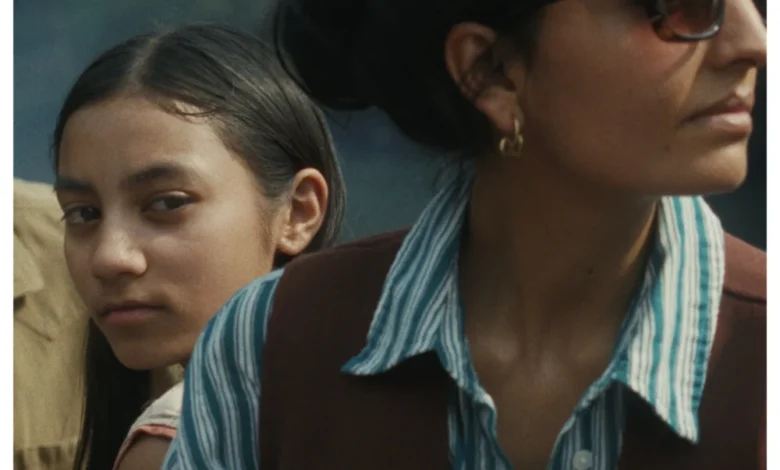
The Venice Film Festival Critics’ Week is set to unveil a compelling slate of debut features, showcasing emerging directorial talent from across the globe. Among the standout selections is "Our Share of Sand," the inaugural feature film from London-based Chilean-Indian director Shalini Adnani. This poignant drama centers on Maya, a 12-year-old girl who embarks on a journey back to rural India in an attempt to mend her fractured relationship with her estranged father. The film’s inclusion in this prestigious section, dedicated to first-time filmmakers, signals its potential to resonate with audiences and critics alike, highlighting themes of family, identity, and cultural reconnection.
The Critics’ Week program, a vital platform for discovering new voices in cinema, has consistently championed groundbreaking works since its inception. Established in 1984 as an independent parallel section of the Venice Film Festival, it aims to spotlight films that push creative boundaries and offer fresh perspectives. This year’s edition, running from September 2nd to 12th, 2021, will feature seven films in competition, all world premieres and all by first-time directors. These selections underscore the festival’s commitment to fostering new talent and reflecting the diverse tapestry of contemporary filmmaking.
Beyond Adnani’s anticipated debut, the lineup boasts a rich international flavor. Colombia makes a significant presence with two distinct entries. "The End of Times," a collaborative effort between Bibiana Rojas Gómez and Juan David Cárdenas, presents a unique fiction-documentary hybrid. This politically charged work leverages artificial intelligence to delve into the complex historical narratives of colonialism and capitalism within Colombia. Its innovative approach to storytelling suggests a critical examination of the nation’s past and its ongoing impact. Complementing this is "Meteorite," a drama by Sebastián Múnera. The film’s narrative revolves around ambitious plans to construct an amusement park on the former estate of notorious drug lord Pablo Escobar, a setting that inherently imbues the story with layers of social commentary and historical weight. The juxtaposition of leisure and a dark past provides fertile ground for cinematic exploration.
Italy, as the host nation, also features prominently in the competition. Tommaso Usberti, a Paris-based director, presents "Before the War" (Prima Della Guerra). This film, set within a Northern Italian racist milieu, follows a young man named Guido whose life takes an unexpected turn when he falls in love with Sonia, a Kosovar immigrant. The film’s exploration of prejudice, love, and societal divisions promises a nuanced and potentially challenging cinematic experience, particularly within the context of contemporary European social dynamics. The inclusion of "Before the War" in the competition slot indicates its critical appeal and thematic relevance.
The Venice Critics’ Week will commence with the out-of-competition screening of "Giaffa the Great" (Il Grande Giaffa), an existential noir directed by Marco Santi. This opening film sets a tone of introspection and genre exploration, hinting at the thematic breadth of the section. Concluding the festival’s parallel sidebar is the Italian rap musical "Rider," co-directed by Roan Johnson and the acclaimed local music producer Dade (Davide Pavanello). The film’s narrative follows a young food delivery driver whose ordinary evening takes an extraordinary turn when a large sushi order leads him to a luxurious villa on the outskirts of Milan, where he is unexpectedly invited to stay for the night. This unique blend of music, urban life, and chance encounters suggests a vibrant and contemporary closing statement for the Critics’ Week.
The seven features vying for recognition in the main competition are all testament to the power of debut storytelling. Alongside the aforementioned films, the competition includes Tunisian director Kamel Laaridhi’s dystopian drama "The H@llow Man." Set in the year 2059, the film imagines a Tunisia where a biochip meticulously regulates memory and suppresses emotion, presenting a chilling vision of technological control and its impact on the human psyche. From China, Dong Jie’s drama "Zoom In, Zoom Out" follows a young video game designer on a quest to find his missing roommate, Gao, guided by a cryptic clue discovered within an online game. This narrative threads together elements of mystery, technology, and personal connection. Rounding out the competitive entries is the Brazilian drama "London" by Victor Di Marco and Márcio Picoli, which tackles the complex dilemma faced by a young adult with a disability, offering a potentially insightful and empathetic portrayal of lived experience.
The selection of these diverse films underscores a broader trend in contemporary cinema, one that is increasingly focused on social issues, technological advancements, and the complexities of human relationships. The fact that all seven competitive films are world premieres highlights the Venice Film Festival’s role as a crucial launchpad for new cinematic voices and stories. The average age of directors in such sections often reflects a generational shift in filmmaking, with younger artists bringing fresh perspectives and innovative techniques to the forefront. While specific data on the average age of directors for this year’s Critics’ Week was not immediately available, the emphasis on "first works" inherently points towards emerging talent.
Beatrice Fiorentino, General Delegate of Venice Critics’ Week, articulated the significance of this year’s program in a statement. "Whilst the industry at large is grappling with its crises, these works are proof that cinema never stopped asserting its own cruciality," she remarked. "This cinema is fierce and independent, daring and vibrant, resolute in its reminder that our collective imagination can, and indeed must, continue to be rewritten." Fiorentino’s words highlight a resilience within the film community, emphasizing the enduring power of cinema to provoke thought, inspire change, and reflect the societal landscape, even amidst challenges faced by the industry. Her description of the selected films as "fierce and independent, daring and vibrant" suggests a program that is not afraid to tackle difficult subjects and explore unconventional narratives.
The stakes for these emerging filmmakers are significant, as all Venice Critics’ Week competition entries are eligible for the prestigious Lion of the Future award. This prize, awarded by the festival jury to the best debut film, carries a substantial $100,000 endowment, providing crucial financial support for the director’s future endeavors. Furthermore, these films compete alongside titles in the official selection for this award, underscoring the critical importance and high regard afforded to the Critics’ Week program within the broader Venice Film Festival. The Lion of the Future has a history of launching successful careers, making its award a significant milestone for any first-time director. Past winners have gone on to achieve international acclaim, validating the festival’s early support.
The 83rd edition of the Venice Film Festival is scheduled to run from September 2nd to September 12th, 2021. The official selection lineup, encompassing the main competition and other prestigious sections, was slated for announcement shortly after this report, promising further insights into the festival’s comprehensive programming. The Venice Film Festival, as one of the "Big Three" international film festivals (alongside Cannes and Berlin), holds immense cultural and economic significance, drawing filmmakers, industry professionals, and cinephiles from around the world. Its reputation for premiering critically acclaimed and commercially successful films solidifies its position as a pivotal event in the global film calendar. The Critics’ Week, as a curated section within this larger framework, benefits from the festival’s prestige while maintaining its distinct focus on debut works.
The comprehensive list of films selected for Venice Critics’ Week competition and out-of-competition slots provides a clear overview of the diverse range of stories and directorial approaches on display.
Competition Films:
-
"The End of Times" (Colombia) – Directed by Bibiana Rojas Gómez and Juan David Cárdenas. This fiction-documentary hybrid utilizes AI to explore themes of colonialism and capitalism in Colombian history. Its innovative use of technology suggests a forward-thinking approach to historical narratives, potentially offering a unique perspective on the nation’s past and present. The integration of AI in filmmaking is an emerging trend, and its application in a socio-political context is particularly intriguing.
-
"The H@llow Man" (Tunisia) – Directed by Kamel Laaridhi. This dystopian drama is set in a future Tunisia where memory and emotion are regulated by a biochip. The film’s premise taps into contemporary anxieties surrounding surveillance, data privacy, and the potential for technology to control human experience. Its exploration of societal control mechanisms offers a timely commentary on the direction of technological advancement.
-
"London" (Brazil) – Directed by Victor Di Marco and Márcio Picoli. This drama focuses on a dilemma faced by a disabled young adult. Films that center on underrepresented perspectives and lived experiences are crucial for fostering empathy and understanding. The choice of title, "London," for a Brazilian film may also suggest a thematic exploration of globalism, migration, or a character’s aspirations.
-
"Meteorite" (Colombia) – Directed by Sebastián Múnera. The film’s plot centers on plans to build an amusement park on the former estate of drug lord Pablo Escobar. This setting immediately introduces a complex layer of social and historical commentary, forcing a confrontation between the legacy of violence and the pursuit of entertainment and progress. The film could delve into themes of memory, redemption, or the commodification of dark history.
-
"Our Share of Sand" (India, United Kingdom, Greece) – Directed by Shalini Adnani. This debut feature tells the story of Maya, a 12-year-old girl who returns to rural India to reconnect with her estranged father. The film promises a deeply personal and emotional narrative, likely exploring themes of family reconciliation, cultural identity, and the challenges of bridging generational and geographical divides. Adnani’s Chilean-Indian heritage could also inform a nuanced portrayal of bicultural experiences.
-
"Prima Della Guerra" (France, Italy) – Directed by Tommaso Usberti. This film is about Guido, a young man raised in a Northern Italian racist milieu, who falls in love with a Kosovar immigrant named Sonia. The narrative tackles themes of prejudice, forbidden love, and societal integration. Its exploration of xenophobia and intergroup relationships within a European context is highly relevant to current social discourse.
-
"Zoom In, Zoom Out" (China) – Directed by Dong Jie. A young video game designer embarks on a journey to find his missing roommate, Gao, following a clue hidden within an online game. This film blends elements of mystery and technology, suggesting a narrative that could explore the blurred lines between virtual and real-world relationships, the impact of gaming culture, and the search for connection in the digital age.
Out of Competition Films:
-
"Il Grande Giaffa" (Italy) – Directed by Marco Santi. This film serves as the opening feature, described as an existential noir. Its genre classification suggests a dark, atmospheric, and psychologically driven narrative, setting a contemplative and potentially suspenseful tone for the Critics’ Week.
-
"Rider" (Italy) – Directed by Roan Johnson and Davide Pavanello (Dade). This Italian rap musical is the closing film. The story of a food delivery driver’s unexpected encounter at a luxurious villa offers a blend of urban realism, musical expression, and perhaps a touch of social satire, providing a contemporary and energetic conclusion to the program. The collaboration with a music producer like Dade hints at an authentic and rhythmically driven cinematic experience.
The collective impact of these films, as highlighted by Beatrice Fiorentino, lies in their assertion of cinema’s enduring relevance. In an era marked by significant shifts in media consumption and industry economics, the Venice Critics’ Week stands as a beacon for independent filmmaking, celebrating the courage and creativity of directors at the very beginning of their careers. The $100,000 Lion of the Future prize is not merely a financial award; it represents a significant endorsement of a director’s vision and potential, a vital boost for those embarking on what is often a challenging but rewarding path in the film industry. The festival’s commitment to showcasing these debut works ensures a continuous infusion of fresh perspectives and innovative storytelling into the global cinematic landscape.