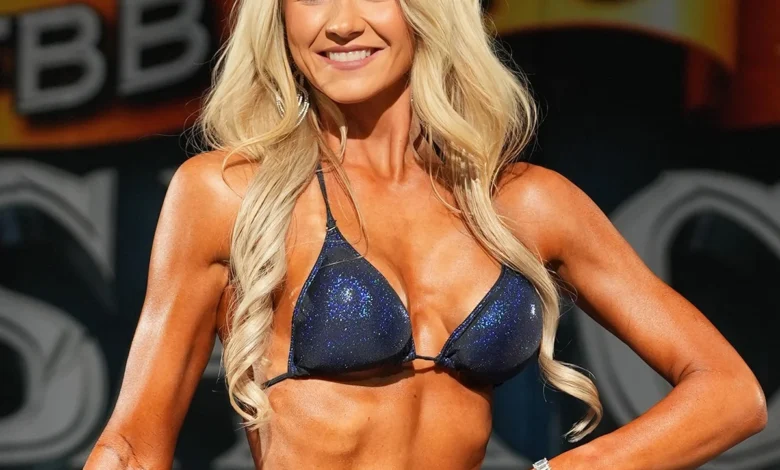
Elizabeth Smart, the woman whose harrowing 2002 abduction captivated the nation and whose resilience has since become a beacon of hope, is now embracing a new chapter of personal strength and self-discovery through bodybuilding. In a recent exclusive interview with E! News, Smart, 38, shared the profound impact this journey has had on her physical and emotional well-being, attributing much of her success to specific advice and a newfound appreciation for her own capabilities.
"It’s lifting heavy, it’s prioritizing protein, and then for me, it was really important to have a coach that was there to help me," Smart revealed. This structured approach, focusing on the foundational elements of bodybuilding, has clearly resonated with her. Beyond the macronutrients and training regimens, the emotional support and accountability provided by a coach have been pivotal. "Having honest feedback and motivation, but at the same time being like, ‘Hey, I notice that this week’s check-in it kind of looks like maybe you had a hard week or you slid back a little bit. Tell me what’s going on. Let’s see if we can work through this and come back better next week.’" This kind of empathetic yet direct guidance underscores the holistic nature of her transformation.
The mantra "I can do hard things" has become a cornerstone of Smart’s philosophy, not just for her personal pursuits but also as a guiding principle for her three children, whom she shares with her husband, Matthew Gilmour. "I think I tell my kids that every day, ‘You can do hard things.’" This powerful affirmation, likely forged through her own unimaginable experiences, now serves to empower the next generation.
Smart’s journey into bodybuilding comes after enduring a nine-month captivity in 2002, a period that tested the limits of human endurance and resilience. Her decision to publicly share her bodybuilding endeavors in April marked another step in her ongoing narrative of overcoming adversity. The physical transformation is evident, but the emotional impact is perhaps even more significant. "I really have fallen in love with it because I just feel like it’s an outer reflection of how I have felt about my body," she explained. "I am so grateful to my body."
This profound gratitude stems from a deep recognition of her body’s capacity to endure and heal. "It really has carried me through so much, and I feel like it’s protected my soul, and it’s protected my heart, and it’s given me three beautiful children," Smart said. "It’s brought me through every worst day of my life and so now I want to celebrate it." This sentiment highlights a powerful shift from viewing her body as a site of trauma to one of strength and life-giving power.
The bodybuilding process has also played a crucial role in her broader healing journey. "It’s taught me to let go of the shame that I felt after everything that I experienced," she shared. "It taught me that my body is beautiful, and I don’t need to be ashamed of it. I can embrace it." This reclamation of her physical self is a testament to her unwavering spirit and her commitment to living a full and unburdened life.
This philosophy of resilience and empowerment is at the heart of her new iHeartRadio podcast, The Survivor Files with Elizabeth Smart, which launched on August 17. The podcast features survivors sharing their stories and the lessons they’ve learned. "It is with the survivors—it’s them sharing their stories and what they’ve learned," Smart explained. "It’s about resilience and hope and finding the inner strength to keep going when everything is against them." This initiative further solidifies her role as an advocate and a source of inspiration for those who have faced immense challenges.
The Shadow of Abduction: A Nation’s Watch
The abduction of Elizabeth Smart from her family’s Salt Lake City home on June 5, 2002, sent shockwaves across the United States. At just 14 years old, she was taken from her bed by Brian David Mitchell and his wife, Wanda Barzee. The ensuing nine months were a grueling ordeal for her family and a public spectacle that gripped the nation, highlighting the vulnerabilities of even seemingly secure communities.
The investigation was immediate and intense, but also fraught with the agonizing uncertainty that accompanies such crimes. Police captain Cory Lyman, a lead investigator, noted in the 2026 Netflix documentary Kidnapped: Elizabeth Smart, the initial police focus on the family was a standard procedure. "They looked like a happy, normal family," Lyman recalled. "But statistically, more often than not, the perpetrator of this type of crime is a parent or a family member. So we started looking very hard at them." This led to "in-depth interviews" and the seizure of 12 computers from the Smart residence. Despite the scrutiny, no evidence implicated the family, and they were ultimately cleared.
The pressure on the family was immense. Ed Smart, Elizabeth’s father, recounted the profound emotional toll of being under suspicion. "To have your daughter go missing is horrendous," he stated in Kidnapped. "And then to be a possible suspect, I was beyond words." His distress was so severe that his own father committed him to a psychiatric ward for a night in an effort to help him cope.
Adding to the public’s distress and confusion, Elizabeth’s uncle, Tom Smart, became a vocal figure in the early days of the investigation. His frequent media appearances and sometimes unusual statements, including expressing sympathy for the abductor, drew scrutiny. Dave Smart, Tom’s brother, recalled in the documentary that Tom’s "really jittery" behavior and inconclusive polygraph results led to questions about his involvement. Tom himself acknowledged in retrospect that his interviews didn’t "come off great," admitting he was exhausted and focused solely on finding Elizabeth.
During the extensive search, investigators faced moments of profound hope followed by crushing disappointment. The discovery of a young girl’s remains, which were burnt beyond recognition, forced investigators to alert Ed and Lois Smart to the possibility that they belonged to their daughter. "A girl’s body, burnt beyond description, so she could not be recognized," Ed remembered the devastating call. While the remains were later identified as belonging to another victim, the emotional toll on the Smart family was immeasurable.
Mary Katherine Smart, Elizabeth’s younger sister and the sole witness to the abduction, was just nine years old. Her repeated interviews and isolation from the family to preserve her memories were a heavy burden for a child. "I was on my own lonely island, if you will, wanting to know, trying to sneak and hear tidbits of things that happened, but people shutting me out," Mary Katherine shared in the documentary. She was even subjected to attempts at hypnosis to aid her recollection.
A significant lead emerged with the arrest of Richard Ricci, a contractor who had worked at the Smart home, on an unrelated parole violation. The discovery of some of Lois Smart’s jewelry in his possession led to his indictment for burglary and made him the prime suspect in Elizabeth’s abduction. Despite his denials, Ricci refused to account for significant mileage on his Jeep shortly after Elizabeth’s disappearance. However, Mary Katherine maintained that the man who abducted her sister was not Ricci, a crucial piece of information that investigators initially struggled to accept.
The case took another agonizing turn when Ricci died of a brain aneurysm in jail on August 27, 2002. This loss was a devastating blow to the investigation. "Our most likely suspect died. Everything he knew was gone with him. And it left us at a dead end that was very difficult," Lyman stated in the documentary.
The Breakthrough and Recovery
The turning point in the case came through Mary Katherine’s persistent memory. Months after the abduction, while flipping through a Guinness World Records book, the name "Emmanuel" suddenly surfaced in her mind. This was the name used by Brian David Mitchell, a drifter who had performed odd jobs in the neighborhood, including for the Smart family.
Armed with this crucial identification, the Smart family held their own press conference, releasing a sketch of Emmanuel, a decision that contradicted police advice. This action, however, proved vital, as it prompted tips from Mitchell’s own family, leading to more photographs and information.
On March 12, 2003, Brian David Mitchell was recognized boarding a bus in Sandy, Utah, with Elizabeth and Wanda Barzee. This led to Elizabeth’s rescue, marking the end of her 276 days in captivity. The reunion with her father was emotional, though Elizabeth recounted feeling hesitant to speak at first, still in a state of fear. When asked by a police sergeant if she was Elizabeth Smart, she responded with "Thou sayeth," a phrase she later explained was her way of confirming her identity without directly implicating herself to her captors who were nearby.
The legal aftermath saw Brian David Mitchell found guilty of kidnapping and transporting a minor across state lines for sexual activity in 2010, resulting in a life sentence without parole. Wanda Barzee pleaded guilty to federal and state charges and was sentenced to 15 years. Despite objections from the Smart family, Barzee was released in September 2018. In May 2025, she was arrested and charged with two counts of entering a protected area as a sex offender after visiting public parks in Utah.
A Life Reclaimed and Shared
Elizabeth Smart’s journey since her rescue has been one of remarkable resilience and advocacy. She earned a degree in music from Brigham Young University and met her husband, Matthew Gilmour, while on a Mormon mission in Paris. They married in 2012 and have since welcomed three children.
Smart has dedicated her life to using her experience to help others. She speaks publicly about her ordeal, authors books, and produces films that shed light on the experiences of kidnapping victims. Her podcast, The Survivor Files, is the latest extension of this commitment, providing a platform for others to share their stories of survival, resilience, and hope.
The advice that has guided her bodybuilding journey—lifting heavy, prioritizing protein, and seeking supportive guidance—mirrors the strength and determination she has demonstrated throughout her life. Her mantra, "I can do hard things," is not just a personal affirmation but a powerful message of empowerment that resonates deeply with her own story of overcoming unimaginable trauma and rebuilding a life filled with purpose and strength. Her embrace of bodybuilding is a tangible expression of this internal fortitude, a celebration of a body that has not only survived but thrived, carrying her through darkness and into a future defined by her own terms.