Nvidia CEO Jensen Huang Faces Dual Crisis Amidst Espionage Allegations and Chip Diversion Scandals

For over a year, Nvidia CEO Jensen Huang has maintained a consistent public stance regarding the illicit global movement of the company’s high-performance AI chips: there is no evidence that these restricted technologies are being systematically diverted to China. This assertion, repeated across various media platforms and investor calls, has served as a cornerstone of the company’s defense against mounting scrutiny from U.S. regulators and lawmakers. However, a convergence of two major scandals, coupled with a personal disclosure from the CEO himself, has cast unprecedented doubt on the efficacy of Nvidia’s internal compliance programs and the integrity of its executive leadership.
The situation centers on two separate, yet increasingly overlapping, investigations into the unauthorized flow of Nvidia’s advanced GPU hardware into prohibited jurisdictions. The first involves Super Micro Computer (Supermicro), a long-standing partner and server manufacturer, while the second involves Megaspeed International, a Singapore-based firm that has emerged as one of Nvidia’s largest customers in Southeast Asia. These revelations, compounded by reports of a potential foreign intelligence operation targeting the CEO, have prompted an independent investigation by the Nvidia board of directors and intensified the focus of U.S. federal authorities.
A Personal Confession and National Security Implications
The crisis reached a tipping point on Sunday when Jensen Huang issued a formal message to employees, acknowledging an extramarital affair. The disclosure followed reports that U.S. intelligence officials were investigating the CEO’s affair partner, Alice Huang, a former executive at Megaspeed International. Intelligence assessments, according to these reports, suggest that Alice Huang may have been recruited by China’s Ministry of State Security to gain insights into Nvidia’s strategic operations and global supply chain.
The potential for a "honey trap" scenario has elevated the scandal from a matter of corporate compliance to one of national security. In response, the Nvidia board of directors has engaged the legal firm Wachtell, Lipton, Rosen & Katz, with former acting U.S. Attorney for the Southern District of New York Joon H. Kim leading an independent inquiry. While the board has publicly expressed confidence in Huang and stated there is no immediate evidence that intellectual property or national security secrets were compromised, the optics of a potential intelligence breach involving the head of the world’s most valuable chipmaker are profound.
The Supermicro Connection and the Supply Chain Gap
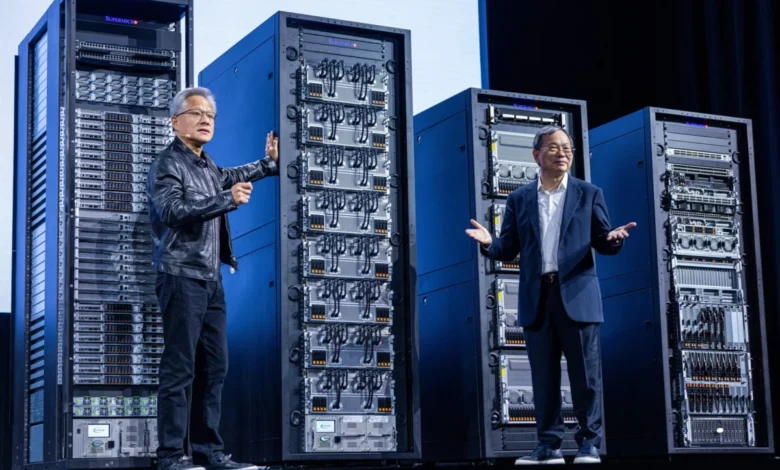
The first pillar of the current controversy involves Supermicro, a company with deep historical ties to Nvidia. The two firms, both founded in 1993, have enjoyed a symbiotic relationship, with their CEOs, Jensen Huang and Charles Liang, frequently appearing together at industry trade shows like Computex.
However, in March, federal prosecutors filed an indictment against Supermicro co-founder Yih-Shyan "Wally" Liaw and two associates, alleging they orchestrated a $2.5 billion scheme to route servers equipped with high-end Nvidia H200 and B200 GPUs to China. The scheme reportedly utilized a Bangkok-based firm, OBON, as a front to bypass U.S. export restrictions. The allegations paint a picture of a sophisticated operation that involved the use of dummy servers to deceive auditors and the physical tampering with serial numbers to mask the ultimate destination of the hardware.
While Supermicro has not been charged as a corporate entity and has asserted its status as a victim of the scheme, the case highlights systemic vulnerabilities in the semiconductor supply chain. Prosecutors noted that the accused used the promise of monthly forecasts—data crucial for securing chip allocations from Nvidia—to maintain the facade of a legitimate business operation. This incident is not the first time Supermicro has faced scrutiny; the company previously pleaded guilty in 2006 to illegally exporting computer equipment to Iran, suggesting a recurring challenge in its export control compliance.
The Megaspeed Investigation
The second front of the scandal involves Megaspeed International. Over the past two years, the firm has reportedly purchased over $4.8 billion in Nvidia hardware. Despite growing concerns regarding the destination of these chips—with some reports suggesting they were being utilized in data centers in Malaysia and Indonesia to provide remote computing power to Chinese entities—Nvidia had previously characterized its relationship with Megaspeed as compliant.
In October 2025, a company spokesperson stated that Nvidia had conducted on-site inspections of Megaspeed operations and found no evidence of diversion. However, as the connection between Alice Huang and the Ministry of State Security emerged, these prior assurances have faced intense skepticism. Analysts from firms such as Culper Research have pointed to digital breadcrumbs—including remnants of code on the Megaspeed website linking the firm to Supermicro—that suggest a more complex, interconnected network of distribution than previously acknowledged by Nvidia.
Chronology of Escalating Regulatory Pressure
The regulatory environment for Nvidia has tightened significantly over the last eighteen months:
- June 2026: Sen. Elizabeth Warren (D-Mass.) sends a formal letter to Nvidia general counsel Tim Teter and audit committee chair Brooke Seawell, demanding transparency regarding the company’s compliance program and its ongoing relationship with Supermicro.
- May 2026: Culper Research publishes a report alleging potential smuggling routes connecting Supermicro, Megaspeed, and other entities to Chinese firms.
- October 2026: One of the individuals charged in the Supermicro smuggling indictment pleads guilty, further substantiating the allegations of large-scale diversion.
- November 2026: Nvidia is scheduled to report its third-quarter financial results on November 17. The following day, Huang is expected to appear before House committee chairs for a closed-door briefing on the smuggling allegations.
- January 2027: With the Senate shifting in the recent midterm elections, Sen. Warren is poised to chair the Senate Banking Committee, where she is expected to wield subpoena power to compel testimony and document production from Nvidia.
Data-Driven Analysis: The Cost of Compliance
Nvidia’s GPU technology is categorized as "dual-use," meaning the hardware is as vital for military simulation and weapons development as it is for commercial AI training. The U.S. Department of Commerce maintains strict licensing requirements for these chips, yet the complexity of the global data center market makes enforcement difficult.
The current scandal suggests that the "know your customer" (KYC) protocols employed by major hardware suppliers may be insufficient when faced with sophisticated, state-sponsored actors. Industry experts suggest that the use of "dummy" data centers and intermediary shell companies—as seen in the OBON/Supermicro case—demonstrates that export controls are only as strong as the human element overseeing them. The alleged involvement of a high-ranking executive’s partner in an intelligence operation suggests that the threat vector is not merely technical, but human-centric, involving potential bribery, coercion, or seduction.
Broader Industry and Economic Impact
For Nvidia’s shareholders, the convergence of these events poses a significant risk to the company’s market valuation. The firm’s dominance in the AI sector is contingent upon its ability to maintain its technological lead while navigating the geopolitical minefield of U.S.-China relations. Any finding that Nvidia knowingly or negligently permitted its chips to reach Chinese military-linked entities could result in heavy fines, tighter export restrictions, or even criminal liability for individual executives.
Furthermore, the scandal creates a chilling effect on the broader tech industry. Data center providers and hardware distributors are now facing pressure to implement more rigorous, potentially costly, auditing processes. If the U.S. government decides to mandate more aggressive "end-user verification" for all GPU sales, the friction in the supply chain could slow the pace of global AI development, potentially impacting the revenue streams of Nvidia’s largest customers, such as OpenAI and Anthropic.
Conclusion: The Path Forward
The coming months will be defining for both Jensen Huang and Nvidia. The investigation led by the board of directors, combined with the inevitable congressional hearings, will test the company’s transparency. The central question remains: was the diversion of chips a result of isolated rogue actors, or is there a systemic failure within Nvidia’s compliance culture that allowed these channels to persist?
As the House committees prepare to grill the CEO and the Senate readies its subpoena power, Nvidia finds itself in a defensive posture. The company’s ability to move past these scandals will depend on its willingness to perform a deep, perhaps painful, housecleaning of its partner network and its internal security protocols. For now, the "poster child of the AI buildout" must grapple with the reality that, in the world of high-stakes technology, the most dangerous bugs are not in the software, but in the oversight.