US Space Force Triples National Security Space Launch Contract Value to $17 Billion Amid Surging Demand

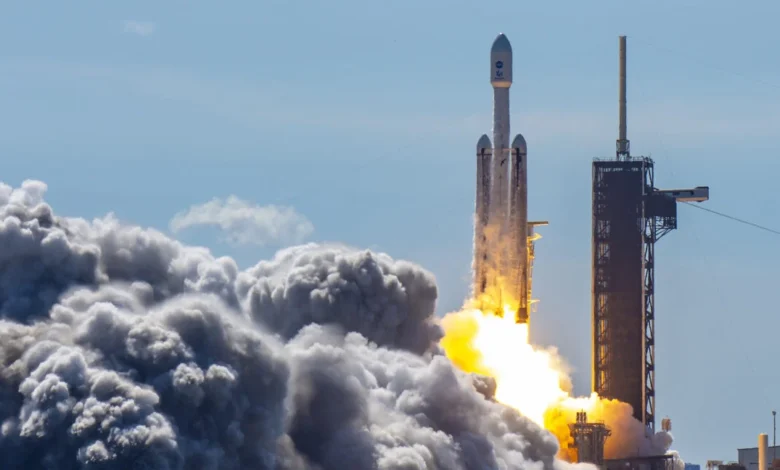
The United States Space Force announced on Friday a significant escalation in its commitment to securing critical orbital access, tripling the maximum value of one of its National Security Space Launch (NSSL) Phase 3 contracts from an initial $5.6 billion to an unprecedented $17 billion. This substantial increase underscores a burgeoning demand within the Pentagon for military satellite launches and signals a strategic pivot towards greater agility and resilience in space operations. The decision, revealed by military officials, reflects a broader shift in national security strategy, emphasizing the rapid deployment and replenishment of space assets crucial for intelligence, communication, and navigation.
The National Security Space Launch (NSSL) program serves as the bedrock for the Space Force’s mission to deliver vital military satellites into orbit. Overseen by Space Systems Command (SSC), the program is designed to create a competitive environment among a pool of qualified launch providers, ensuring that the U.S. military has assured access to space for its most critical payloads. This latest expansion specifically targets the "Lane 1" component of the NSSL Phase 3 contract, which caters to missions deemed more risk-tolerant, yet increasingly vital for maintaining a robust and adaptive space architecture.
The Evolution of National Security Space Launch
To fully grasp the magnitude of this contract expansion, it is essential to understand the historical context and strategic evolution of the NSSL program. Prior to NSSL, the primary mechanism for launching U.S. national security payloads was the Evolved Expendable Launch Vehicle (EELV) program, established in the mid-1990s. EELV was initially designed to foster competition and reduce launch costs by replacing an aging fleet of diverse rocket systems with a standardized family of launch vehicles. For many years, it effectively created a duopoly, primarily between Lockheed Martin and Boeing, which later merged their launch operations to form United Launch Alliance (ULA) in 2006.
The EELV program, while successful in ensuring reliable access to space, eventually faced criticism for its high costs and lack of competitive innovation. The rise of new commercial launch providers, particularly SpaceX with its Falcon family of rockets, began to challenge the traditional paradigm, demonstrating the potential for significantly lower launch costs and increased launch cadence. This burgeoning commercial capability spurred the Pentagon to re-evaluate its approach, leading to the development of the NSSL program.
NSSL was conceived to inject greater competition, leverage commercial innovation, and enhance the overall resilience of the U.S. space architecture. It is structured in phases, with Phase 1 focusing on bridging the gap from EELV, and Phase 2 (awarded in 2020) solidifying the competitive landscape for critical missions, primarily through ULA’s Vulcan Centaur and SpaceX’s Falcon 9 and Falcon Heavy. Phase 3, launched in 2024, represents the current iteration, further refining the strategy by introducing the distinct "Lane 1" and "Lane 2" categories to better match mission requirements with available launch capabilities and market dynamics.
Differentiating Lane 1 and Lane 2 Missions
The NSSL program is fundamentally divided into two distinct lanes, each addressing different tiers of national security launch requirements:
-
Lane 1 Missions: This category encompasses the Space Force’s more risk-tolerant missions, characterized by a greater willingness to utilize newer, potentially less flight-proven, or commercially oriented launch solutions. These include medium-lift launches carrying experimental payloads, technology demonstration satellites, or rideshare missions for the Pentagon’s burgeoning surveillance and data relay constellations. A prime example is the Space Development Agency’s (SDA) Proliferated Warfighter Space Architecture (PWSA), which aims to deploy hundreds of small, interconnected satellites in low-Earth orbit (LEO) to provide global data transport and missile tracking capabilities. The relatively lower cost and faster production cycles of these satellites allow for a higher tolerance for launch delays or even failures, enabling the Space Force to experiment with a wider array of launch providers and technologies. Crucially, Lane 1 is open to commercial launch providers without requiring the extensive, multi-year certification and oversight processes typically mandated by the Space Force for its most sensitive missions. This lower barrier to entry is designed to harness the rapid innovation and cost efficiencies of the commercial space sector. It is this Lane 1 segment that has seen its maximum contract value tripled to $17 billion.
-
Lane 2 Missions: In contrast, Lane 2 is reserved for the highest-priority strategic missions, demanding the utmost reliability and security. This includes the government’s largest and most expensive intelligence-gathering satellites, such as those operated by the National Reconnaissance Office (NRO), or radiation-hardened communications satellites designed to maintain functionality even in the event of a nuclear conflict. The stringent requirements for these missions necessitate lengthy and rigorous military certification reviews for the launch vehicles. Currently, only SpaceX’s Falcon 9 and Falcon Heavy, and United Launch Alliance’s Vulcan rocket, are certified for these critical Lane 2 missions, reflecting their proven reliability and robust design.
The Drivers Behind Surging Demand
The decision to dramatically expand the Lane 1 contract value stems directly from a confluence of factors signaling an escalating demand for military satellite launches:
-
Geopolitical Imperatives: The intensifying competition in space, particularly from near-peer adversaries like China and Russia, has underscored the need for the U.S. to maintain and enhance its space superiority. Both nations are rapidly developing advanced anti-satellite (ASAT) capabilities and expanding their own space-based assets, creating a more contested and potentially hostile orbital environment. The ability to rapidly deploy new satellites, replace damaged ones, or augment existing constellations is paramount for national security.
-
Proliferated Architectures: The Pentagon is increasingly moving away from a few exquisite, large, and expensive satellites towards "proliferated" architectures involving numerous smaller, more resilient, and often lower-cost satellites. The SDA’s PWSA is the leading example, aiming for hundreds, potentially thousands, of satellites to create a distributed network that is harder to disrupt or destroy. Each of these satellites requires a launch, leading to a significant increase in the sheer volume of required missions.
-
Technological Advancement and Miniaturization: Advances in satellite technology, particularly miniaturization and increased capabilities for smaller platforms, mean that more can be accomplished with smaller, less expensive spacecraft. This enables the deployment of larger numbers of satellites for diverse missions, from persistent surveillance to advanced communications and missile tracking.
-
Resilience and Redundancy: A key tenet of modern U.S. space strategy is resilience. This involves diversifying assets across different orbits, increasing the number of satellites in a constellation, and ensuring the ability to rapidly reconstitute capabilities if assets are lost. Multiple launch options and a robust launch cadence are crucial to achieving this resilience.
-
Cost-Effectiveness: While $17 billion is a substantial sum, the shift towards leveraging commercial launch services for Lane 1 missions is ultimately driven by a desire for greater cost-effectiveness. The competitive market fostered by NSSL Lane 1 encourages providers to offer more economical solutions compared to the bespoke, government-centric launches of previous eras.
A Growing Ecosystem: The Lane 1 Providers
The expansion of the Lane 1 contract is a significant boon for the commercial space launch industry. When the Phase 3 round of the NSSL program was initiated in 2024, Space Systems Command originally selected three major players for Lane 1 contracts: SpaceX, United Launch Alliance (ULA), and Blue Origin.
Since then, the roster of companies eligible to compete for Lane 1 missions has expanded, reflecting the vibrant and growing commercial launch market. Rocket Lab, known for its Electron small-lift rocket and developing the Neutron medium-lift vehicle, was added, bringing specialized capabilities for smaller payloads. Stoke Space, an emerging player focused on fully reusable launch systems, also joined the ranks. Most recently, Relativity Space, with its innovative 3D-printed Terran R rocket, and Impulse Space, a company specializing in orbital transfer vehicles and in-space services, were added to the list. This diverse pool of providers ensures a wide range of options for the Space Force, from established giants to nimble startups pushing the boundaries of launch technology.
The procurement process for Lane 1 missions involves the Space Force issuing a request for bids (RFB) for a specific number of missions each year. Qualified providers then submit proposals, and the Space Force awards individual fixed-price "task orders" to the winning bidders. To date, SpaceX has secured the lion’s share of Lane 1 task orders, leveraging its high launch cadence and competitive pricing. However, other players are beginning to make inroads, with Blue Origin notably winning its first Lane 1 task order earlier this year, signaling increasing competition and diversification of awards.
Official Perspectives and Strategic Implications
While specific official statements regarding this latest announcement were brief, the rationale behind such a significant contract expansion aligns perfectly with the Space Force’s stated objectives and the Pentagon’s broader space strategy.
Space Force officials are expected to emphasize the importance of "agility" and "responsiveness" in meeting national security requirements. General Chance Saltzman, Chief of Space Operations, has consistently highlighted the need for the Space Force to be able to "detect, deter, and defeat threats in space." Rapid access to orbit, enabled by a robust and competitive commercial launch sector, is fundamental to this mission. The contract expansion reinforces the Space Force’s commitment to leveraging commercial innovation and fostering a healthy industrial base capable of meeting the nation’s strategic needs.
Furthermore, this move underscores a strategic shift towards "proliferated LEO" (Low Earth Orbit) constellations, moving away from a few high-value, vulnerable assets. By significantly increasing the funding for Lane 1, the Space Force is demonstrating its intent to rapidly deploy these smaller, more resilient constellations that can withstand attacks and provide continuous coverage. This strategy enhances redundancy, reduces single points of failure, and complicates an adversary’s targeting calculus.
For the commercial launch industry, the $17 billion commitment represents a massive vote of confidence and a substantial economic stimulus. It provides long-term stability and a clear market signal for companies investing in new launch vehicles and infrastructure. This guaranteed demand encourages further innovation, drives down costs through competition, and solidifies the U.S. as a leader in commercial space. Smaller companies, in particular, gain critical opportunities to prove their capabilities on national security missions, potentially paving the way for larger contracts in the future.
Chronology of Key Milestones
- 1990s: Evolved Expendable Launch Vehicle (EELV) program established, aimed at reducing launch costs and consolidating launch providers.
- 2006: United Launch Alliance (ULA) formed, consolidating Lockheed Martin and Boeing launch operations.
- 2010s: SpaceX emerges as a significant competitor, introducing lower-cost launch options.
- December 2019: United States Space Force established, elevating space to an independent military branch.
- 2020: NSSL Phase 2 contracts awarded, primarily to ULA and SpaceX, for the most critical missions.
- 2023: Space Systems Command begins outlining the NSSL Phase 3 strategy, introducing Lane 1 and Lane 2.
- 2024: NSSL Phase 3 Lane 1 contracts initially awarded to SpaceX, ULA, and Blue Origin, with a maximum value of $5.6 billion.
- Late 2024 – Early 2026: Rocket Lab, Stoke Space, Relativity Space, and Impulse Space are added to the list of eligible Lane 1 providers.
- Early 2026: Blue Origin wins its first NSSL Lane 1 task order.
- July 2026 (Friday): US Space Force announces the tripling of the NSSL Phase 3 Lane 1 contract value from $5.6 billion to $17 billion.
Broader Impact and Future Outlook
The implications of this $17 billion contract expansion extend far beyond simply procuring more launches. It solidifies the U.S.’s strategic advantage in space, enabling the rapid deployment of advanced capabilities necessary to maintain deterrence and defend national interests. By fostering a vibrant and competitive commercial launch market, the Space Force is not only ensuring assured access to space but also driving down costs and accelerating innovation across the entire space ecosystem.
However, challenges remain. Managing a growing number of diverse launch providers requires robust oversight and effective contract management. Ensuring supply chain security, protecting against cyber threats, and navigating potential geopolitical sensitivities within the commercial space sector will be ongoing priorities. The Space Force will also need to continuously adapt its acquisition strategies to keep pace with the rapidly evolving technological landscape and the dynamic threat environment in space.
Ultimately, this contract expansion represents a clear statement of intent from the U.S. government: space is a critical domain for national security, and the nation is committed to investing aggressively in the capabilities required to secure its advantage, leveraging the full power of American innovation and industry. The $17 billion allocation for Lane 1 missions is not just a budget increase; it is an investment in the future of U.S. space power and a testament to the growing reliance on commercial partners to achieve strategic objectives.