Senate Commerce Committee advances FCC nominee Danielle Thumann in 15-0 vote as Democrats boycott session

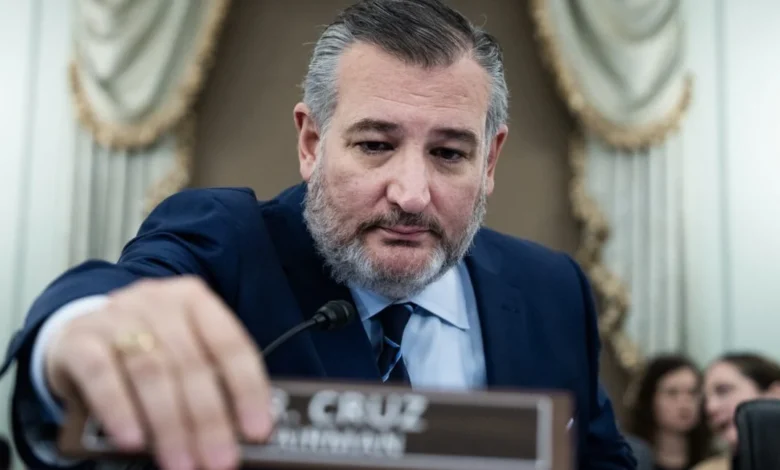
In a display of intensifying partisan friction within the upper chamber of the United States Congress, the Senate Commerce Committee, under the leadership of Chairman Ted Cruz (R-Texas), successfully advanced the nomination of Danielle Thumann to the Federal Communications Commission (FCC) on Tuesday, November 18, 2025. The 15-0 vote was achieved entirely by Republican members, as the committee’s 13 Democratic senators staged a coordinated boycott to protest what they characterized as an illegitimate maneuver designed to pack the agency with conservative appointees before the incoming Democratic administration takes control in January.
The procedural standoff centers on a clash between long-standing committee traditions and the hard-nosed political realities of a lame-duck session. While Republicans argued they were fulfilling their constitutional duty to provide advice and consent, Democrats claimed the proceeding lacked the necessary quorum to conduct official business, citing a requirement that at least one minority party member be present for such votes—a rule they assert has been in practice since 2005.
The Conflict Over Quorum and Rules
The controversy over the vote’s validity hinges on the current operational status of the Senate Commerce Committee. Democratic members, led by Ranking Member Maria Cantwell (D-Wash.), contend that the committee has been operating under a de facto adherence to established precedents, which include the requirement for minority participation to establish a quorum for nominations.
"Since 2005, Commerce Committee rules required that a quorum include one member of the minority for official action on a bill, resolution, or nomination," a spokesperson for Senator Cantwell stated following the walkout. The Democratic contingent argues that because the committee failed to formalize new rules for the current legislative session, it has functioned under the protocols of the previous Congress. By proceeding without a single Democrat present, the committee majority has effectively discarded nearly two decades of bipartisan institutional practice.
Conversely, Senator Cruz and his staff have leaned on the Standing Rules of the Senate to justify the move. A committee spokesperson pointed to Rule XXVI, paragraph 7, which dictates that a majority of committee members must be physically present for a vote, without explicitly mandating the presence of a minority member. The committee’s position is that as long as a physical majority is present, the action is legally binding, effectively nullifying any procedural objections once the nomination reaches the floor for a full Senate vote.
Allegations of Misleading Testimony
The tension surrounding Thumann’s confirmation is compounded by serious allegations regarding the accuracy of her testimony during recent confirmation hearings. During a hearing held in mid-November, Senator Ben Ray Luján (D-N.M.) questioned Thumann regarding her professional history as senior counsel to current FCC Chairman Brendan Carr, specifically probing whether she had engaged in media-related policy work.
Thumann explicitly stated under oath, "I have not worked with the chairman on any media-related issues." However, records obtained by the advocacy group Protect Democracy through Freedom of Information Act (FOIA) requests suggest a more complex reality. The documents indicate that Thumann was involved in processing informal complaints concerning allegations of news distortion on CBS’s 60 Minutes and assisted in drafting the agency’s official response to public inquiries regarding the Jimmy Kimmel controversy.
In a follow-up response provided to the committee, Thumann attempted to clarify her position, stating, "My work sometimes includes reviewing documents or filings in a matter outside of my designated portfolio. However, I did not have any conversations with Paramount, CBS, or Skydance related to the merger." Critics, including Senator Luján, have labeled these clarifications insufficient, arguing that the documented evidence directly contradicts her earlier testimony and reflects a lack of candor that should disqualify her from holding a commission seat.
Chronology of the Nomination Process
- Early November 2026: Danielle Thumann is nominated for a seat on the FCC as the Republican transition team seeks to solidify the agency’s ideological balance.
- November 11, 2026: During her confirmation hearing, Thumann testifies that she has not worked on media-related issues under Chairman Brendan Carr.
- November 17, 2026: Senator Luján sends a formal letter to Chairman Cruz, presenting evidence from FOIA requests that contradicts Thumann’s testimony and calls for a delay in the confirmation process.
- November 18, 2026: Senate Democrats announce a boycott to protest the nomination and the lack of "paired" nominations—a tradition where one Republican and one Democrat are confirmed simultaneously to maintain balance.
- November 18, 2026 (Afternoon): The Senate Commerce Committee, with only 15 Republicans present, votes 15-0 to advance Thumann’s nomination.
Implications for the Federal Communications Commission
The confirmation of Thumann carries significant weight for the future of the FCC’s regulatory agenda. Should she be confirmed by the full Senate, the commission would shift to a 3-1 Republican majority. This shift would provide the current leadership with a robust mandate to pursue a more aggressive deregulatory agenda and initiate broader investigations into media organizations.
Under the current structure, the sole remaining Democrat, Commissioner Anna Gomez, faces a term that concludes at the end of 2027. If the current administration proceeds without nominating a replacement for the empty Democratic seat, the commission could effectively function with limited opposition for the remainder of the term.
The debate over "pairing" nominations is also a point of contention. Traditionally, the Senate has sought to fill FCC vacancies in pairs to preserve the bipartisan nature of the agency. Democrats have insisted that Thumann’s nomination should be postponed until it can be paired with both the renomination of Commissioner Gomez and the nomination of a new Democratic commissioner. Senator Cruz has countered that there is no legal requirement for such pairing, citing the Communications Act, which only limits the maximum number of commissioners from a single party to prevent a complete monopoly of control.

Broader Political Context and Institutional Precedent
The decision to push through the nomination during a lame-duck session has drawn sharp criticism from Democrats, who point to Senator Cruz’s own rhetoric from 2014. At that time, Cruz argued that controversial nominees should not be confirmed during a lame-duck session by senators who have already lost their seats or are in the final weeks of their tenure.
"As you wrote in 2014, controversial nominees should not be confirmed in the lame-duck session of Congress by senators who just lost their seats and are no longer accountable to the voters," the Democratic committee members wrote in their protest letter to Cruz.
However, the Republican majority maintains that the timing is irrelevant to the legitimacy of the process. "Democrats will control the Senate, unfortunately, in January. But today is November 18," Cruz remarked during the session. This sentiment reflects a broader strategic push by the current majority to cement policy goals while they still hold the levers of legislative power.
Future Outlook
As the nomination moves toward a potential floor vote, the outcome remains uncertain. The procedural maneuvers used by the Senate Commerce Committee have set a contentious tone for the final weeks of the legislative session. Legal analysts suggest that while the committee’s vote may be "cleansed" of procedural irregularities once it reaches the Senate floor, the political fallout could have lasting effects on the working relationship between the two parties in the upper chamber.
The Thumann nomination has evolved from a routine appointment into a high-stakes test of Senate norms. Whether the final confirmation is achieved through traditional bipartisan cooperation or through the unilateral exercise of majority power remains the defining question of this legislative cycle. For now, the FCC awaits a decision that will shape its composition and regulatory trajectory for years to come.
Related posts: