LG Monitors Accused of Stealthily Installing Adware and Extensive Data Collection Software Without User Consent

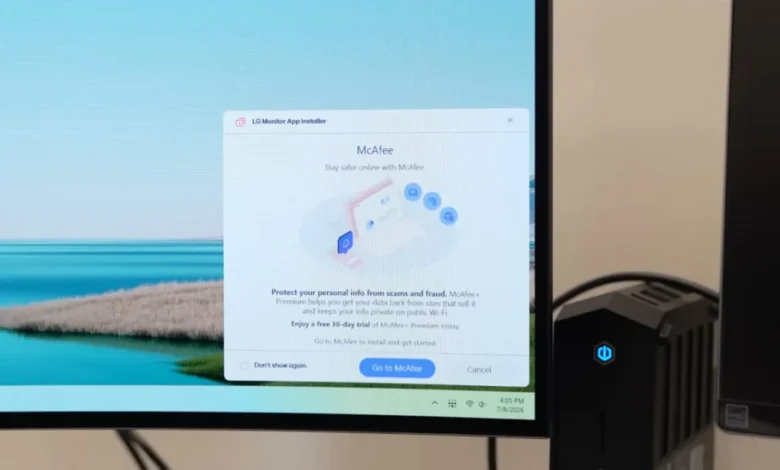
A growing controversy has erupted around LG Electronics, with users reporting the unconsented installation of the "LG Monitor App Installer" and associated advertisements on their Windows systems. This revelation has sparked widespread alarm among consumers, particularly those who have invested significantly in LG’s premium monitors, which can cost upwards of $1,000. The core concern revolves around the surreptitious nature of the installation, the disruptive presence of ads on high-end hardware, and, most critically, the alarming breadth of data collection permissions the application reportedly acquires. This incident not only challenges consumer expectations regarding product integrity and privacy but also casts a critical light on the practices of hardware manufacturers and the policies governing software distribution on platforms like Windows.
The Unwelcome Intrusion: Details of the LG Monitor App Installer
The controversy gained significant traction following investigations by tech media outlets, notably Gamers Nexus, which highlighted the issue through detailed analysis and user testimonials. Unlike traditional software installations, where users are typically prompted for permission and presented with terms of service, the LG Monitor App Installer appears to bypass these conventional safeguards. Users have reported discovering the application and its subsequent advertisements on their systems without any explicit prompt or opt-in mechanism from LG. This stealthy deployment, often occurring via Windows Update, creates a profound sense of intrusion and a violation of digital autonomy.
The immediate and most visible consequence for affected users is the appearance of pop-up advertisements. These ads, emerging unsolicited on the desktop, are inherently disruptive, particularly in professional or gaming environments where focus and an uncluttered user experience are paramount. For consumers who have paid a premium for LG’s high-quality monitors, often chosen for their superior performance and aesthetic, the presence of forced advertising is perceived as a significant downgrade to their investment and a breach of trust. The expectation with high-end hardware is a clean, unencumbered experience, not one marred by third-party promotions.
Beyond the annoyance of ads, the profound privacy implications of the LG Monitor App Installer are a major source of concern. As highlighted by cybersecurity researcher and privacy advocate, Burke, the permissions granted to the application are extraordinarily broad. Once installed, the app reportedly possesses "permission to use ‘all system resources’," a blanket authorization that raises immediate red flags. More alarmingly, Burke notes that the app is also empowered to "collect geolocation, device data, online activity, contacts, user credentials, transactions, and more." This extensive list of data points encompasses highly sensitive personal information, creating a potential surveillance vector that extends far beyond the typical requirements of a monitor utility. The collection of user credentials and financial transaction data, in particular, points to a potential for deep profiling and raises serious questions about data security and the potential for misuse or breaches. Such comprehensive data harvesting, without clear consent or explanation, fundamentally undermines user privacy and trust in the brand.
A Timeline of Stealthy Deployment and Escalation
Evidence suggests that the practice of installing the LG Monitor App Installer has been ongoing for several years, a silent undercurrent beneath the surface of consumer computing. However, recent observations indicate an escalation in its visibility and impact. Burke, for instance, reported that he recently started encountering pop-up ads on LG monitors he had purchased three years prior. This suggests either a delayed activation of the advertising component, a recent update to the application that enabled or expanded ad delivery, or a shift in LG’s strategy to more aggressively monetize its user base.
The incremental nature of this deployment, starting perhaps with a silent installation and evolving into more overt advertising, points to a carefully orchestrated strategy. Initially, users might have overlooked a seemingly innocuous "app installer" or dismissed it as a necessary driver or utility. However, the subsequent appearance of ads transforms a minor irritation into a significant privacy and usability concern. This chronological expansion of the app’s functionality and intrusiveness highlights a troubling trend where software bundled with hardware gradually expands its reach and data collection efforts over time, often without explicit user notification or renewed consent. This evolutionary approach makes it harder for users to trace the origin of the unwanted software and to understand the full scope of its operations. The fact that older monitors are now also affected suggests a broad, retroactive application of this policy, impacting a wider segment of LG’s customer base.
The Role of Microsoft and the UWP Framework
The mechanism facilitating these stealthy installations appears to be rooted in Microsoft’s Universal Windows Platform (UWP) device app framework. Microsoft’s policies for UWP device apps allow for certain applications to be automatically installed under specific conditions, raising questions about the balance between convenience for hardware manufacturers and user control over their systems.
According to a Microsoft support page for Windows developers, UWP device apps can "automatically install when the user connects their device to the PC" provided the user has not opted out of "Recommended Settings" during the initial Windows installation or setup, and is connected to the internet and signed into the Microsoft Store. This policy, spotted by Windows Latest, is critical to understanding how LG’s app can bypass traditional consent prompts. The key phrase "Recommended Settings" is often vague and presented during an expedited setup process, leading many users to accept default options without fully understanding their implications.
Crucially, Microsoft’s own documentation acknowledges the potential for user dissatisfaction with this auto-installation feature: "The automatic installation feature does not provide a notification to the user when the app is installed. Some users may find this experience confusing and frustrating and give your app a bad rating." While Microsoft acknowledges the problem, the policy itself remains in place, effectively enabling hardware vendors like LG to push software onto user systems without explicit notification or consent. This creates a significant loophole that companies can exploit, shifting the burden of vigilance onto the user to navigate complex system settings during initial setup. The lack of a clear, explicit notification at the point of installation is a fundamental flaw, as it deprives users of the opportunity to make informed choices about what software runs on their devices, especially when that software collects extensive personal data and delivers ads.
Industry Precedent and the "Bloatware" Epidemic
The phenomenon of hardware manufacturers bundling unwanted software, often termed "bloatware," is not new to the tech industry. Over the years, numerous vendors have faced criticism for similar practices, underscoring a broader industry trend of monetizing user hardware beyond the initial purchase price. Examples abound across various hardware categories:
- Razer (Gaming Peripherals): Has been criticized for forcing users to install its Synapse software, which, while offering customization, is often seen as unnecessarily intrusive and resource-intensive.
- Logitech (Gaming and Productivity Peripherals): Similar to Razer, Logitech’s companion software, like G Hub or Options, has been known to be bulky and sometimes mandatory for full device functionality, leading to user complaints about bloat.
- Asus (Motherboards): Users have reported instances where Asus motherboards automatically install software like Armoury Crate, which can include various utilities and sometimes unwanted extras, often without clear consent.
- Gigabyte (Motherboards): Like Asus, Gigabyte has also faced backlash for automatically installing software, sometimes without explicit user permission, adding to system overhead and raising privacy concerns.
What makes the LG Monitor App Installer particularly egregious, however, is the context of a monitor. Unlike a gaming mouse or a motherboard, which might genuinely benefit from companion software for customization, performance tuning, or driver updates, a monitor typically functions perfectly well as a standalone display device. Its core function – displaying an image – requires minimal, if any, additional software beyond basic display drivers. The idea that a monitor, a device whose primary interaction with the user is visual output, needs an "App Installer" that collects extensive personal data and pushes ads, seems disproportionate and ethically questionable.
Furthermore, the price point of LG’s monitors exacerbates the issue. Consumers paying hundreds, or even over a thousand dollars, for a premium display expect a sophisticated, focused, and uncompromised experience. The forced inclusion of ad-delivering bloatware undermines the value proposition of these expensive devices, turning a high-quality product into an unwilling platform for advertising and data harvesting. This practice blurs the lines between a hardware purchase and a subscription service, where the user becomes the product, even after a substantial upfront investment.
Economic and Ethical Dimensions

The core of this controversy lies in the collision of premium pricing with an ad-supported, data-monetization business model. When a consumer purchases an LG monitor for over $1,000, they are paying for high-quality hardware, advanced features, and a premium user experience. The expectation is that this transaction grants them ownership of a device free from additional revenue-generating schemes that compromise their privacy or workflow. The stealthy installation of an app that collects vast amounts of personal data and serves ads fundamentally violates this implicit contract.
The data collection capabilities of the LG Monitor App Installer – spanning geolocation, device data, online activity, contacts, user credentials, and transactions – suggest a clear intent for data monetization. This data can be incredibly valuable to advertisers, marketers, and data brokers. It could be used to build detailed user profiles, enabling highly targeted advertising not just through the LG app itself, but potentially across other platforms if the data is shared or sold to third parties. For example, knowing a user’s online activity, contacts, and transactions allows for sophisticated insights into their lifestyle, purchasing habits, and social network, making them a prime target for various commercial interests.
Ethically, this practice raises significant concerns about transparency, informed consent, and consumer rights. Without explicit, granular consent for data collection and ad delivery, LG is operating in a grey area that many would argue crosses into exploitative territory. It leverages the technical infrastructure of Windows and the physical connection of its hardware to extract value from users post-purchase, often without their knowledge or understanding. This erodes user trust, not just in LG, but in the broader tech ecosystem, fostering cynicism about digital products and services. The long-term damage to LG’s brand reputation could be substantial, as consumers increasingly prioritize privacy and ethical business practices.
User Reactions and Expert Commentary
The revelation has ignited a firestorm of user complaints across online forums, social media, and tech communities. Users express feelings of betrayal, anger, and a deep sense of invasion. Many feel that their expensive investment has been devalued by a company prioritizing profit over customer experience and privacy. The sentiment often echoes a feeling of being "nickeled and dimed" or exploited, even after a significant upfront payment. The frustration is compounded by the difficulty many users face in identifying and removing such stealthily installed software, highlighting a gap in user control.
Gamers Nexus, in its comprehensive video report, amplified these user complaints, providing a platform for affected individuals and bringing the issue to a wider audience. Their detailed technical analysis and clear communication helped clarify the mechanisms behind the installation and the scope of the problem. Burke’s expert commentary, specifically detailing the extensive permissions sought by the app, served to quantify the privacy risks, transforming abstract concerns into concrete dangers of data exposure. The collective voice of users, amplified by credible tech journalists and experts, underscores the severity of the issue and the strong public demand for accountability and change.
LG’s Official Stance (or Lack Thereof)
In response to these serious allegations, Ars Technica, a respected technology publication, reached out to LG for comment. The questions posed specifically addressed "the purpose of LG Monitor App Installer, affected monitors, and privacy concerns." However, as of the publication of the original article, LG’s response was notably absent. A company representative "acknowledged receipt of the questions but didn’t provide a response ahead of publication."
This silence from LG is itself a significant point of concern. In a crisis of consumer trust, a prompt, transparent, and comprehensive response is crucial. The absence of an official statement leaves users and the broader public in the dark, fueling speculation and reinforcing negative perceptions. A responsible company response would typically involve acknowledging the issue, explaining the purpose and necessity (or lack thereof) of the app, clarifying its data collection practices, outlining what measures are being taken to address privacy concerns, and detailing steps for users to opt out or remove the software. LG’s current silence only exacerbates the sense of distrust and suggests a potential reluctance to address the fundamental ethical questions raised by its practices.
The Path Forward: Implications and Recommendations
This incident carries significant implications for consumers, hardware manufacturers, and software platform providers like Microsoft. It highlights an urgent need for greater transparency, stricter regulations, and enhanced user control in the digital ecosystem.
For Users:
Consumers are advised to be increasingly vigilant. During the setup of new hardware or operating systems, it is crucial to carefully review all "Recommended Settings" and privacy options, opting out of any automatic software installations or data collection that is not explicitly required for core functionality. Users should regularly review installed applications on their systems, even those that appear benign, and investigate any unfamiliar software. Tools that monitor network activity and application permissions can also provide an additional layer of defense against stealthy installations. While Gamers Nexus listed some affected monitors based on user complaints, the lack of a definitive list from LG means users with any LG monitor should be cautious.
For Microsoft:
The incident places a spotlight on Microsoft’s UWP device app policies. While aiming for convenience, the current implementation clearly enables practices that undermine user trust and privacy. Microsoft should consider revising its policies to mandate explicit, clear, and prominent notifications for any automatic software installation, regardless of "Recommended Settings." Furthermore, a robust opt-out mechanism for such installations, easily accessible and clearly explained, should be a fundamental requirement. Stricter vetting of app permissions and purposes for UWP device apps, especially those not central to device functionality, could also prevent future abuses.
For Hardware Manufacturers:
This controversy should serve as a wake-up call for LG and other hardware vendors. The pursuit of data monetization and advertising revenue through stealthy means ultimately harms brand reputation and erodes consumer loyalty. Ethical software practices, explicit opt-in consent for non-essential applications and data collection, and a clear value proposition for any bundled software are essential. Manufacturers must respect the consumer’s investment in premium hardware and ensure that the post-purchase experience aligns with the quality and expectations set by the product itself. Moving forward, companies that prioritize transparency and user privacy will likely gain a significant competitive advantage.
Regulatory Scrutiny:
The extensive data collection claims, especially encompassing "user credentials" and "transactions," could attract the attention of regulatory bodies globally. Depending on the jurisdictions of affected users, privacy laws such as the General Data Protection Regulation (GDPR) in Europe, the California Consumer Privacy Act (CCPA) in the United States, or other national data protection frameworks could be applicable. These laws typically require explicit consent for data collection and specify how personal data must be handled, stored, and protected. A lack of transparency and consent could lead to investigations, significant fines, and mandatory changes in business practices. The Federal Trade Commission (FTC) in the U.S. also has a mandate to protect consumers from unfair and deceptive practices, which could include misleading software installations.
Conclusion
The LG Monitor App Installer controversy represents a significant breach of consumer trust and a stark reminder of the evolving challenges in digital privacy. It underscores how seemingly innocuous hardware can become a conduit for extensive data collection and unwanted advertising, even after a substantial financial investment. As technology becomes more integrated into every aspect of our lives, the line between product and platform blurs, making ethical considerations and transparent practices more critical than ever. The incident calls for a collective re-evaluation by consumers, industry players, and regulators to ensure that user autonomy and privacy remain paramount in an increasingly interconnected world.