Navigating the Maze: How New Medicaid Work Requirements and Disability Rules Threaten Vulnerable Patients

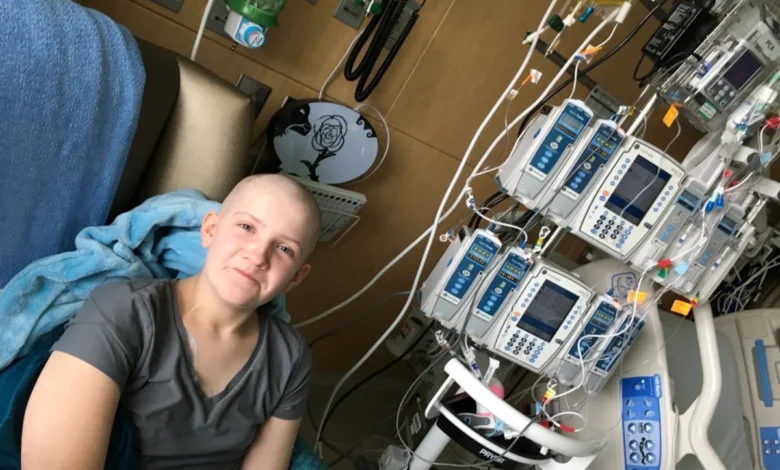
Five years into her remission from childhood Hodgkin lymphoma, 19-year-old Taya Hailstone faces a grueling daily routine that has little to do with fighting cancer, and everything to do with fighting bureaucracy. The lasting damage to her organs and nerves—stemming from a childhood diagnosis at age 10 that required partial intestinal removal—transforms basic domestic chores like loading a dishwasher into formidable physical challenges. Her body struggles to process food properly, leaving her susceptible to severe dehydration, brain fog, and chronic swelling in her hands and feet that can make walking across a room or gripping a fork agonizing. Yet, despite these persistent medical hurdles, Montana’s health department determined last year that Hailstone is no longer eligible for low-cost disability health coverage through Medicaid. Instead, state officials switched her to the state’s Children’s Health Insurance Program (CHIP)—another branch of Medicaid—just three months before she aged out of it entirely.
The administrative decision arrived without consulting Hailstone’s active medical team. According to letters from her treating physicians reviewed by KFF Health News, state officials failed to request records from the doctors managing her complex recovery before stripping her of her status. The sudden reclassification was triggered after state authorities discovered that Hailstone had voluntarily stopped receiving Social Security disability payments. She had hoped to transition into the workforce, aiming to get healthy enough to hold a job and save money beyond the strict income caps tethered to those federal payments. However, her health fluctuates unpredictably day to day. For now, she remains too sick to maintain consistent employment. Protected by legal appeals while her case is pending, Hailstone and her mother continue to fight the decision, knowing that losing Medicaid would instantly cut off their access to the specialized treatments required to manage her post-cancer complications.
The Struggle Over Disability Status and State Capacity
Hailstone’s predicament is far from an isolated incident. Across the United States, patients living with severe disabilities have long grappled with administrative hurdles, procedural blunders, and profound confusion when attempting to secure and maintain federally subsidized health coverage. These systemic vulnerabilities are now poised to intensify dramatically. Under newly implemented federal Medicaid work requirements, states face the daunting new responsibility of evaluating and deciding who qualifies for medical exemptions. This requires state agencies to review complex medical cases for an exponentially larger swath of enrollees.
Public aid attorneys, academic researchers, and healthcare advocates warn that cases like Hailstone’s serve as glaring indicators that state bureaucracies are fundamentally unequipped for the influx of medical evaluations. Consequently, consumer advocates fear that millions of vulnerable Americans will be quietly stripped of their coverage through an opaque, slow-moving administrative process. Anthony Wright, executive director of Families USA, a national healthcare advocacy nonprofit, starkly summarized the unfolding reality, noting that this scenario will soon become the dominant narrative for millions of individuals nationwide.
In response to inquiries regarding individual cases, Jon Ebelt, a spokesperson for the Montana Department of Public Health and Human Services, stated that the agency does not comment on specific Medicaid files. However, Ebelt maintained that the state remains committed to treating every client with respect and ensuring that eligible individuals receive appropriate coverage.
A National Shift: The Implementation of Medicaid Work Requirements
The restructuring of state Medicaid programs is unfolding against a backdrop of sweeping national policy changes. The Congressional Budget Office (CBO) estimates that an astounding 18.5 million people will soon be forced to navigate new rules requiring them to actively prove they are working, attending school, or participating in volunteer activities to maintain their Medicaid eligibility. Data from KFF reveals that more than 40% of these affected enrollees live with chronic health conditions. While some of these individuals are theoretically excused from the mandates if they can furnish proof that their illnesses render them physically incapable of working, the administrative burden of proving medical frailty is immense.
The CBO projects that more than 5 million people will lose their Medicaid coverage by 2034 as a direct result of these work requirements. Championed by Republican policymakers and the Trump administration as a mechanism to preserve resources exclusively for the most needy, the mandates were codified nationally through last year’s One Big Beautiful Bill Act. The legislation granted states a firm deadline of January 2027 to fully implement work-for-coverage rules.
Rather than waiting for the final deadline, several jurisdictions have initiated compliance checks ahead of schedule. Nebraska launched its work requirements in May, while Montana began its rollout in July, establishing a three-month grace period wherein enrollees are warned of noncompliance before disenrollment begins in October.
Legislative Intent Versus Federal Guidelines
The current friction between states and enrollees stems largely from a disconnect between congressional legislation and subsequent federal rule-making. In drafting the original law, Congress explicitly authorized states to exempt individuals whose illnesses qualified them as "medically frail." Many states developed straightforward frameworks to handle these judgment calls locally. However, state officials were caught off guard when federal regulators subsequently released guidelines that superseded congressional intent, adding a stringent requirement that enrollees must formally prove their medical conditions directly hinder their ability to work.
Advocacy groups like Families USA argue that these expansive new rules compel states to construct a patchwork of review systems that are vastly larger and more complicated than the Social Security Administration’s (SSA) established disability evaluation apparatus. To put the administrative scale into perspective, the SSA’s federal program cost more than $5 billion last year alone to administer benefits for roughly 7 million people nationally. Conversely, the federal legislation establishing the Medicaid work requirements provided a mere $200 million for all states to share as they scramble to implement the rules. To bridge this gap, cash-strapped states are paying private contractors millions of dollars to overhaul public aid systems that are already plagued by documented errors and systemic delays.
The resulting friction prompted a legal backlash. In June, a coalition of 25 states filed a lawsuit against the Trump administration challenging the legality of the medical frailty rules, arguing that the standards are excessively onerous for patients to fulfill and virtually impossible for state agencies to accurately assess. That federal litigation remains ongoing.

A Daily Reality of Treatment and Exhaustion
For Taya Hailstone, the bureaucratic wrangling contrasts sharply with the physical realities of her daily life. Diagnosed with blood cancer at the age of 10, her treatment regimen caused her intestines to tear, necessitating partial surgical removal. The permanent gastrointestinal damage leaves her body struggling to process basic nutrition and manage fluid balance. Furthermore, the lingering neurological and vascular side effects of her cancer therapies trigger severe brain fog and intermittent swelling in her hands and feet, occasionally making it impossible for her to securely hold a utensil or navigate a room without assistance.
Having spent nearly half of her young life defined by cancer treatments, Hailstone also battles the enduring mental health scars left by the disease. "Some days you feel fine and then you suddenly crash," she reflected.
Residing with her mother, Kyla Hailstone, in Roundup—a central Montana community of approximately 2,000 residents—Hailstone must regularly endure the grueling, two-hour round-trip drive to Billings to access specialized medical care. Her standard weekly schedule typically involves three separate medical appointments, divided among physical therapists, occupational therapists, and a mental health counselor.
While Hailstone credits her mother with helping her navigate the labyrinthine Medicaid appeals process, Kyla Hailstone points out that the state has consistently failed to provide transparent criteria explaining how it evaluated and dismissed her daughter’s disability status. Compounding the frustration, the formal appeals process has moved at a glacial, dysfunctional pace. Ironically, if Hailstone ultimately fails to prove her eligibility for specialized disability coverage, she might still qualify for Medicaid based strictly on low income. However, doing so would require her to prove that she is too sick to meet the standard work requirements—thrusting her right back into the exact same contentious cycle of state-mandated medical reviews.
"If I lose this, this is life-changing," Hailstone said.
Systemic Gaps and the Broader Implications
The vulnerability experienced by patients like Hailstone highlights systemic flaws in how state agencies interpret federal disability definitions. Hailstone was formally recognized as disabled by the federal government as recently as 2024, roughly a year before Montana officials elected to terminate her coverage. Under the law, state agencies retain the authority to conduct independent medical reviews to determine whether an individual meets federal disability standards for Medicaid access.
"Whether that happens is always a bit of a crapshoot just based on state capacity," explained Megan Dishong, deputy director of the Montana Legal Services Association, an organization dedicated to helping low-income residents navigate public assistance programs. "Things fall through the cracks."
While state officials maintain that they accept disability determinations previously issued by the Social Security Administration, they assert that internal reviews are discretionary if an enrollee qualifies through alternative pathways. Ebelt reiterated the state’s official stance, emphasizing that Montana strives to help eligible individuals retain proper coverage.
Academic experts who study the architecture of public benefits warn that relying on convoluted, discretionary administrative pathways undermines the foundational purpose of social safety nets. Pamela Herd, a social policy professor at the University of Michigan who has extensively researched bureaucratic obstacles to public benefits, criticized the growing reliance on legal representation simply to retain healthcare access.
"When we’ve designed public programs in ways that people can’t figure out whether they’re eligible without consulting lawyers, we’ve done something wrong," Herd noted. "That has huge, huge implications for what’s to come."
Although Montana officials have pledged to automatically review existing medical records to assist patients seeking work exemptions, federal guidelines dictate that enrollees will likely still be forced to jump through additional hoops to secure their status. Meanwhile, primary care physicians and specialists—already operating under severe professional strain—express growing anxiety that they will be unfairly burdened with acting as arbiters of work-capacity exemptions.
As the October deadline approaches for Montana to begin actively disenrolling noncompliant residents, legal aid advocates like Dishong fear the state is hurtling toward an administrative disaster. "This is a problem that’s just starting," Dishong warned.
Faced with the prospect of losing her healthcare entirely, Taya Hailstone has taken matters into her own hands, formally reapplying for Social Security disability payments. While securing that federal aid will once again impose strict limits on her ability to earn a living through work, it remains her only reliable shield—guaranteeing the uninterrupted access to Medicaid that she needs simply to survive the aftermath of her childhood cancer.