Reflecting on the 2001 Anthrax Attacks: Lessons in Preparedness and the Evolving Biological Threat Landscape

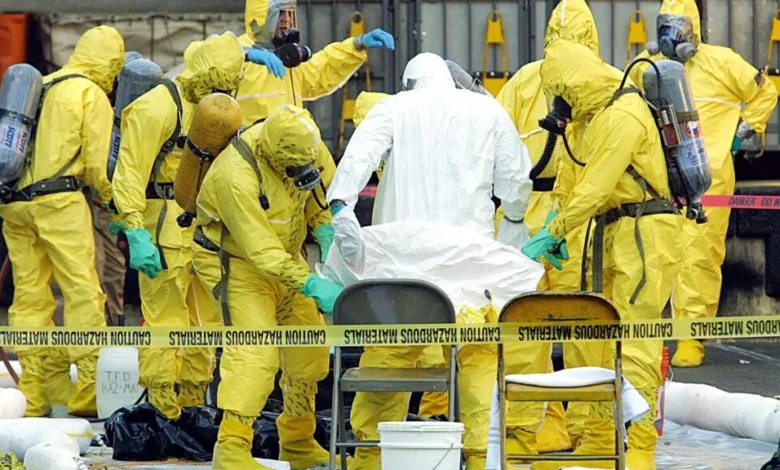
Twenty-five years have passed since the United States faced a domestic biological crisis that fundamentally altered the nation’s approach to public health and national security. In the immediate, volatile aftermath of the September 11, 2001, terrorist attacks, the American postal system was weaponized, serving as the delivery mechanism for a series of anthrax-laden envelopes that struck at the heart of the media and the federal government. This silent, invisible assault resulted in 22 confirmed cases of anthrax disease, five deaths, and a societal ripple effect that cost billions of dollars in emergency response, decontamination, and economic disruption. As the nation marks this somber quarter-century milestone, the legacy of the 2001 anthrax letters remains a vital case study for addressing contemporary biological threats, whether they arise from natural occurrences, accidental laboratory releases, or the increasingly complex intersection of synthetic biology and artificial intelligence.
A Chronology of Crisis
The ordeal began in Florida, where the mail-borne nature of the threat was first identified. On October 2, 2001, an astute clinician at American Media Incorporated (AMI) in Boca Raton suspected anthrax after observing characteristic indicators in a patient’s spinal tap. This discovery triggered an immediate notification to the Centers for Disease Control and Prevention (CDC) through the newly established Laboratory Response Network.
The chronology of the dissemination followed a chilling pattern. Forensic analysis identified two primary mailings. The first, postmarked September 18, 2001, contained a "crunchy," clumped formulation of Bacillus anthracis that resulted primarily in cutaneous, or skin-based, infections. These letters were directed largely at media organizations. The second mailing, postmarked October 9, 2001, featured a refined, "fine powder" formulation designed for easier aerosolization. This iteration led to a surge in inhalational anthrax cases, particularly among postal workers who handled the mail as it moved through the automated sorting process.
The federal response was unprecedented. The CDC, realizing the gravity of the situation, established an Emergency Operations Center (EOC) within its own auditorium, a move that would set the standard for future infectious disease outbreak responses. Public health teams were deployed across the country to conduct contact tracing and environmental testing, effectively engaging in a massive, real-time experiment to understand how a deliberate biological release behaves in an urban environment.
Shifting Paradigms of Infection
One of the most consequential realizations during the 2001 investigation was that the established scientific consensus on anthrax transmission was flawed. Pre-existing literature largely suggested that the risk of re-aerosolization—the process by which settled spores become airborne again—was minimal. Consequently, initial public health protocols were narrowly focused on individuals who had directly opened the tainted envelopes.
The infection of postal workers who had never touched the envelopes themselves forced a radical pivot in the government’s public health strategy. Investigators quickly recognized that the movement of mail through high-speed sorting machinery could aerosolize spores, putting workers in distant processing centers at significant risk. This realization prompted the administration of antimicrobial prophylaxis to an estimated 32,000 individuals. This massive prophylactic undertaking was successful; no further cases were identified among those who initiated the treatment, underscoring the necessity of rapid, adaptive decision-making when facing an unconventional biological threat.
The Modern Biodefense Landscape
In the two and a half decades since the attacks, the United States has invested heavily in biodefense. Today, the postal system is protected by sophisticated detection and screening technologies. Furthermore, the "Select Agent" regulations, implemented in the wake of the attacks, have significantly tightened oversight of laboratories handling high-consequence pathogens, making it far more difficult for unauthorized individuals to acquire such materials.
However, despite these technical advancements, the infrastructure of the nation’s public health system faces renewed strain. Reports from the Center for Strategic and International Studies (CSIS) have warned that Americans currently face higher biological risks than at any other point in the 21st century. This assessment is driven by a combination of factors: the erosion of public health funding, the loss of experienced scientific leadership, and the emergence of new technologies.
Artificial intelligence, in particular, has emerged as a double-edged sword. While AI offers transformative potential for vaccine development and early warning systems, it also lowers the barriers to entry for those seeking to synthesize or modify pathogens. The Bipartisan Commission on Biodefense has noted that AI fundamentally alters the biological threat landscape, providing capabilities for pathogen design that were once reserved for state-level programs.
Institutional Vulnerabilities
The current state of public health preparedness is marked by a concerning discrepancy between technological capability and institutional capacity. While the CDC and its partners possess more advanced diagnostic tools than they did in 2001, the effectiveness of these tools is contingent upon the human element—the experts, the networks, and the relationships required to interpret complex data and act.
Recent trends in public health staffing are cause for concern. Data indicates a significant decline in the civilian workforce at the CDC compared to previous years. The departure of subject matter experts and the slow pace of hiring scientific personnel have hampered the agency’s ability to manage high-consequence pathogen programs. Furthermore, the politicization of public health in recent years has created an environment where independent, evidence-based decision-making is sometimes challenged, potentially delaying responses to emerging threats.
Implications for the Future
The lessons of 2001 remain as relevant today as they were during the initial investigation. First, detection is only the first step; it must be coupled with rapid interpretation and coordinated action. The ability to integrate data from disparate local and state entities is essential to prevent a localized incident from becoming a national crisis.
Second, preparedness must remain flexible. The assumption that the initial manifestation of a threat is the only manifestation proved to be a fatal flaw in 2001. A culture of internal dissent and scientific skepticism is necessary to challenge existing assumptions and adapt to new evidence. Current administrative practices that stifle such dialogue could prove disastrous in a future biological emergency.
Third, institutional memory and workforce continuity are non-negotiable. Technology, no matter how advanced, cannot replace the "shoe-leather" epidemiology required to track a disease through a population. As the country navigates the ongoing challenges posed by natural outbreaks—such as recent incidents involving hantavirus, Ebola, and measles—the shadow of the 2001 anthrax attacks serves as a reminder that the strength of the nation’s defense lies in its people.
The specter of an intentional biological release remains a low-probability, high-consequence event. However, the unpredictability of both natural and artificial pathogens necessitates a sustained commitment to preparedness. Strengthening the cross-sector coordination between law enforcement, intelligence, and public health agencies is not merely an administrative goal; it is a fundamental pillar of national security.
Ultimately, the 25th anniversary of the anthrax attacks is a call to action. It serves as a reminder that the first signal of an outbreak—or an attack—will rarely provide the full picture. The capacity to respond effectively hinges on the ability to sustain the institutions and the scientific culture required to understand the threat in real-time. As the biological threat landscape continues to evolve, the resilience of the nation will depend on its ability to combine the lessons of the past with a proactive, science-driven approach to the uncertainties of the future.