Navigating America’s Fractured Political Landscape: The Imperative of Humility and Open Discourse

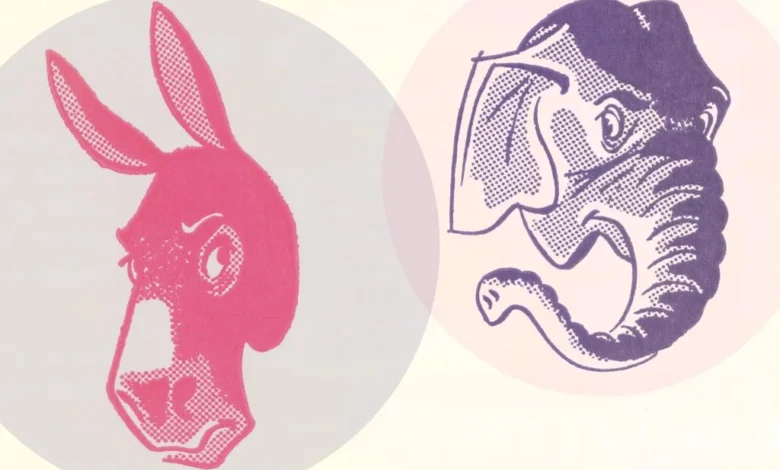
In the diverse tapestry of the United States, a nation comprising over 340 million citizens, a fundamental truth persists: regardless of their political alignment – be it conservative, liberal, or independent – most Americans harbor aspirations for lives characterized by happiness, health, prosperity, and profound meaning for themselves and their loved ones. Furthermore, an overarching desire for what each believes is unequivocally best for the nation binds them. However, the inherent complexity arises not from these shared aspirations, but from the myriad, often contradictory, opinions on precisely how to define "best" governance for the world’s most powerful and prosperous nation, and, critically, how to effectively achieve it. This fundamental divergence in methodology, rather than ultimate goals, has become the crucible of contemporary American political discourse, transforming what should be a robust exchange of ideas into an increasingly entrenched and often hostile conflict.
The Evolution of Political Polarization: A Historical Context
The current state of political tribalism is not an overnight phenomenon but the culmination of decades of societal and political shifts. Following the Second World War, American politics, while certainly contentious, often featured greater bipartisan cooperation and a more centrist political spectrum. Figures like Tip O’Neill and Ronald Reagan, despite their ideological differences, were known for their ability to forge relationships and compromise. This era, sometimes romanticized as a period of greater unity, was characterized by fewer media outlets, stronger political parties that encompassed broader ideological ranges, and a less geographically sorted populace.
However, starting in the late 20th century and accelerating into the 21st, several factors began to fray this civic fabric. The rise of cable news in the 1980s and 90s, followed by the internet and social media platforms, fragmented the media landscape. This allowed individuals to curate their information consumption, increasingly leading to "echo chambers" where existing beliefs were reinforced and alternative viewpoints were rarely encountered. Concurrently, political parties became more ideologically pure, driven by primary elections that rewarded fervent activists over moderate compromisers. This ideological sorting also manifested geographically, with like-minded individuals tending to reside in similar communities, further reducing opportunities for cross-partisan interaction. Events such as the contentious impeachment proceedings of the 1990s, the deeply divided response to the Iraq War, and the stark partisan battles over healthcare reform during the Obama administration each contributed to widening the chasm, creating a climate where political identity began to overshadow shared national identity.
The Psychology of Political Identity: When Belief Becomes Being
One of the most concerning aspects of modern political culture, as highlighted by various sociological and psychological studies, is the profound intertwining of personal identity with political opinion. What one believes about policy or governance is no longer merely an intellectual position but a core component of who one is. This fusion transforms political discourse from a debate about facts and approaches into a personal affront. When an opinion is challenged, it feels like an attack on one’s very self, triggering defensive mechanisms that prioritize loyalty to one’s "tribe" over rational evaluation.
Psychological research offers insights into this phenomenon. Concepts like "in-group/out-group bias" demonstrate humans’ innate tendency to favor members of their own group and view outsiders with suspicion or hostility. "Confirmation bias" leads individuals to seek out, interpret, and remember information in a way that confirms their pre-existing beliefs, dismissing contradictory evidence. "Cognitive dissonance" describes the mental discomfort experienced by a person who holds contradictory beliefs, often resolved by rationalizing or rejecting information that challenges their worldview. In a highly polarized environment, these cognitive biases are amplified, creating an impermeable barrier to changing one’s mind. Admitting error, in such a climate, can feel not merely like conceding a point but like a betrayal of one’s identity and one’s group, particularly to those who equate unwavering certainty with strength. This dynamic stifles intellectual growth and prevents the critical self-reflection necessary for adaptive governance.
The Peril of Unquestioning Orthodoxy: A Case Study
The erosion of intellectual independence in favor of tribal loyalty is starkly illustrated by instances where individuals dare to deviate from their expected ideological script. Consider the hypothetical "John," a deeply read and intellectually formidable individual who once described himself as "to the left of Trotsky." Despite his staunch progressive leanings, John surprised many by expressing agreement with the Supreme Court’s Citizens United v. Federal Election Commission decision. This 2010 landmark ruling held that corporations and unions have the same First Amendment rights as individuals and therefore cannot be restricted in their independent political spending.
The Citizens United decision was widely condemned by liberals, who argued it unleashed a torrent of "dark money" into politics, empowering corporations and wealthy donors at the expense of ordinary citizens. They contended that treating corporations as "persons" for free speech purposes distorted the democratic process. John, however, while acknowledging the potential discomfort, offered a nuanced defense. He posited that if corporations are legally treated as persons for accountability – held responsible for their actions, subject to fines, and liable in court – then it is logically consistent, albeit perhaps politically unpalatable, that they should also enjoy certain constitutional protections, including free speech. His willingness to articulate a position that ran counter to the prevailing orthodoxy of his political "tribe" demonstrated an intellectual honesty and curiosity often absent in contemporary discourse. This intellectual courage, the readiness to critically examine an issue beyond partisan talking points, has become increasingly rare, signaling a broader trend where adherence to party lines trumps independent thought.
The "Silence is Complicity" Doctrine and its Impossible Standards
Modern political culture frequently demands not merely agreement but public, unequivocal affirmation of specific positions. In this environment, silence itself can be weaponized, interpreted as evidence of guilt, indifference, or complicity. Yet, democratic societies have historically recognized abstention as a meaningful stance. Individuals may choose silence for a multitude of valid reasons: insufficient knowledge on a complex issue, competing personal or professional obligations, a lack of conviction regarding any single solution, or simply the prudence that counsels restraint in highly charged debates. Not every issue necessitates a public declaration, nor does every undecided citizen automatically become morally accountable for every perceived wrong committed in the world.
The assertion that silence always equates to compliance imposes an impossible standard upon individuals. No single person possesses the encyclopedic knowledge, limitless time, or undivided attention required to publicly engage with every political controversy, issue, or perceived injustice that arises globally or domestically. To insist otherwise is to demand a degree of certainty and omnipresence that no human being can consistently sustain. This demand for constant public performance creates an environment of fear and self-censorship, where individuals are hesitant to express nuanced opinions or even to remain neutral, lest they be mislabeled or ostracized by their own or opposing factions. Such an atmosphere ultimately impoverishes public discourse, replacing thoughtful deliberation with performative solidarity.
Data Reflecting Deepening Divides
Statistical data from reputable research organizations consistently underscore the severity of America’s political polarization. The Pew Research Center, for instance, has extensively documented the growing ideological distance between the two major parties, showing that the median Republican is now more conservative than 95% of Democrats, and vice versa. Furthermore, negative partisanship—the tendency to dislike the opposing party more than one likes their own—has significantly increased. In a 2022 Pew study, a substantial majority of both Republicans (72%) and Democrats (62%) reported having "cold" or "very cold" feelings toward the other party. This isn’t merely disagreement; it’s active antipathy, impacting everything from inter-personal relationships to legislative functionality.
Gallup polls tracking trust in institutions also reveal a worrying trend. Public trust in Congress, the presidency, and even the Supreme Court has fluctuated wildly along partisan lines, often reflecting approval or disapproval of the party in power rather than objective evaluation of institutional performance. This erosion of trust, fueled by partisan narratives, makes it exceedingly difficult to build consensus or for leaders to govern effectively, as their actions are often viewed through a lens of partisan suspicion rather than national interest.
The Abrahamic Metaphor: Conviction Detached from Humility
The biblical narrative of Abraham and Isaac offers a powerful, albeit stark, metaphor for the perils of absolute political commitment. Abraham’s willingness to sacrifice his most precious possession, his son Isaac, in obedience to a perceived divine command, symbolizes ultimate devotion. In a political context, citizens can become similarly devoted to ideological causes or political movements, viewing them as sacrosanct and beyond reproach. When an ideology fully subsumes one’s identity, reason often ceases to function as an evaluator of conviction, instead becoming its servant, diligently constructing justifications for pre-existing beliefs, however extreme.
While political movements often originate from legitimate concerns and noble intentions, history is replete with examples where the fervent desire to "save" a nation or uphold a particular ideal becomes so intense that it justifies actions that profoundly damage the very social trust, democratic institutions, and civic bonds upon which the nation depends. If citizens are likened to Abraham and the nation itself to Isaac, excessive partisanship risks sacrificing the very thing it purports to preserve. Unlike Abraham, however, modern political partisans operate without the guarantee of a divine covenant or the expectation that providence will intervene to stay the knife. The danger, therefore, is not conviction itself, which is often a necessary fuel for positive change, but rather conviction detached from the indispensable quality of humility.
Philosopher Søren Kierkegaard, in his exploration of faith and uncertainty, utilized the Abraham story to distinguish between the "Knight of Infinite Resignation" and the "Knight of Faith." Both figures embody profound conviction, but their approach to uncertainty differs fundamentally. The Knight of Infinite Resignation accepts sacrifice within the logical limits of reason, understanding that some things are lost forever. The Knight of Faith, however, acts decisively despite reason’s inability to provide absolute certainty, embracing the paradox of believing in the impossible. Modern politics, in its relentless pursuit of victory and ideological purity, increasingly rewards a spirit akin to resignation, where loyalty is prized above thoughtful reflection, certainty above humility, and tribal solidarity above intellectual honesty. Yet, effective democratic citizenship may demand a posture closer to Kierkegaard’s Knight of Faith: the willingness to pursue what one believes is right, coupled with the profound and persistent acknowledgment of the possibility of error.
Lessons from Lincoln: Tempering Certainty with Humility
Perhaps no American leader embodied this delicate balance better than President Abraham Lincoln during the darkest days of the Civil War—a period when Americans on both sides were equally convinced of the moral righteousness of their respective causes. In a private reflection, later discovered among his papers, Lincoln wrote: "In the present civil war it is quite possible that God’s purpose is something different from the purpose of either party — and yet the human instrumentalities, working just as they do, are of the best adaptation to effect His purpose. I am almost ready to say this is probably true — that God wills this contest, and wills that it shall not end yet."
Lincoln’s observation is remarkable not because it weakens conviction; he tirelessly prosecuted a war he believed necessary for the preservation of the Union. Rather, it is remarkable because it profoundly tempers certainty. He admitted that neither side, despite their fervent beliefs, might fully comprehend the larger, overarching purpose being served. He acted with decisive conviction while simultaneously retaining a profound humility before the limits of his own understanding and the inscrutability of historical forces. This capacity for humble certainty—the ability to act decisively while acknowledging one’s fallibility—is a lesson modern American politics desperately needs to internalize.
The Broader Impact and Implications
The implications of unchecked partisan tribalism extend far beyond heated rhetoric. It paralyzes legislative action on critical issues, erodes public trust in democratic institutions, and fosters a climate of hostility that can, at its extreme, threaten social cohesion and stability. When political disagreement escalates into existential conflict, compromise becomes synonymous with surrender, and collaboration is viewed as weakness. This prevents effective governance on pressing challenges such as climate change, economic inequality, healthcare reform, and infrastructure development, which demand sustained, bipartisan effort.
Furthermore, the constant pressure for ideological conformity discourages innovative thinking and the exploration of novel solutions. Policy debates become less about evidence-based analysis and more about ideological purity tests. This leads to a stagnation of ideas and an inability to adapt to new realities. The long-term impact risks undermining the very foundations of democratic governance, which relies on the ability of citizens to engage in good-faith deliberation and for elected representatives to find common ground for the collective good.
Cultivating a Path Forward: The Imperative of Humility
The path forward requires a conscious and sustained effort to reintroduce humility and intellectual honesty into American political discourse. This involves fostering environments where changing one’s mind is seen not as a defeat but as a sign of growth and open-mindedness. It means valuing critical thinking and media literacy, enabling citizens to discern fact from partisan rhetoric and to challenge their own confirmation biases. Encouraging cross-partisan dialogue, even at local levels, can help bridge divides and humanize those on the "other side."
Ultimately, the wisdom that modern American politics most needs to acquire is the recognition that opinions, however deeply cherished, remain opinions. The moment these opinions become unquestionable articles of faith, they cease to be instruments of understanding and become instead dogmatic pronouncements of a public orthodoxy. The true measure of conviction is not absolute certainty, but rather the unwavering willingness to pursue what one believes is right, while simultaneously retaining the profound humility to recognize that one may be wrong—and, crucially, possessing the wisdom to avoid destroying the very thing one hopes to save in the process. The future of American democracy may well depend on whether its citizens and leaders can embody this essential, yet increasingly elusive, balance.