ICE Apprehends Undocumented Immigrant Accused of Assaulting NYPD Officer Following Manhattan Manhunt Ignited by Sanctuary City Release

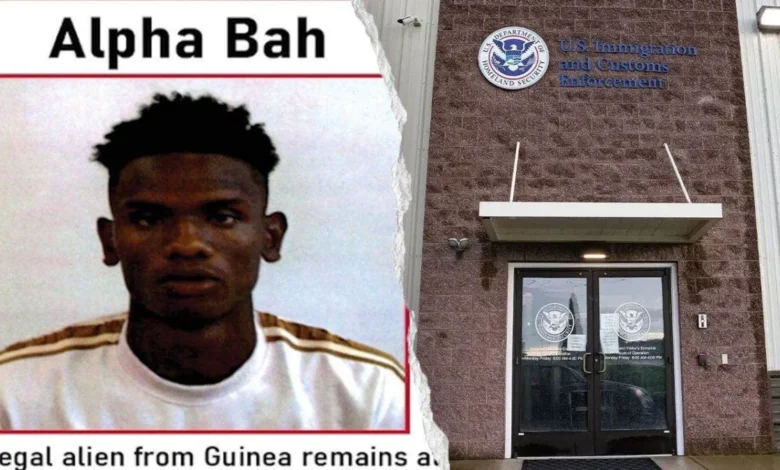
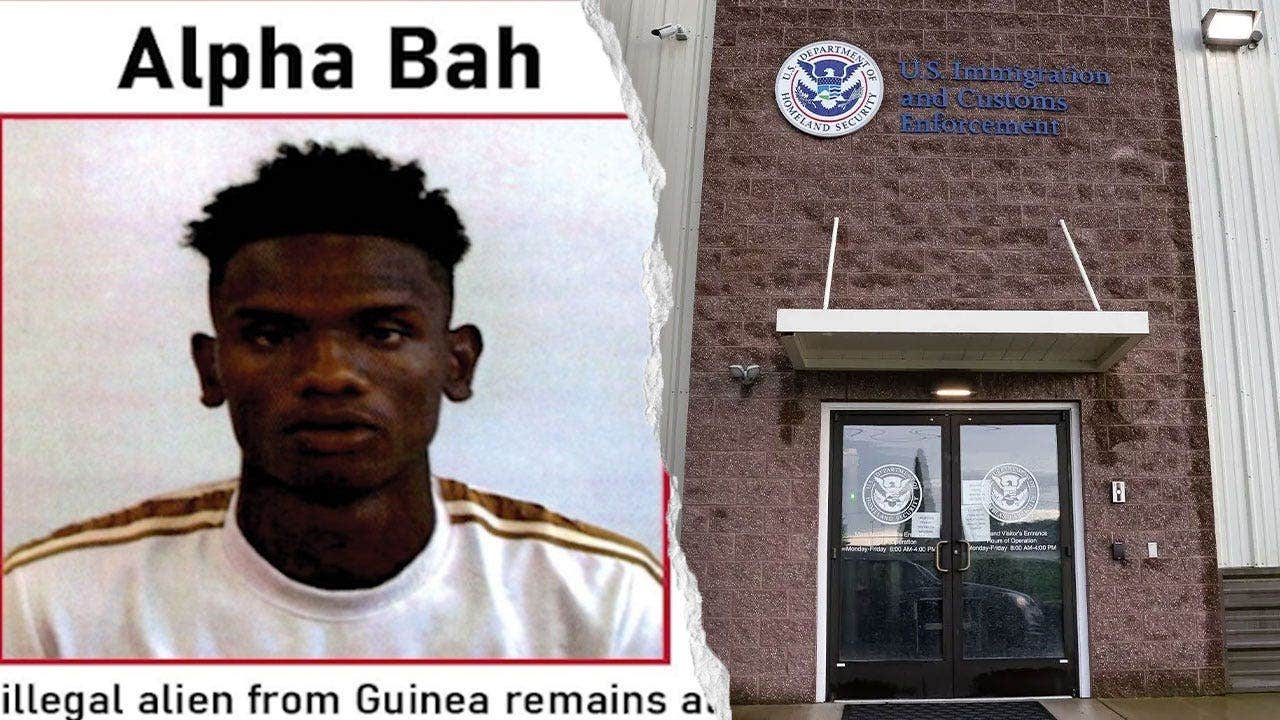
Federal immigration enforcement authorities successfully took Alpha Bah into custody on Friday afternoon, concluding a high-stakes manhunt triggered by his controversial release from local New York City custody. Bah, an undocumented national from Guinea, is accused of violently attacking a New York City Police Department (NYPD) officer earlier in October. His apprehension by Immigration and Customs Enforcement (ICE) officers at a temporary residence in Manhattan underscores an ongoing, intense jurisdictional clash between federal immigration authorities and local municipal leadership regarding sanctuary city policies, inter-agency cooperation, and public safety.
The operation, executed by officers assigned to ICE’s Enforcement and Removal Operations (ERO), highlights the intricate logistical and tactical steps federal agents must navigate when pursuing individuals released under local non-cooperation mandates. The case has rapidly escalated into a national flashpoint, drawing sharp rebukes from Department of Homeland Security leadership directed squarely at New York Governor Kathy Hochul and New York City Mayor Zohran Mamdani.
The Chronology of an Operation: Surveillance and Apprehension
According to details provided by the Department of Homeland Security, the operation to locate and arrest Bah culminated on Friday afternoon following intense intelligence-gathering efforts by ERO field personnel. Earlier in the day, ERO intelligence units successfully geolocated Bah to a temporary residential dwelling situated within the five boroughs of New York City.
At approximately 1:30 p.m. on Friday, federal teams established a robust surveillance perimeter around the target location. Field operatives observed the residence closely, ensuring they could track any movement while prioritizing public safety in the densely populated urban environment.
By 2:22 p.m., agents observed an individual whose physical characteristics closely matched Bah emerging from the building. The suspect engaged in brief conversations with several unidentified individuals on a public street directly outside the residence. Rather than immediately moving in to effect an arrest—a decision dictated by the presence of several school-aged children walking in the immediate vicinity—officers maintained passive surveillance to prevent any collateral risk to minors or bystanders.
Approximately one hour later, at roughly 3:25 p.m., the suspect was observed walking alone. ERO operatives closed the distance, identifying themselves clearly as law enforcement officers displaying both police and ICE credentials. To definitively verify his identity prior to physical transport, officers utilized a combination of standard biographical questioning, photographic matching, and Mobile Fortify, a cutting-edge biometric identification tool equipped with rapid fingerprint and facial recognition capabilities linked to federal databases.
Once Bah’s identity was conclusively verified as the subject of an outstanding administrative immigration arrest warrant, officers took him into custody without incident. The suspect was immediately transferred to the federal office building located at 26 Federal Plaza in Lower Manhattan for formal post-arrest processing, biometric confirmation, and preparation for removal proceedings.
The Catalyst: Criminal Charges and Sanctuary Release
The circumstances surrounding Bah’s time in local custody before Friday’s arrest have ignited a fierce debate over the practical applications of New York’s municipal sanctuary laws.
Bah’s initial legal troubles in the United States began on October 7, when he was taken into custody by local law enforcement officers following an alleged altercation. According to charging documents and DHS summaries, Bah faced a severe array of criminal counts, including aggravated assault upon a police officer utilizing a deadly weapon, resisting arrest, obstructing governmental administration, and intent to obtain transportation without paying a fare (commonly referred to as turnstile jumping).
Under standard operating procedures prior to the widespread adoption of strict sanctuary directives, federal immigration authorities routinely lodge immigration detainers—formal requests asking local jails and detention facilities to maintain custody of a non-citizen for up to 48 hours beyond their scheduled release time, allowing ICE officers sufficient opportunity to assume custody. In Bah’s case, ERO officials lodged an official detainer with Queens Central Booking following his arraignment on the October criminal charges.
However, under New York City’s local sanctuary legislation, municipal correctional facilities are legally barred from honoring ICE detainer requests unless the individual in question has been convicted of certain specific, high-level violent felonies or if a judicial warrant signed by an Article III federal judge is presented. Because administrative immigration warrants are signed by immigration officers rather than federal judges, local authorities declined to honor the detainer. Consequently, Bah was released back onto the streets of New York City without federal immigration authorities receiving timely notification of his impending release, setting off the multi-agency manhunt that concluded on Friday.
Official Reactions and Political Fallout
The decision by local authorities to release Bah despite the pending federal detainer drew swift, unsparing condemnation from top federal officials, who argue that such policies directly jeopardize the safety of both law enforcement personnel and the general public.
In statements released prior to Friday’s successful apprehension, DHS Secretary Markwayne Mullin delivered a scathing critique of New York’s executive leadership.

"This illegal alien from Guinea was arrested for assaulting a police officer with a deadly weapon," Secretary Mullin stated. "Despite these violent charges, New York City sanctuary politicians refused to honor ICE’s detainer and released him back onto the streets, forcing our officers to track him down. DHS is calling on Governor Kathy Hochul and Mayor Zohran Mamdani to knock it off with these evil sanctuary policies before another American gets hurt, or worse."
The friction between federal immigration enforcement and local municipal officials is not a new phenomenon, but the specifics of Bah’s case—involving a direct, violent assault on a sworn law enforcement officer—have amplified the political urgency of the debate. Proponents of sanctuary policies argue that local non-cooperation mandates foster trust between immigrant communities and municipal services, encouraging victims and witnesses of crimes to interact with police without fear of deportation proceedings. Conversely, critics and federal law enforcement agencies contend that these policies systematically shield individuals accused of serious criminal offenses from federal accountability, creating preventable risks to public safety.
Recent reports from congressional oversight committees have further complicated the local political landscape, highlighting internal practices within municipal prosecution offices regarding plea deals tailored to avoid immigration consequences. These findings have added fuel to ongoing legislative battles at both the state and federal levels regarding the legality and future of sanctuary jurisdictions nationwide.
Broader Implications and Next Steps
The successful apprehension of Alpha Bah brings a temporary resolution to a high-profile manhunt, but the broader policy implications of the incident will likely reverberate through legislative chambers and courtrooms for months to come.
Following his processing at 26 Federal Plaza, Bah is expected to face formal federal immigration removal proceedings in addition to any ongoing criminal prosecution associated with his October 7 arrest. Federal authorities have indicated that they intend to pursue his removal from the United States vigorously once local criminal matters are resolved, leveraging federal detention facilities where local cooperation is unavailable.
As the political debate intensifies, the case serves as a focal point for a larger national reckoning over immigration enforcement, federalism, and the limits of local autonomy in matters of public safety and national security. With DHS officials doubling down on their public pressure campaign against New York leadership, the pressure on municipal policymakers to defend or reconsider their sanctuary stance has arguably never been higher.
Related posts: