Global Light Vehicle Production Forecast Revised Downward as Chinese Industrial Saturation Impacts 2026 Outlook

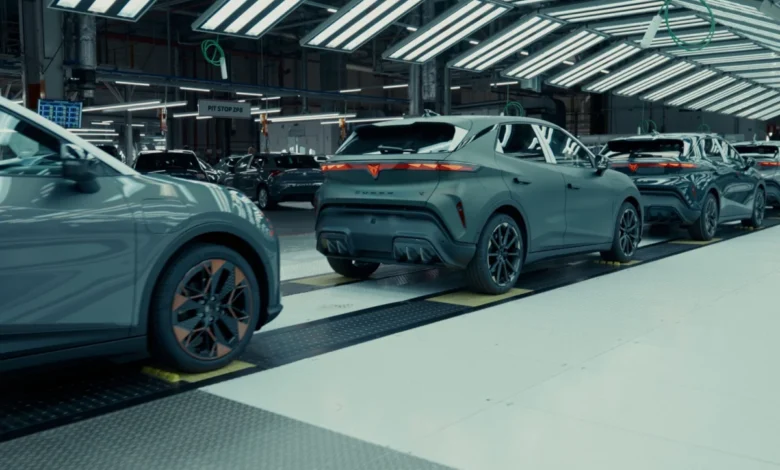
Global light vehicle production is facing a significant recalibration as cooling industrial activity in China prompts analysts to slash their long-term growth projections. According to the latest data update from Automotive World, the anticipated global output for 2026 has been revised downward to 76.5 million units, representing a 3.1% decrease from previous estimates. This adjustment reflects a broader shift in the automotive landscape, where the aggressive expansion of the last decade is meeting the hard reality of market saturation and shifting consumer behavior in the world’s largest car market.
The revision highlights a stark disparity between different geographic regions. While several emerging and established markets continue to show signs of resilience and growth, the sheer scale of the downturn in China has proven sufficient to drag the global aggregate into negative territory. Of the 2.5 million-unit shortfall identified in the updated forecast, nearly the entirety of the decline is attributed to Chinese industrial output. This pivot suggests that the era of hyper-growth in China’s domestic automotive sector may be reaching a plateau, forcing manufacturers to reconsider their production strategies on a global scale.
The China Contraction: A Turning Point for the World’s Largest Market
The most significant takeaway from the July update is the 17% reduction in China’s projected production for 2026. Analysts now expect the country’s output to top out at 18.7 million units, a sharp decline from the bullish forecasts issued just a year ago. This more bearish conclusion is rooted in growing pessimism among Chinese automakers and industry associations regarding the domestic market’s ability to absorb current production levels.
For years, the Chinese automotive industry operated under the assumption that demand would continue to scale alongside the country’s middle class. However, recent economic data suggests a cooling of consumer sentiment. High levels of household debt, a sluggish property market, and a general post-pandemic economic slowdown have dampened the enthusiasm for new vehicle purchases. Consequently, the industry is grappling with a significant supply-demand imbalance. More cars are rolling off assembly lines than there are buyers ready to take them home, leading to an "inventory overhang" that is now forcing a reduction in future production targets.
Major domestic brands, which have been the primary drivers of China’s automotive ascent, are expected to bear the brunt of this correction. Companies such as BYD, Chery, and Geely, which have invested billions into expanding their manufacturing footprints, now face the challenge of managing excess capacity. While these brands have seen remarkable success in the New Energy Vehicle (NEV) sector, the saturation of the domestic market means they must increasingly look toward exports to maintain their production momentum—a strategy that is becoming more difficult due to rising international trade tensions.
Chronology of a Cooling Market: From Post-Pandemic Surge to Saturation
To understand the 2026 downward revision, it is necessary to examine the timeline of the global automotive industry over the last five years. The industry has moved through several distinct phases, each contributing to the current state of oversupply in China and cautious growth elsewhere.
2020–2021: The Pandemic Disruption and Supply Chain Crisis
The global automotive industry was hit by unprecedented factory closures and a subsequent semiconductor shortage. During this period, production was constrained not by demand, but by the inability to source components. This created a massive "pent-up demand" that led to high prices and record profits for many manufacturers.
2022: The Race to Recover
As supply chains began to stabilize, manufacturers, particularly in China, ramped up production to meet the backlog of orders. The Chinese government introduced various subsidies and tax breaks to stimulate the economy, specifically targeting the electric vehicle (EV) sector. This led to a surge in production capacity as brands raced to capture market share in the rapidly evolving NEV landscape.
2023: The Price Wars Begin
By early 2023, the gap between production and demand in China began to manifest. Led by Tesla and followed quickly by BYD, a brutal price war broke out. Manufacturers slashed prices to clear inventory, which momentarily boosted sales but eroded profit margins and signaled that the domestic market was reaching its limit.
2024: The Realization of Saturation
The current year has been defined by a "reality check." Industry associations, including the China Association of Automobile Manufacturers (CAAM), have expressed concerns about the sustainability of current production levels. The Automotive World July update codifies this sentiment, projecting that the overproduction seen in 2023 and 2024 will necessitate a significant cooling period leading into 2026.
Regional Resilience: India and Mexico Emerge as Growth Engines
While China’s outlook has darkened, the forecast for the rest of the world offers a more optimistic counter-narrative. The downward revision in global figures would have been much more severe if not for the upward adjustments in other key regions.
India stands out as the primary beneficiary of the shifting industrial tide. Production estimates for India have been revised upward by a staggering 18%. This growth is driven by a combination of factors, including a rapidly expanding middle class, significant government investment in infrastructure, and the "Make in India" initiative, which encourages global manufacturers to establish local assembly lines. Brands like Suzuki (via Maruti Suzuki), Hyundai, and Tata Motors are seeing robust domestic demand, while also positioning India as a burgeoning export hub for Southeast Asia and Africa.
Mexico has also seen a positive revision of 6.1%. The country is benefiting immensely from "nearshoring" trends, as manufacturers looking to serve the North American market seek to reduce their reliance on trans-Pacific supply chains. The United States-Mexico-Canada Agreement (USMCA) provides a stable regulatory framework that encourages investment in Mexican automotive plants, particularly for parts and light trucks destined for the U.S. market.
In the United States, production forecasts have been increased by 4.4%. This is largely attributed to the incentives provided by the Inflation Reduction Act (IRA), which has spurred a wave of investment in domestic EV manufacturing and battery production. Despite high interest rates, the U.S. consumer market has remained relatively resilient, supporting a steady production outlook. Europe, meanwhile, saw a modest upward revision of 0.8%. While the region continues to struggle with high energy costs and a complex transition to electrification, the stabilization of supply chains has allowed for a slight improvement in projected output.
The Impact on Major Manufacturers: BYD, Geely, and the Global Pivot
The 17% drop in Chinese production estimates carries heavy implications for the country’s leading automotive groups. BYD, which recently overtook Tesla as the world’s largest producer of EVs on a quarterly basis, is now at a crossroads. While its technological prowess is undisputed, its massive manufacturing footprint was designed for a domestic market that is no longer growing at the same pace. To sustain its growth, BYD is aggressively expanding into Europe, Southeast Asia, and Latin America, but these efforts are meeting with increased regulatory scrutiny.
Geely and Chery face similar challenges. Geely, which owns Volvo and has significant stakes in several European brands, has a more diversified global footprint than some of its domestic rivals. However, its core production remains heavily tied to the Chinese economy. The projected downturn suggests that these companies will need to accelerate their transition from "China-centric" entities to truly global manufacturers, which involves the difficult task of setting up factories in foreign jurisdictions to bypass trade barriers.
Industry analysts suggest that the "bearish conclusion" regarding China reflects a necessary correction. For years, the Chinese market was the "engine of growth" for the global industry. As that engine cools, the focus is shifting toward efficiency and market-specific production rather than sheer volume.
Geopolitical Headwinds and Trade Barriers
The reduction in production forecasts cannot be viewed in isolation from the geopolitical climate. The "shortfall" in Chinese production is partly a response to the increasing difficulty Chinese-made vehicles face in international markets. Both the United States and the European Union have recently moved to implement or increase tariffs on Chinese-made electric vehicles, citing concerns over state subsidies and unfair competition.
These trade barriers make it harder for Chinese manufacturers to export their way out of domestic saturation. If a Chinese brand cannot easily sell its excess inventory in Paris or New York, it has no choice but to scale back production at home. This geopolitical friction is a key driver behind the 17% reduction in Chinese output. Manufacturers are realizing that the global market is no longer a "free-for-all" and that localizing production in the markets where they sell is becoming a prerequisite for success.
Analysis: The Long-Term Consequences for the Global Supply Chain
The revision to 76.5 million units globally marks a departure from the "road to 100 million" narrative that dominated industry discussions a decade ago. This shift suggests that the global automotive industry is entering a more mature, perhaps even stagnant, phase in terms of total volume.
1. Supply Chain Consolidation:
With lower production volumes, the pressure on Tier 1 and Tier 2 suppliers will intensify. Companies that provide components for internal combustion engines (ICE) are particularly vulnerable as the industry continues its slow but steady pivot toward electrification. A smaller overall "pie" means that only the most efficient and technologically advanced suppliers will survive the next five years.
2. Focus on Value Over Volume:
As production targets are lowered, manufacturers are likely to focus more on high-margin vehicles—such as SUVs and luxury EVs—rather than mass-market economy cars. This trend is already visible in the U.S. and Europe, where the average transaction price for a new vehicle has risen significantly over the last three years.
3. The Rise of New Hubs:
The 18% jump in India’s forecast and the 6.1% rise in Mexico indicate a fundamental geographic shift. The global automotive "center of gravity" is moving away from a China-centric model toward a more fragmented, regionalized approach. This "localization of production" helps mitigate risks associated with trade wars and shipping disruptions, but it also increases the complexity of managing global operations.
4. The EV Transition Challenge:
The downturn in China is particularly poignant because China has been the leader in EV adoption. If the world’s most advanced EV market is hitting a wall of saturation, it raises questions about the pace of the transition in other regions. Manufacturers must now balance the need to invest in future technologies with the reality of a global market that is producing fewer vehicles overall.
In conclusion, the July update from Automotive World serves as a sobering reminder of the volatility inherent in the global industrial economy. The 3.1% decline in the 2026 global production forecast is not merely a statistical adjustment; it is a signal of a structural shift in how and where the world’s cars are made. As China grapples with the challenges of a maturing market, the rest of the world—led by India and North America—is stepping up to fill the void, albeit not enough to prevent an overall contraction in the global outlook. The coming years will likely be defined by a quest for efficiency, as the industry learns to navigate a world where growth is no longer a given.
Related posts: