High-Stakes Leadership Battles and Legislative Clashes Grip Capitol Hill Following Midterm Elections

The smoke from the midterm elections has barely cleared, yet Washington, D.C., is already engulfed in an even more intense political struggle: high-stakes internal leadership elections and a fierce ideological battle over the future legislative agenda of the United States Congress. While the dust settles from a dramatic cycle that saw major shifts in congressional power, lawmakers on both sides of the aisle are grappling with internal dissent, leadership challenges, and the heavy math of a newly configured Capitol.
As the political machinery prepares for the upcoming congressional term, House and Senate leaders face unexpected friction from their own flanks. House Speaker Mike Johnson, R-La., has opted not to pursue the minority leader post, paving the way for a crowded and contentious field of Republican contenders. Meanwhile, Senate Majority Leader John Thune, R-S.D., maintains his position despite a complex relationship with the White House, though progressive Democrats are mounting internal challenges against established leadership figures like Senate Minority Leader Chuck Schumer and House Minority Leader Hakeem Jeffries.
Internal Dissent and Leadership Challenges
The post-midterm environment has laid bare deep-seated generational and ideological fractures within both major parties. On the Democratic side, despite a sweeping night of electoral victories, incoming progressive lawmakers have openly hesitated to offer unconditional support to incumbent leaders.
Sen.-elect Abdul El-Sayed, D-Mich., who has long positioned himself as a formidable voice for the progressive wing, declined to endorse Chuck Schumer for Majority Leader immediately following the election. Instead, El-Sayed pointed toward alternative candidates, expressing a desire for leadership that prioritizes sweeping reforms such as Medicare for All and aggressive measures to remove corporate money from politics. Other incoming progressive voices, including Sen.-elect Adam Hamilton of Kansas and Sen.-elect Annie Andrews of South Carolina, have similarly voiced desires for a new generation of congressional leadership, openly questioning whether entrenched leaders can meet the demands of a changing electorate.
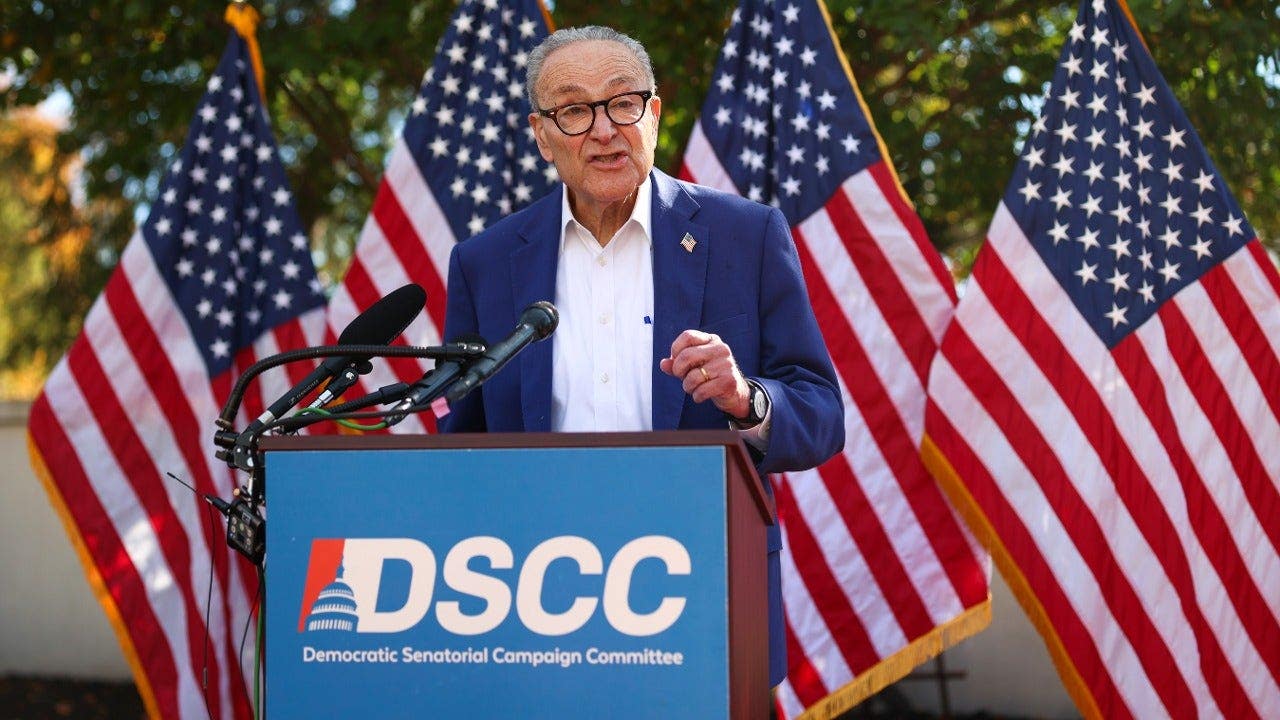
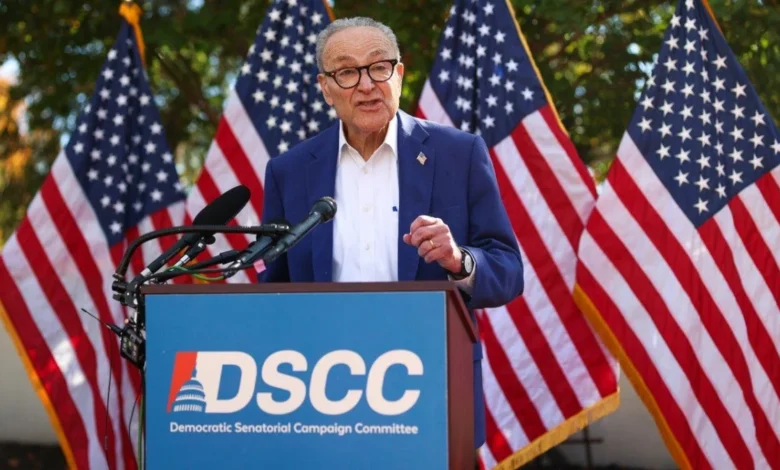
Despite this localized friction, Schumer has projected absolute confidence in his retention of the post. To secure another term as Majority Leader, Schumer requires a simple majority of approximately 29 votes within a secret caucus ballot of incoming Senate Democrats.
Simultaneously, House Democrats face their own internal dynamics. While the caucus is projected to command a robust majority—potentially exceeding 260 seats once all outstanding races are finalized—at least five members affiliated with the Democratic Socialists of America have signaled they will withhold their votes for Hakeem Jeffries as Speaker unless they receive binding commitments regarding their policy priorities. However, given the expansive size of the expected Democratic caucus, Jeffries retains a comfortable buffer, affording him dozens of potential defections while still needing the standard 218 votes for an outright majority of the entire 435-seat House when the new Congress convenes on January 3.
Republican Reorganization and the Future of House Leadership
Across the aisle, House Republicans are navigating a period of profound introspection and structural reorganization following the midterms. Speaker Mike Johnson previously hinted at a potential departure from political life during a campaign appearance, remarking on the unpredictable nature of his calling. While a permanent retirement to his hometown of Shreveport, Louisiana, remains speculative, the Republican conference is actively contesting the top positions.
House Majority Leader Steve Scalise of Louisiana and hardline conservative Rep. Jim Jordan of Ohio have both entered the fray to lead the House Republican conference. Concurrently, House Majority Whip Tom Emmer of Minnesota is seeking to return as minority whip, facing a direct challenge from Rep. August Pfluger of Texas.
The core dilemma facing House Republicans lies in coalition management. Both Scalise and Jordan are closely aligned with President Donald Trump, a dynamic that creates friction within a party deeply divided over whether to double down on Trump-era populism or pivot toward a broader appeal.

Legislative Priorities and the Policy Clash
With the political alignments crystallized, attention has turned swiftly to the legislative battlefield. Unlike the historic 1994 midterm cycle—which featured Newt Gingrich’s formalized 10-point "Contract with America"—the incoming Democratic majorities have mapped out a strategic, multifaceted agenda focused heavily on economic corrections, healthcare preservation, and technological regulation.
Among the primary initiatives for congressional Democrats is the reversal of tax cuts enacted under the previous legislative package, alongside immediate efforts to renew and permanently fund expired Obamacare subsidies. The battle over healthcare premium offsets was a central catalyst behind the historic 43-day government shutdown in the previous Congress, an event that both parties utilized to sharpen their messaging to the American public.
Furthermore, Democrats are turning their legislative focus toward emerging economic sectors, notably artificial intelligence and the rapid proliferation of data centers. Lawmakers have expressed growing anxiety that rapid technological automation poses an existential threat to American labor, signaling upcoming hearings and regulatory proposals to safeguard domestic jobs. Progressive leaders, including Congressional Progressive Caucus figures, have framed the public pushback against unregulated data expansion as an early indicator of a larger political realignment driven by technology.
Foreign policy and trade also remain prime territory for legislative conflict. Democratic lawmakers are preparing fresh war powers resolutions aimed at curtailing unauthorized military engagements—specifically concerning operations in Iran—by restricting federal funding. Proponents argue that de-escalating foreign conflicts will directly alleviate inflationary pressures on domestic energy markets, subsequently lowering the cost of consumer goods and groceries.
Tariff policy stands as another major flashpoint. Despite mounting economic research suggesting that broad-based tariffs have driven up the costs of American-made goods, congressional Republicans have largely defended the administration’s trade protections as a necessary defense of domestic manufacturing. Democrats view the post-election landscape as an opportunity to challenge this consensus, pushing for votes to unwind what they characterize as a self-defeating tariff regime.

The Arithmetic of Governance: Vetoes and Overrides
As the new Congress prepares to take office, the ultimate success of either party’s legislative ambitions will be dictated by strict mathematical realities.
Democrats are guaranteed a commanding presence, holding 54 confirmed seats in the Senate—with contests in Alaska and Mississippi remaining too close to call—and tracking toward over 260 seats in the House. Passing legislation is well within reach, but overriding a presidential veto requires a formidable two-thirds supermajority: 290 votes in the House and 67 votes in the Senate.
While reaching 290 votes in the House is mathematically possible if Democrats maintain a 260-seat floor and secure defections from moderate or disillusioned Republicans, achieving 67 votes in the Senate presents a steeper challenge. The departure of prominent Senate figures—including former Majority Leader Mitch McConnell of Kentucky, alongside Sens. John Cornyn of Texas, Bill Cassidy of Louisiana, and Thom Tillis of North Carolina—shifts the internal dynamics of the upper chamber, yet coalescing the necessary Republican votes to override a White House veto will demand profound bipartisan negotiation.
Ultimately, the trajectory of the federal government will depend on the delicate interplay between legislative initiatives advanced by congressional majorities and the executive authority wielded by the White House. As internal leadership elections conclude and lawmakers descend upon Capitol Hill, Washington stands on the precipice of a legislative session defined equally by intra-party debate and inter-branch friction.
Related posts: