High Stakes in the Final Nine Days: Trump, Vance, Obama, and Harris Blitz the Country as Parties Clash for Control of Congress

With just nine days remaining until a critical Election Day, the national political landscape has shifted into overdrive as both major political parties execute their final, high-stakes campaigns to determine control of the United States Congress. The outcome of these midterms carries profound implications, effectively poised to serve as either a legislative anchor or an expansive runway for President Donald Trump’s agenda during the final two years of his term.
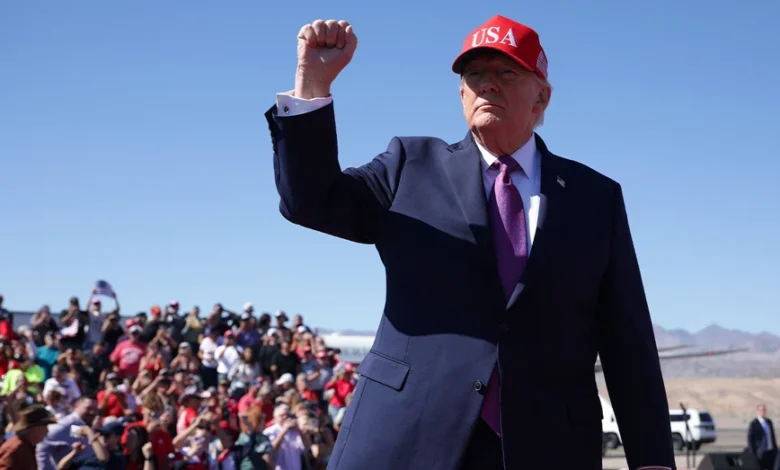
As the calendar ticks down to November 3, the nation’s political heavyweights are traversing time zones at a blistering pace. President Donald Trump and Vice President JD Vance are spearheading the Republican offensive, deploying a relentless schedule of high-energy rallies across America’s heartland and coastal battlegrounds. Simultaneously, the Democratic Party has mobilized its own powerhouse surrogates, with former President Barack Obama and former Vice President Kamala Harris crisscrossing the country to defend vulnerable Democratic incumbents and flip critical seats in both the House of Representatives and the Senate.
The geographic footprint of these campaign visits over the past month reveals a strategic tug-of-war. While campaign maps trace a complex web of stops in reliably red strongholds and fierce swing states alike, the underlying narrative of the final stretch is defined by colliding economic anxieties, shifting voter demographics, and a fierce legislative battle for Capitol Hill.
A Relentless Campaign Schedule Across the Map
The final weeks of any midterm election cycle are characterized by logistical marathons, but the 2026 campaign trail has reached unprecedented intensity. President Trump signaled his aggressive intent in early October, setting a demanding goal of hosting five to seven rallies every single week. True to his word, the president’s travel schedule has spanned the breadth of the nation, encompassing stops in Texas, Oklahoma, Ohio, Georgia, Florida, and Michigan.
The weekend before this crucial nine-day stretch encapsulated the frantic pace of the Republican strategy. On Friday, Trump brought his populist economic message to Florida, followed by a high-turnout rally in Georgia on Saturday, and a prime-time campaign event in Michigan on Sunday. These rallies are designed not only to drive localized media coverage but to bank early votes and inspire enthusiastic voter turnout among the core GOP base.
Meanwhile, Vice President JD Vance has maintained a punishing schedule of his own, fanning out across industrial Midwestern towns and Western suburbs to reinforce the administration’s legislative priorities. Together, the executive branch leaders are laser-focused on transforming voter discontent over cost-of-living increases into a powerful referendum on congressional leadership.
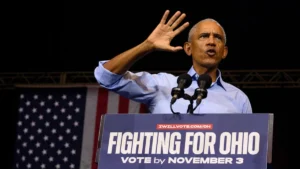
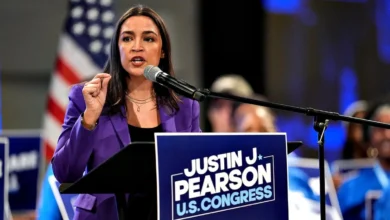
On the Democratic side, the party is leaning heavily on its most recognizable national figures to energize demoralized bases and shore up tight races. Former President Barack Obama touched down in crucial battlegrounds like Ohio and Michigan, leveraging his enduring popularity with progressive and independent voters to deliver targeted closing arguments. Former Vice President Kamala Harris has similarly maintained an aggressive travel footprint, executing strategic visits to Nevada, Mississippi, and New Hampshire to rally grassroots organizations and defend seats that could tip the balance of power in Washington.
The Battleground States: Where the Election Will Be Won or Lost
While nationwide rallies generate enthusiasm, the mechanics of winning a congressional majority come down to a handful of hyper-competitive jurisdictions. The current electoral map illustrates a sharp distinction between base reinforcement and battleground conquest.
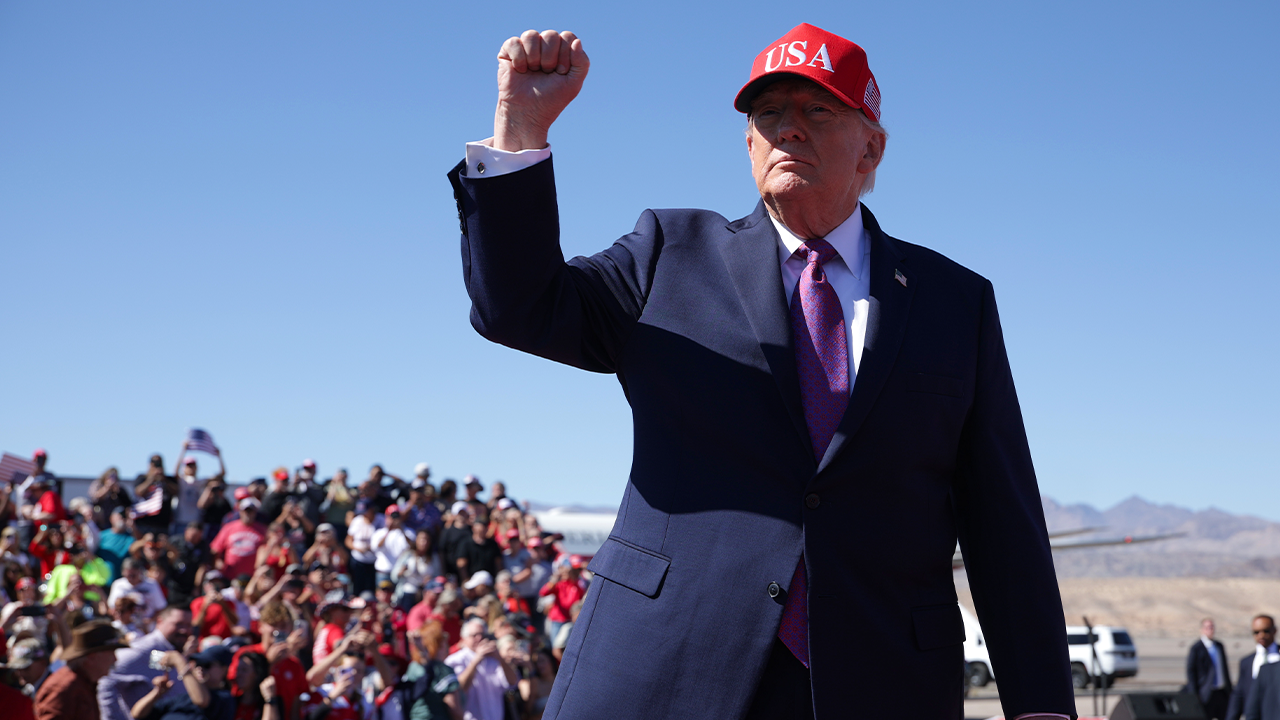
In deep-red states like Oklahoma and Alabama, Republican rallies serve primarily to maximize turnout margins. In these regions, the goal is not to persuade undecided voters—who are few and far between—but to rack up commanding vote totals that can offset potential losses in suburban swing districts elsewhere.
However, the true friction points of the 2026 midterms lie in a select group of competitive Senate and House contests where margins are razor-thin. States such as Ohio, Texas, and Iowa—traditionally viewed as leaning conservative or reliably Republican in presidential cycles—have morphed into fiercely contested Senate battlegrounds. According to recent polling aggregates from the Cook Political Report, Democratic challengers in these three states have managed to carve out narrow leads, putting long-held Republican seats squarely in play.
In response, both parties have flooded these regions with resources, advertising dollars, and high-profile surrogates. Michigan, a perennial industrial swing state, remains a premier battleground for both the House and Senate. With its mix of union households, suburban voters, and economically anxious communities, Michigan exemplifies the broader national debate over manufacturing, employment, and inflation.
Economic Realities and the Cost-of-Living Debate
At the core of the final nine days of campaigning is a fierce ideological battle over the American economy. As voters prepare to cast their ballots, high prices and persistent inflation have thrust economic policy into the blinding spotlight.
Republicans have centered their closing message on the rising cost of everyday goods, fuel, and housing, framing current economic pressures as a direct consequence of Democratic governance and federal spending. By arguing that families are paying more for basic necessities, the GOP playbook aims to channel consumer frustration into a potent weapon at the ballot box. Trump’s rallies consistently highlight these financial burdens, promising voters that a Republican-controlled Congress will enact aggressive tax relief, energy independence initiatives, and deregulation to spur growth.
Conversely, Democrats are countering with a message focused on protecting social safety nets, lowering healthcare costs, and defending workers’ rights. Democratic surrogates like Obama and Harris have argued that Republican economic policies would disproportionately benefit corporations and wealthy earners while destabilizing programs vital to working-class families. They are pushing back against the GOP narrative by highlighting job creation metrics and manufacturing investments secured during the current administration’s tenure.
This tug-of-war over economic perception is critical in shaping the decisions of independent and undecided voters. In past midterms, economic anxiety has frequently favored the party out of power, making the current climate a crucial test of whether the GOP can successfully weaponize inflation or if Democratic messaging on pocketbook issues can hold the line.
Strategic Playbooks and the Fight for Capitol Hill
Control of the 110th Congress hangs in the balance, and both parties have refined sophisticated operational playbooks to maximize their efficiency in the final stretch.
For Republicans, the strategy involves a heavy reliance on micro-targeting voters who participated in previous presidential elections but sat out previous midterms. The GOP’s newly engineered playbook emphasizes aggressive ballot-harvesting operations where legal, sophisticated digital outreach, and localized messaging tailored to specific regional grievances—such as energy costs in the industrial Midwest or border security concerns in the Southwest.
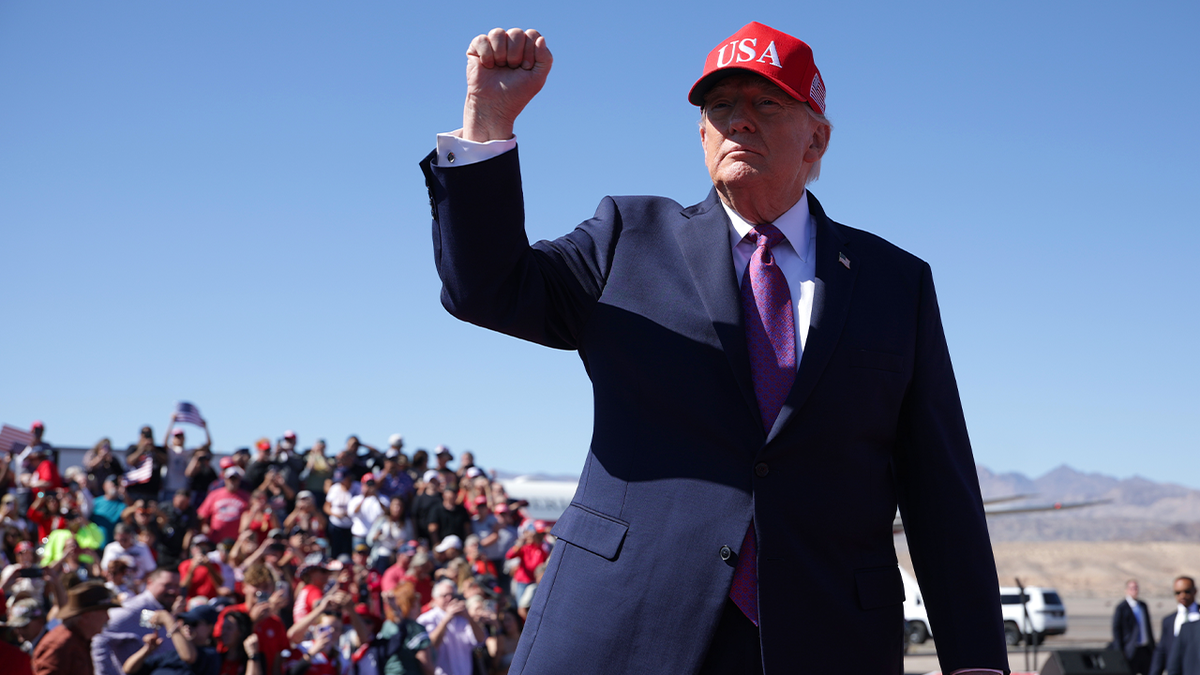
For Democrats, the defensive playbook centers on protecting incumbent advantages, mobilizing young voters, and leveraging reproductive rights and democratic governance as galvanizing themes. Despite facing headwinds typically experienced by the party in power during a midterm cycle, Democrats have sought to turn out high-propensity voters in urban centers and university towns while making strategic inroads in traditionally moderate suburban districts.
The historical trend in American politics heavily favors the opposition party during midterm elections, a phenomenon driven by voter fatigue and a desire for institutional checks and balances. However, political analysts note that the unique economic and social dynamics of this cycle have complicated traditional predictive models, leaving both parties uncertain of the final outcome until the last ballot is counted.
Chronology of the Final Stretch: From Convention to Closing Arguments
To understand the compressed urgency of the current political environment, it is necessary to examine the trajectory of the 2026 midterm cycle:
- Early September: Following the traditional post-Labor Day campaign kickoff, both national committees finalize their targeted lists of competitive House and Senate districts, reallocating millions of dollars in advertising funds to high-priority media markets.
- Late September: Initial early voting windows open in select states, prompting both political parties to shift from pure persuasion campaigns to intensive get-out-the-vote (GOTV) and ballot-tracking operations.
- Early October: President Trump announces an aggressive campaign schedule targeting five to seven rallies per week, setting a frantic pace designed to dominate news cycles. Simultaneously, high-tier Democratic surrogates, including Barack Obama and Kamala Harris, map out parallel tours through critical Rust Belt and Sun Belt battlegrounds.
- Mid-October: Major non-partisan polling aggregates, including the Cook Political Report, release updated metrics indicating tight Senate races in states like Ohio, Texas, and Iowa, prompting an immediate surge of surrogate visits and outside spending.
- Present Day (Nine Days to Election Day): The race enters its final sprint. Campaigns transition entirely to ground-game mobilization, door-to-door canvassing, digital saturation, and final televised appeals to undecided voters.
Implications for the Remainder of the Presidential Term
The stakes of the November 3 election extend far beyond the immediate distribution of congressional office space. The results will decisively shape the governing capacity of the federal government for the final two years of President Trump’s term.
Should Republicans successfully defend their majority in the House and capture the Senate, the legislative branch will act as an aligned partner to the executive office, facilitating the rapid confirmation of judicial nominees, the passage of sweeping tax reforms, and the implementation of conservative regulatory rollbacks. Under this scenario, the administration would face minimal legislative friction in advancing its core policy objectives.
Conversely, if Democrats retain control of the Senate or manage to flip the House of Representatives, Washington will return to a state of divided government. Such an outcome would likely trigger legislative gridlock, increased congressional oversight and investigations, and intense partisan negotiations over federal budgets, debt ceiling raises, and executive appointments.
As the final nine days wind down, millions of Americans are preparing to render their verdict. With campaign trails blazing from coast to coast and the political future of the nation hanging in the balance, both parties are leaving nothing to chance in the ultimate battle for Capitol Hill.
Related posts: