Harvard Researchers Harness Microscopic Sound Waves to Safeguard Delicate Quantum Information in Breakthrough for Chip-Scale Networks

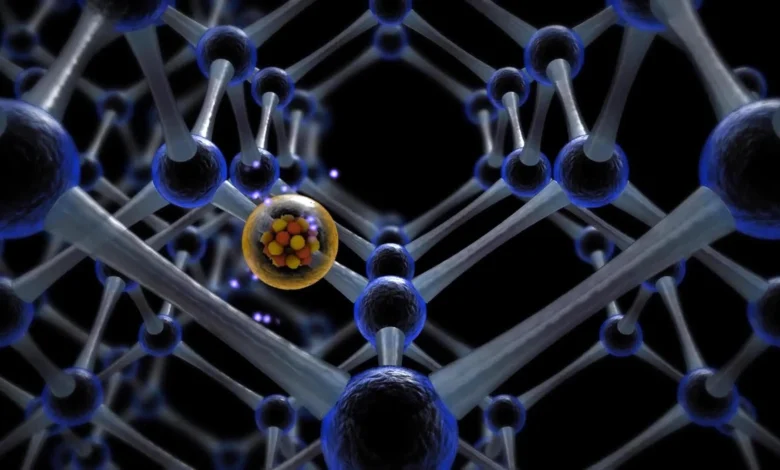
The Harvard John A. Paulson School of Engineering and Applied Sciences (SEAS) has emerged as a focal point for cutting-edge quantum information science following a breakthrough that utilizes mechanical vibrations—essentially microscopic sound waves—to shield delicate quantum states from environmental degradation. Published recently in the prestigious academic journal Nature Physics, this milestone achievement addresses one of the most persistent hurdles in quantum computing and networking: maintaining quantum coherence without sacrificing the strong interactions necessary for operational efficiency.
The research was spearheaded within the laboratory of Marko Lončar, the Tiantsai Lin Professor of Electrical Engineering at SEAS. The experimental work was led by co-first authors Eliza Cornell, a recent Ph.D. graduate from the Lončar lab now serving as a postdoctoral researcher at Boston University, and Zhujing Xu, a former postdoctoral scholar in the same research group. By demonstrating an innovative technique dubbed "all-mechanical coherence protection," the team has paved the way for more compact, highly integrated quantum networks built directly onto silicon chips, while simultaneously unlocking new pathways for hybrid quantum architectures.
The Foundation of Phonon-Based Quantum Networks
To appreciate the gravity of the Harvard SEAS team’s achievement, one must understand the fundamental architecture of modern quantum networking. Traditionally, researchers aiming to build scalable quantum networks have relied heavily on optical photons—particles of light—to transmit quantum information across chip-scale infrastructures. While photons move rapidly and efficiently over long distances, they present distinct engineering challenges when scaled down to ultra-compact, high-density integrated circuits.
Enter phonons: quantized packets of mechanical vibration traveling through a solid-state lattice. Within the Lončar laboratory, researchers have long championed the use of phononic systems as a viable, and in many ways superior, alternative to light for on-chip quantum transport. Phonons boast significantly shorter wavelengths than light waves at comparable frequencies. This distinct physical property allows engineers to design drastically smaller components and pack them tightly together onto a single microchip without suffering from destructive optical cross-talk or diffraction limits.
Furthermore, phonons exhibit a remarkable versatility: they interact readily and naturally with both solid-state electronic spins and electromagnetic fields. This dual-interaction capability makes them uniquely suited for hybrid quantum technologies, which seek to bridge disparate quantum platforms—such as superconducting circuits, trapped ions, and solid-state defects—into a unified, harmonious system.
In the experimental setup examined by the SEAS team, the primary medium for storing quantum information was the electron spin associated with a specific atomic impurity, known as a silicon-vacancy center, embedded within a diamond crystal. To manipulate and route the mechanical energy, the researchers utilized specialized nanostructures pioneered in the Lončar lab called phononic cavities. These microscopic traps confine mechanical vibrations tightly, forcing them to interact intensely with the electron spin housed inside the diamond qubit.
The Persistent Dilemma: Coherence Versus Interaction
Despite their immense promise, phonons introduced a formidable engineering paradox that has vexed physicists for years: the conflict between strong interaction and long-lasting quantum memory.
Qubits are notoriously fragile entities. Their operational utility relies entirely on their ability to maintain a superposition of states—a property known as quantum coherence—long enough to reliably store, process, and transmit data. Even the slightest microscopic disturbance from the surrounding thermal, magnetic, or structural environment can cause a qubit to lose its quantum information through a process called decoherence, rendering the computation useless.
Historically, physicists have shielded quantum memories from environmental noise by applying external microwave pulses. These pulses effectively decouple the qubit from ambient disturbances by rapidly modulating its state. However, this conventional mitigation strategy breaks down entirely when applied to qubits placed directly inside phononic cavities. The physical proximity required for strong mechanical coupling makes the system exceptionally vulnerable to low-frequency noise, yet traditional decoupling pulses disrupt the delicate mechanical interaction essential for phonon-based transport.
Consequently, researchers faced a frustrating technological ceiling. They could either design systems optimized for strong phonon-matter interaction—which suffered from rapid decoherence—or build systems with protected memory that failed to interact meaningfully with the mechanical carriers. Achieving both attributes simultaneously within a single, cohesive device remained an elusive goal.
All-Mechanical Coherence Protection: The "Dressed" Qubit Solution
The SEAS research team resolved this long-standing impasse by abandoning conventional electromagnetic decoupling schemes and turning instead to a wholly mechanical solution. Rather than applying external microwave fields to shield the silicon-vacancy spin, the researchers continuously applied a mechanical driving field composed of phonons.
This continuous acoustic driving fundamentally alters the quantum mechanical nature of the system, transforming the standard qubit into what physicists designate as a "dressed" state. In this context, "dressed" is a technical term indicating that the qubit is effectively surrounded and sustained by a continuous acoustic field.
By keeping the silicon-vacancy spin continuously "dressed" by microscopic sound waves, the researchers rendered the qubit remarkably resilient to the low-frequency environmental noise that typically causes decoherence. Crucially, because this protective field is mechanical in nature, it is entirely compatible with the phononic cavities already designed to route information across the chip.
This dual-utility property transforms phonons from a double-edged sword into a unified solution. Instead of forcing engineers to choose between transport and protection, the acoustic field performs both functions concurrently. Phonons can ferry quantum data between disparate nodes across a network while simultaneously wrapping that same data in an acoustic shield of protection against ambient noise.
"We are solving two problems," explained Eliza Cornell during discussions of the methodology. "We want the spin to have strong interaction with phonons, and we want the spin to have a long coherence time. Our paper demonstrates a method of extending the coherence time that is compatible with the silicon-vacancy center being in a cavity."
Empirical Results: Tripling Quantum Coherence
The practical validation of this theoretical framework yielded quantifiable, highly promising results. Through the application of continuous-wave mechanical noise suppression, the SEAS team successfully extended the coherence time of the silicon-vacancy spin in diamond by approximately a factor of three.
While a threefold extension represents a monumental step forward in a field where microscopic improvements dictate feasibility, the broader implication extends far beyond the specific numerical increase. The experiment conclusively proves that continuous mechanical driving can be successfully harnessed for real-time noise suppression in solid-state quantum devices.
By demonstrating that microscopic sound waves can simultaneously facilitate strong qubit-cavity coupling and suppress environmental decoherence, the Harvard researchers have established a new baseline for the design of future quantum hardware. The findings suggest that acoustics—long treated as a nuisance or background noise in electronic systems—may soon become a primary architectural tool in the quest to build fault-tolerant, scalable quantum computers.
Collaborative Scope and Institutional Support
The breadth of this multidisciplinary research is reflected in its extensive roster of contributors. Alongside Lončar, Cornell, and Xu, the study titled "All-mechanical coherence protection and fast control of a spin qubit" was co-authored by Zhaoyou Wang, Hana K. Warner, Eliana Mann, Michael Haas, Smarak Maity, Graham Joe, Liang Jiang, Peter Rabl, and Benjamin Pingault. The collaborative team spanned expertise in quantum optics, nanolithography, condensed matter physics, and acoustic engineering.
Such ambitious foundational research requires substantial financial and infrastructural backing. The project received robust support from several key U.S. federal agencies and national institutions. Primary funding was provided by the National Science Foundation under grant number EEC-1941583; the Air Force Office of Scientific Research under award numbers FA9550-23-1-0333 and FA9550-23-1-0338; and Q-NEXT, a U.S. Department of Energy Office of Science National Quantum Information Science Research Center under award No. DE-FOA-0002253.
Additionally, the physical fabrication of these intricate nanostructures was executed in part at the Harvard Center for Nanoscale Systems. This facility operates as a member of the National Nanotechnology Infrastructure Network, supported by National Science Foundation award No. ECS-0335765, underscoring the critical role that shared academic infrastructure plays in modern scientific discovery.
Commercial Implications and Future Outlook
As quantum technology transitions gradually from theoretical physics into applied engineering, the commercialization of breakthroughs originating in university laboratories becomes increasingly vital. Recognizing the immense economic and strategic value of chip-scale quantum networking, the Harvard Office of Technology Development has taken proactive steps to secure intellectual property rights. The office is actively pursuing comprehensive patent protection and exploring commercialization opportunities for the innovations stemming from Lončar’s laboratory.
The implications of this research stretch across multiple sectors of the high-tech landscape. In telecommunications and secure computing, compact quantum networks capable of operating at room temperature or within integrated cryogenic microchips could revolutionize data encryption and distributed quantum computing. Furthermore, by facilitating the integration of different qubit modalities via acoustic phonons, hybrid systems may soon bridge the gap between the high processing speeds of superconducting processors and the long-term memory stability of solid-state atomic spins.
While significant engineering challenges remain before these laboratory-scale devices evolve into commercial processors, the Harvard SEAS breakthrough marks a definitive turning point. By proving that sound waves can both transport and protect quantum data, the research team has opened a resonant new avenue in the ongoing quest to master the quantum realm.