‘Gintama: Yoshiwara in Flames’ Director and Producer Discuss Bringing the Cult Anime to the Big Screen

The Genesis of a Cult Phenomenon
The Gintama saga occupies a unique position in the landscape of contemporary Japanese media. Created by Hideaki Sorachi, the original manga series first appeared in Weekly Shōnen Jump in 2003, quickly distinguishing itself through a blend of surreal humor, poignant social commentary, and high-stakes action. The narrative is set in an alternative version of late-Edo-period Tokyo, a world where the isolationist shogunate has been forcibly dismantled by the Amanto, an extraterrestrial race that has occupied Earth.
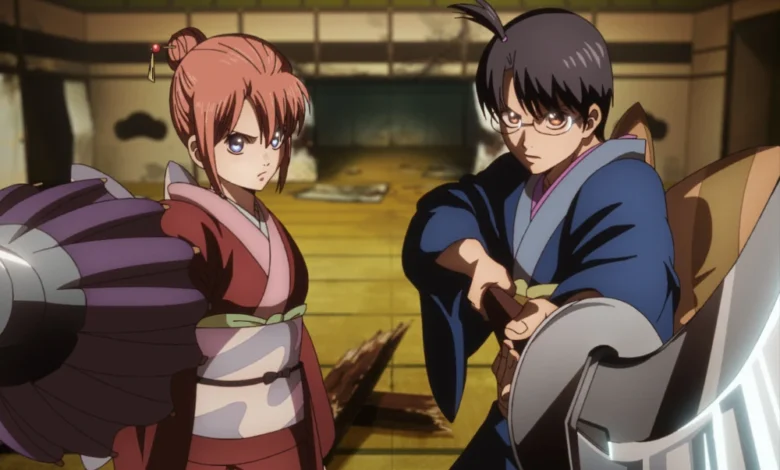
At the center of this world is Gintoki Sakata, a silver-haired samurai who operates a freelance business alongside his companions, Shinpachi Shimura and Kagura. Over the course of 367 television episodes, the series garnered a global cult following, characterized by its irreverent tone and its ability to seamlessly transition from slapstick comedy to heavy, character-driven drama. Despite its immense popularity, the transition from episodic television to feature film remains a complex logistical and artistic challenge. Gintama: Yoshiwara in Flames represents the fourth major theatrical venture for the property, aiming to push the boundaries of what the franchise can achieve on a larger canvas.
The Technical Evolution of the Franchise
One of the primary concerns for the production team was how to elevate the visual language of the show without alienating long-term fans. According to director Naoya Andō, the decision to pivot toward the CinemaScope ultrawide ratio was fundamental to this transition. By adopting this broader format, the production team gained the ability to frame the sprawling, intricate architecture of the Yoshiwara district with greater scale and depth.
"When we started planning this film, we already knew that there would be many action scenes," Andō explained. "We were keen to use the CinemaScope ultrawide ratio as well as using 3D to move the camera more, and give us more variety, as well as keep the camera a little distant from the subjects so we could frame the shots better and really appreciate the design and setting."
Furthermore, the team leveraged advancements in animation technology that occurred in the five-year gap following the conclusion of the television series. This allowed for more complex particle effects—particularly essential for the film’s titular "burning" sequence—and a more immersive audio design. The production’s commitment to visual excellence is evidenced by the "Director’s Cut" approach taken earlier this year. After a rushed initial release in February, which was dictated by strict distribution deadlines, the team took the opportunity to refine their work. By the time of the September re-release, over 200 shots had been retouched, demonstrating a commitment to quality that is rarely seen in mainstream anime feature productions.
Yoshiwara in Flames: A Creative Departure
The decision to depict the destruction of Yoshiwara in literal, explosive detail was a significant point of internal debate. While the "Yoshiwara in Flames" arc was a highlight of the television series, the constraints of television animation meant that the visual payoff was necessarily limited. During the development phase, Andō consulted with producer Takashi Maekawa, who had served as a pillar of the television series’ production team.
"I asked him, are we going to actually burn the town this time?" Andō recalled. "The producer said, ‘Yes, this time we’re going to burn everything.’" This creative directive underscored the film’s purpose: to provide an experience that felt genuinely cinematic rather than merely an extended television episode. By increasing the stakes of the environment itself, the production successfully heightens the sense of danger and consequence, providing a satisfying resolution to a narrative arc that had been a fixture of the franchise’s history for years.
Global Collaboration and Operational Scale
The production of Gintama: Yoshiwara in Flames reflects the increasingly international nature of the modern animation industry. The film’s end credits feature a vast array of studio contributors, ranging from firms in China and Indonesia to Vietnam. Coordinating such a disparate group of artists requires a rigid, hierarchical structure.
Producer Ryo Nakamuray noted that the process relies on delegating specific technical domains to specialized teams. "In animation, you’re always dividing elements into teams," Nakamuray explained. "Some will be experts in characters, others in action scenes, and so on. We are always choosing the collaborators and animators who will be best for each element, and we are always meeting up with these different studios and groups. Every group has a team leader who is responsible for their work." This decentralized approach allowed the production to maintain a consistent aesthetic across thousands of individual frames while utilizing the best talent available globally.
Bridging the Cultural Divide: The Lucca Experience
The presence of the creative team at Lucca Comics and Games marks a strategic shift in the franchise’s international distribution strategy. Historically, Gintama has struggled with cross-cultural translation, particularly regarding its reliance on "meta-humor" and specific Japanese cultural references. The film manages this through a nuanced directorial approach to comedy.
Andō emphasized that humor should never be forced upon the audience. "We figured out that it was best not to present the humor to the audience as ‘this bit is really funny,’ but rather have the characters themselves joke between themselves, and the audience could listen in and enjoy the humor." This observational style of comedy is better suited for international audiences, as it relies on character chemistry rather than niche cultural tropes.
The reception in Italy, a country with one of the most enthusiastic anime fanbases in Europe, suggests that this strategy is paying off. The warmth of the reception at Lucca provides a strong indicator for the commercial viability of further Gintama theatrical releases in the European market, a region that has previously been secondary to domestic and North American markets.
Future Implications for the Franchise
The successful screening at Lucca and the subsequent refined release in Japan indicate that the Gintama brand is moving toward a more premium, high-quality output. By moving away from the "quantity-over-quality" model of weekly television production, the studio has demonstrated that there is a significant appetite for prestige versions of long-running anime properties.
From an industry standpoint, the Gintama model provides a roadmap for other long-running anime franchises. By identifying popular arcs that deserve a "second look" and utilizing updated technology to enhance their scope, studios can effectively re-monetize intellectual property while providing genuine value to long-time fans. As the industry continues to integrate global animation teams and adopt more sophisticated visual technologies, the success of Yoshiwara in Flames stands as a testament to the power of balancing fan expectations with the necessity of technical and artistic evolution.
For the creators, the journey is far from over. The positive reception of the film in Italy highlights a growing demand for Japanese intellectual properties in Europe, potentially paving the way for larger, more coordinated international rollouts in the future. As the franchise looks ahead, it remains tethered to the unique, irreverent spirit that made it a household name in Japan, yet increasingly equipped to compete on the global stage of prestige cinema.