Abandon All Hope For A Free And Open Strait Of Hormuz Until Late 2027, Energy Analysts Say

This revised outlook marks a significant departure from earlier market assumptions, which had largely priced in a temporary disruption followed by a diplomatic resolution. Instead, the persistent state of conflict between the United States and Iran, exacerbated by the failure of recent ceasefire negotiations, has created a "new normal" for global shipping. According to Rapidan, the disruptions will be "deeper and more persistent" than previously anticipated, fundamentally altering global oil balances for the next several years.
The Strategic Importance of the Strait of Hormuz
To understand the gravity of the Rapidan forecast, one must consider the geographical and economic reality of the Strait of Hormuz. Located between Oman and Iran, the strait connects the Persian Gulf with the Gulf of Oman and the Arabian Sea. At its narrowest point, the shipping lanes are only two miles wide in either direction, making it a natural chokepoint.
According to the U.S. Energy Information Administration (EIA), approximately 21 million barrels of crude oil, condensate, and petroleum products flow through the strait daily. This represents about 21% of global petroleum liquids consumption. Furthermore, the strait is the primary route for nearly all the liquefied natural gas (LNG) exported from Qatar, one of the world’s largest LNG producers. Any prolonged closure or significant military threat in this region does not merely affect regional players; it sends shockwaves through the entire global manufacturing and transportation sectors.
Chronology of Escalation: From Diplomacy to Protracted Conflict
The current crisis is the culmination of years of deteriorating relations and shifting foreign policy priorities. The stability of the strait was previously maintained through a combination of international diplomatic frameworks and a heavy U.S. naval presence. However, the breakdown of the Joint Comprehensive Plan of Action (JCPOA) and the subsequent "maximum pressure" campaign initiated during the Trump administration set the stage for the current hostilities.
While energy markets initially viewed the uptick in maritime incidents—including tanker seizures and drone strikes—as transient risks, the situation shifted dramatically following the collapse of a temporary ceasefire agreement earlier this year. Republican leadership’s inability or unwillingness to secure a lasting peace deal, coupled with a return to open military engagement, has convinced analysts that a diplomatic off-ramp is no longer on the immediate horizon.
In 2023 and early 2024, market sentiment was buoyed by the hope that back-channel negotiations might restore the status quo. However, the most recent data indicates that military risks are now a structural component of the market. Rapidan Energy Group’s statement emphasizes that they "can no longer assume a near-term return to freedom of navigation," noting that military risks will constrain vessel transits well into 2025 and keep Arab Gulf production below pre-conflict levels through the end of 2027.
Market Implications: The $200 Barrel Scenario
The immediate consequence of a restricted Strait of Hormuz is a tightening of global oil inventories. Rapidan’s updated crude balance now shows consistent inventory draws through the end of the year, a trend that is historically bullish for crude prices. For investors and traders, this translates to higher profit margins and increased volatility. However, for the broader economy, the implications are more dire.
Bob McNally, CEO of Rapidan Energy Group and a former senior White House energy advisor, has outlined several scenarios for what he describes as the "Third Gulf War." With ceasefire options exhausted, the U.S. and its allies are expected to focus on "degrading" Iran’s capability to disrupt traffic. The goal is to reduce attacks to a "reasonable level" that allows for military-escorted convoys.
If these military efforts fail to stabilize the passage, McNally warns of a price surge that could eclipse all historical records. While the previous record for crude oil stood at approximately $147 a barrel, McNally suggests that prices could climb into the $200 range. Such a spike would persist until the market reaches a "new level that induces an economic downturn," effectively forcing demand destruction through widespread financial hardship.
Impact on the American Consumer and Global Logistics
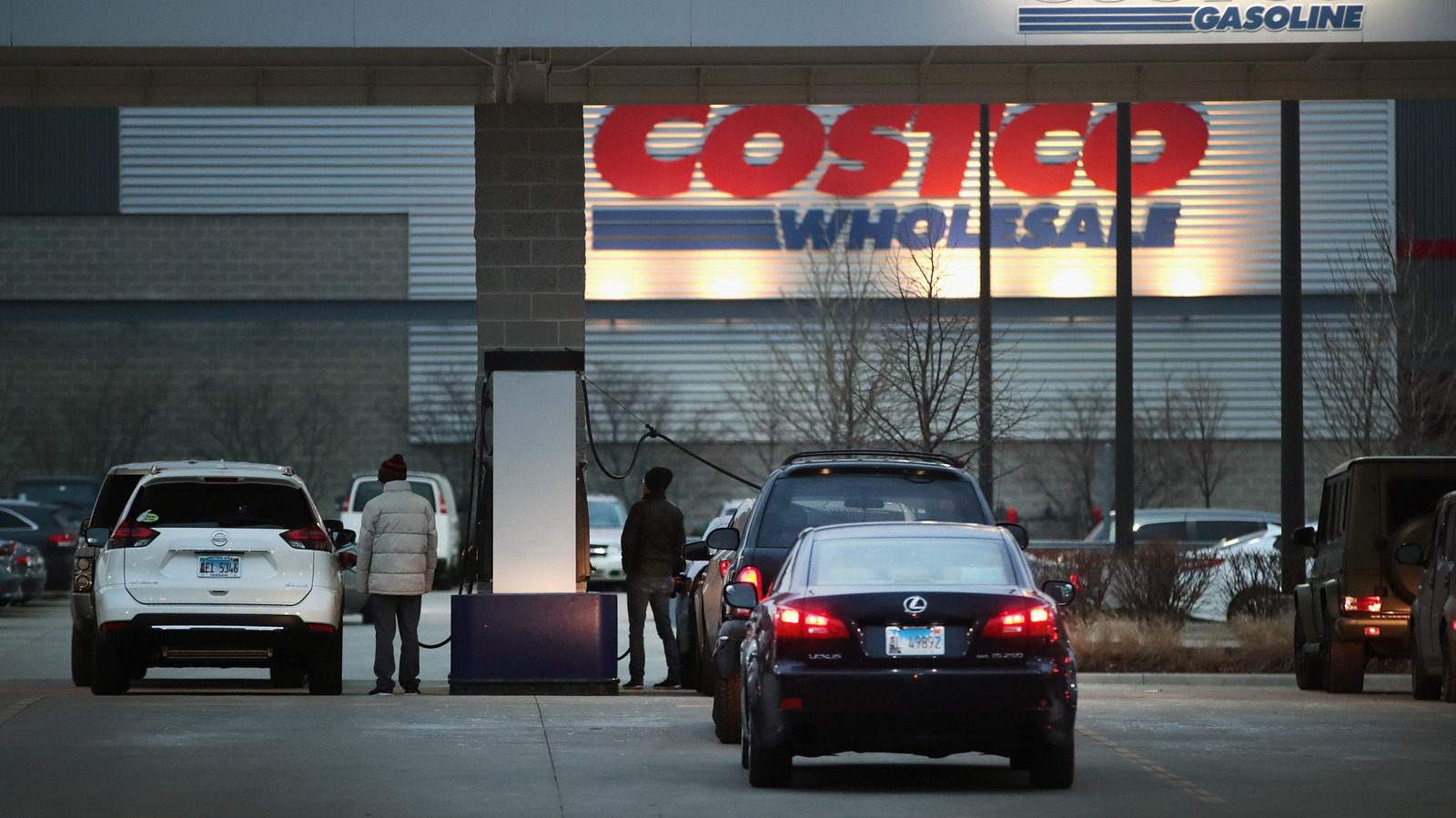
For the average consumer, the geopolitical struggle in the Middle East is felt most acutely at the gas pump. In the United States, national average gas prices have already surged back over $4.00 a gallon, with diesel prices exceeding $5.00. This marks a historic anomaly; according to Patrick De Haan, head of petroleum analysis at GasBuddy, the U.S. has never before seen gas prices cross the $4.00 threshold, retreat, and then climb back above $4.00 within the same calendar year.
If crude oil were to reach the $200 per barrel mark predicted by some analysts, the domestic impact would be unprecedented. Financial experts estimate that such a spike would result in average gasoline prices between $6.50 and $7.00 per gallon. This would not only affect personal travel but would also drastically increase the cost of shipping and logistics, leading to "second-round" inflationary effects on groceries, consumer goods, and construction materials.
The logistics industry is already grappling with the increased costs of "war-risk insurance." Shipping companies must pay significantly higher premiums to sail through the Strait of Hormuz, costs that are invariably passed down to the end consumer. Some firms have opted to bypass the region entirely where possible, though for oil exports originating in the Persian Gulf, there are few viable alternatives to the strait.
Official Responses and Regional Reactions
While the U.S. Department of Defense has maintained that it will continue to protect the "free flow of commerce," the reality on the water is increasingly complicated. The U.S. Fifth Fleet, based in Bahrain, has increased its patrols, but the asymmetrical nature of the threat—utilizing low-cost drones and fast-attack craft—makes total security nearly impossible to guarantee without a massive escalation in force.
Regional players such as Saudi Arabia and the United Arab Emirates find themselves in a precarious position. While they benefit from higher oil prices in the short term, the long-term threat to their primary export route and the potential for domestic instability caused by regional war are significant concerns. Both nations have invested in pipelines that can bypass the strait—such as the East-West Pipeline in Saudi Arabia and the Habshan-Fujairah pipeline in the UAE—but these do not have the capacity to handle the total volume of oil currently moving by sea.
In Iran, the government has historically used the threat of closing the strait as a leverage point in international negotiations. The current protracted closure suggests a shift in strategy, moving from a "threat" to a sustained "attrition" model designed to strain Western economies and test the resolve of the U.S. military.
Analysis of Broader Implications
The prospect of a closed or contested Strait of Hormuz until late 2027 carries profound implications for the global energy transition. On one hand, sustained high oil prices may accelerate the adoption of electric vehicles (EVs) and renewable energy sources as governments and consumers seek to decouple from volatile fossil fuel markets. On the other hand, the economic "drag" caused by high energy costs could reduce the capital available for the massive infrastructure investments required for a green transition.
Furthermore, the "bullish" outlook for crude prices mentioned by Rapidan highlights a growing divide in economic impact. While high-net-worth investors and energy sector traders may find opportunities for profit in this volatility, the burden falls disproportionately on low-to-middle-income households who spend a larger percentage of their income on fuel and energy-dependent goods.
As the world looks toward 2028, the "freedom of navigation" that was once taken for granted appears to be a relic of a more stable geopolitical era. The coming years will likely be defined by a scramble for energy security, a fortification of maritime borders, and a global economy forced to adapt to the permanent risk of the Hormuz chokepoint. For now, the message from analysts is clear: the era of cheap, easily accessible energy from the Persian Gulf is on an extended hiatus, and the road to recovery will be long, expensive, and fraught with military peril.
Related posts: