From ’60s Darling To Rare Treasure: The Pink Pyrex Dish Collectors Dream Of Thrifting Themselves

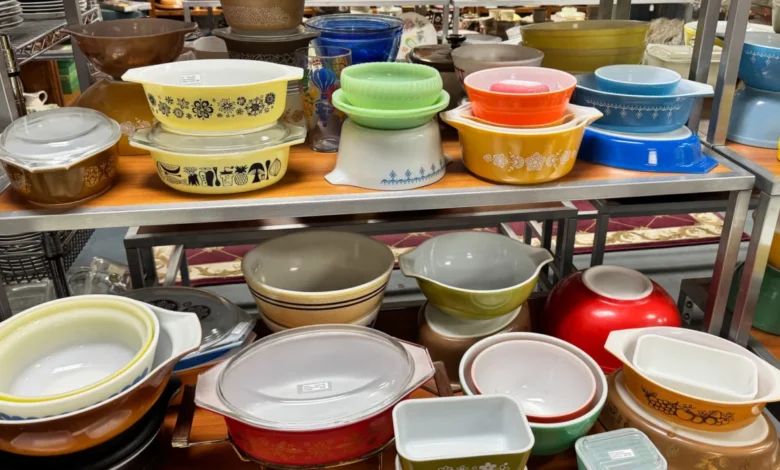
For more than a century, the name Pyrex has been synonymous with durability, utility, and domestic life. From standard glass measuring cups to heavy-duty casserole dishes, the brand cemented its place in kitchens across the globe. Today, it remains nearly impossible to imagine a contemporary household operating without some iteration of its glassware. Yet, while modern kitchenware often leans toward minimalist, sterile aesthetics, an entirely different movement is taking place among collectors, interior designers, and culinary historians who chase the vibrant, kitschy, and exceptionally durable designs of the mid-20th century.
Among the most sought-after relics of this bygone era is the Pink Gooseberry pattern, particularly when featured on Pyrex’s iconic Cinderella bowls. Once a ubiquitous wedding registry item and an affordable staple of suburban kitchens, this midcentury darling has transformed from humble everyday cookware into a prized, high-value collectible. For modern thrifters, spotting a flash of bubblegum pink beneath a dusty shelf in a secondhand store or flea market represents the ultimate holy grail of vintage hunting.
The Evolution of Pyrex: From Laboratory Glass to Kitchen Staple
The origins of Pyrex trace back to the early 20th century, emerging from the scientific laboratories of the Corning Glass Works in New York. Originally developed as non-expansion borosilicate glass designed to withstand extreme thermal shock—initially utilized for railroad lanterns and industrial battery jars—its domestic potential was realized almost by accident. Legend has it that in 1913, a Corning physicist named Bessie Littleton asked her husband, Dr. Jesse Littleton, to bring home a piece of the heat-resistant glass. She used it to bake a sponge cake, discovering that the material conducted heat evenly and allowed bakers to view their food as it cooked.
By 1915, Corning had introduced Pyrex to the consumer market, revolutionizing baking and food storage. For decades, the brand relied primarily on clear, heat-strengthened glass. However, the post-World War II economic boom brought a cultural shift toward color, domestic modernization, and interior decoration. Homemakers wanted their kitchens to reflect personality and joy, prompting manufacturers to reimagine traditional tool-based kitchenware as decorative lifestyle products.
In 1945, Pyrex introduced its Opal Ware line, marking the brand’s departure from transparent glass into an era of opaque, milk-glass-based cookware painted in vibrant hues. This innovation laid the groundwork for the explosion of patterned nesting bowls, refrigerator sets, and mixing tiers that defined the 1950s and 1960s. Between the post-war suburban expansion and the dawn of the space age, Pyrex design teams released an array of patterns that captured the optimism and aesthetic trends of the decade. Among these, the Gooseberry pattern, which debuted in 1957, would go on to achieve legendary status.
The Birth and Design of the Pink Gooseberry Cinderella Line
Released during the height of the midcentury modern design movement, the Gooseberry pattern was characterized by a delicate, whimsical motif of interwoven vines, leaves, and small, dangling berries. It was one of the earliest designs applied to the revolutionary Cinderella Bowl line, which Corning introduced in 1958.
The Cinderella line departed from traditional round mixing bowls by incorporating functional ergonomics. Each bowl featured a unique handle on one side that doubled as a pouring spout, attached to a flared rim that made gripping, scraping, and pouring significantly easier. These bowls were sold predominantly in nested sets of four, engineered to stack efficiently inside one another to save valuable cabinet space.
The Pink Gooseberry series was strategically marketed with alternating color schemes within the nesting set. Typically, the collection featured pastel pink bowls with white patterns alongside white bowls adorned with pink patterns. While a less common black-and-yellow colorway was manufactured for a brief period to cater to bolder kitchen color schemes, the pink variation became the defining visual signature of the line.
Despite its immense popularity, the midcentury design landscape moved rapidly. As consumer tastes shifted toward the bolder, abstract, and earth-toned palettes of the late 1960s, manufacturing priorities changed. In 1966, Corning officially discontinued the Gooseberry pattern, consigning the delicate pink vines to memory and secondhand cupboards.
The Rise of Vintage Cookware Collecting and Market Valuation
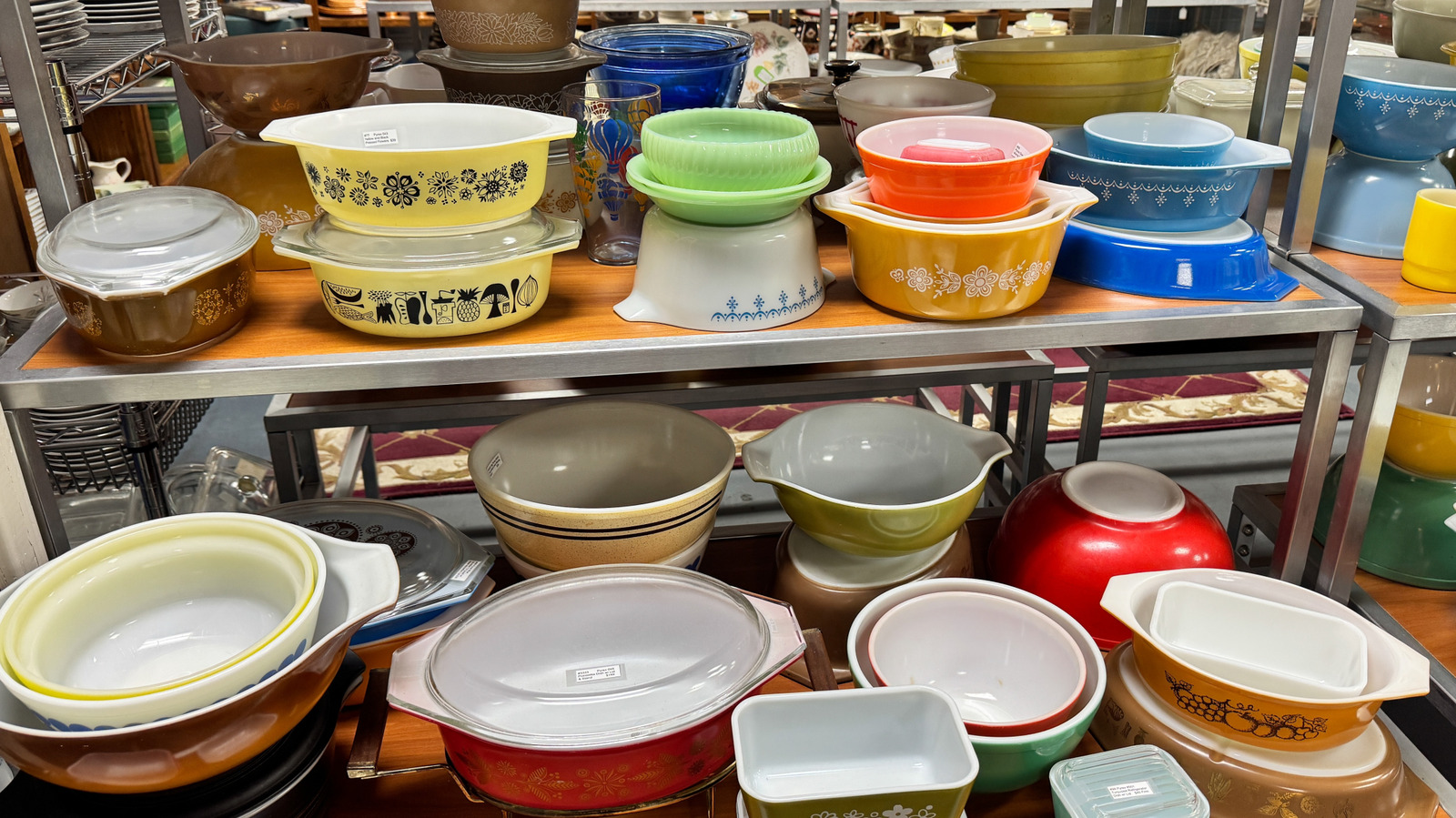
Decades after its discontinuation, vintage Pyrex has evolved from nostalgic memorabilia into a thriving subculture. Online communities, social media groups, and dedicated collector forums boast hundreds of thousands of members who catalog patterns, trade pieces, and share the thrill of unexpected thrift store discoveries.
This resurgence is driven by a complex mix of nostalgia, aesthetic appreciation, and a growing cultural rejection of modern, disposable goods. Midcentury Pyrex was built to last, manufactured from robust borosilicate glass that could endure decades of heavy mixing, baking, and dishwashing without losing structural integrity. For younger generations navigating a market saturated with mass-produced, fragile kitchen goods, vintage Pyrex represents an era of uncompromising craftsmanship.
Consequently, market valuations for rare pieces have skyrocketed. While Pink Gooseberry sets were originally purchased for modest sums in department stores during the late 1950s, complete and well-preserved Cinderella sets now command prices ranging anywhere from $200 to over $1,000 on platforms like eBay, Etsy, and specialized antique marketplaces.
The valuation of a specific set hinges heavily on condition. Because these items were designed as utilitarian cookware, finding pieces completely free of chips, cracks, utensil marks, and paint fading—known in the collector community as "Dishwasher Fade" or "D.W.F."—is exceedingly rare. Pristine sets that retain their original gloss and factory packaging can easily fetch top-tier prices from dedicated collectors willing to invest heavily in museum-quality kitchen history.
Authentication and Identification: Navigating the Market
As the market for vintage Pyrex grows increasingly lucrative, buyers must navigate counterfeit listings, misidentified reproductions, and damaged goods. Authentication requires a keen eye and a fundamental understanding of manufacturing history.
A primary method of identifying authentic midcentury Pyrex involves examining the base of the glassware. Pieces manufactured during the 1950s and 1960s typically feature the "PYREX" trademark embossed in all capital letters, a hallmark of the original borosilicate glass formulation utilized by Corning. In contrast, modern kitchenware sold under the lowercase "pyrex" branding (introduced later in the 20th century) is manufactured from soda-lime glass, which behaves differently under thermal stress.
Furthermore, tactile inspection is crucial. On authentic midcentury patterned bowls, the graphic design—such as the Gooseberry vines—should appear completely flat and smooth against the milk-glass body. Raised or embossed patterns generally indicate a different manufacturing era or a completely different product line.
Broader Economic and Cultural Implications
The surging popularity of vintage Pyrex thrift finds reflects broader shifts in modern consumer behavior. The phenomenon ties directly into the booming secondhand economy, which has accelerated significantly due to environmental concerns, inflation, and a cultural pivot toward circular consumption. Thrifting has transitioned from a necessity-driven activity to a mainstream hobby and a badge of individuality.
Furthermore, the commodification of everyday items like Pyrex highlights a fascinating economic paradox: objects originally mass-produced for the working and middle classes as disposable domestic tools have transformed into scarce luxury assets. This dynamic mirrors trends in vintage fashion, midcentury modern furniture, and retro electronics, where the value of an item is no longer dictated solely by its raw materials, but by its cultural capital, scarcity, and narrative history.
For historians of domestic life, these colorful mixing bowls tell a deeper story about gender roles, post-war suburban consumerism, and the evolution of the American kitchen. The kitchen of the 1950s was transitioning from a purely functional, hidden workspace into the social heart of the home, where design, color, and self-expression mattered.
As physical thrift stores become increasingly picked over by professional resellers and hyper-informed enthusiasts, the likelihood of stumbling upon a complete, mint-condition Pink Gooseberry Cinderella set for a few dollars grows increasingly slim. Yet, the persistent allure of the hunt ensures that millions of modern shoppers will continue scanning crowded shelves, hoping to catch a glimpse of those iconic pink vines—a fleeting connection to a colorful, midcentury past.