Federal Postal Worker Indicted in Wichita Over Alleged Theft of Thousands of Mail Pieces Including Republican Political Flyers

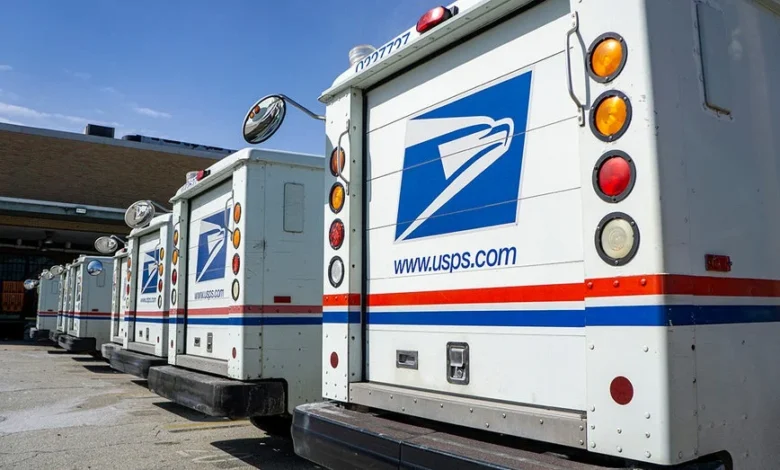
A federal grand jury sitting in Wichita, Kansas, has returned a formal indictment charging a 59-year-old postal worker with the unlawful secretion, destruction, and delay of mail, authorities announced on Tuesday. The case, which underscores mounting concerns regarding election integrity and the security of the United States Postal Service (USPS), centers on thousands of pilfered items recovered by federal investigators from the suspect’s residence, a significant portion of which explicitly targeted Republican candidates and conservative political action committees.
Kelly R. Cram, a resident of Baxter Springs, Kansas, faces a single felony count following an investigation led by the U.S. Postal Service Office of Inspector General. According to the office of the U.S. Attorney for the District of Kansas, Cram allegedly intercepted and withheld more than 4,400 pieces of mail beginning in October. Federal prosecutors and investigators executing a search warrant at her property uncovered a cache of sequestered correspondence, bringing swift condemnation from election watchdogs and renewing intense national scrutiny over internal USPS accountability and the physical handling of sensitive political mail during high-stakes election cycles.
The Investigation and Discovery of Sequestered Mail
The timeline of the federal investigation began to crystallize late in the autumn season as local residents and local political organizations reported anomalies, delivery delays, and missing correspondence. Postal inspectors, operating under the umbrella of the USPS Office of Inspector General, initiated a comprehensive inquiry into delivery routes tied to Cram.
According to the federal indictment filed in the U.S. District Court for the District of Kansas in Wichita, investigators ultimately traced thousands of missing postal items directly to Cram’s personal garage. When federal agents executed the search warrant, they cataloged a total of 4,404 pieces of delayed and un-delivered mail.
Of particular note to federal prosecutors was the precise demographic of a substantial subset of the recovered items. Investigators discovered nearly 400 political mailers. Crucially, federal officials noted in the public release that every single one of these political flyers was solely related to Republican candidates or political action committees affiliated with the Republican Party. Furthermore, law enforcement officials confirmed that a meticulous search of the residence yielded zero mailers or promotional materials related to candidates of any other political party.

The targeted nature of the recovered political literature has added a volatile layer to the criminal proceedings, raising immediate questions regarding whether the alleged interference was politically motivated or indicative of systemic vulnerabilities within the local postal distribution network.
Broader Political Landscape in Kansas
The federal indictment arrives against the backdrop of a fiercely contested election season in Kansas, where voters are casting ballots across a broad slate of high-profile races that have drawn national attention and tens of millions of dollars in campaign expenditures.
At the top of the state ticket, Kansas voters are deciding a heavily contested gubernatorial race. The matchup features Republican state Senate President Ty Masterson facing off against Democratic state Senator Cindy Holscher. The contest for the governor’s mansion has become a battleground as state Republicans attempt to reclaim executive leadership in what has historically been a deeply conservative red state, while Democrats rally around their strongest legislative defenders to maintain control.
Simultaneously, the state’s federal representation is entirely up for grabs. All four of Kansas’s congressional seats in the U.S. House of Representatives are on the ballot, alongside a high-stakes battle for one of the state’s two seats in the United States Senate. Incumbent Republican Senator Roger Marshall is facing a vigorous challenge from Democratic opponent Adam Hamilton.
Throughout the campaign cycle, Senator Marshall has campaigned extensively on economic concerns, inflation, and the unique challenges facing rural agricultural communities, repeatedly defending conservative economic policies before voters across the state. The convergence of a federal election featuring competitive statewide contests and the discovery of hundreds of partisan political mailers withheld from intended recipients has amplified local anxieties regarding the sanctity and reliability of the electoral process.
National Scrutiny and USPS Accountability

The indictment of Kelly Cram is not happening in a vacuum. It feeds into a wider, increasingly contentious national dialogue concerning the operational reliability, security, and oversight of the United States Postal Service. Over recent months, congressional lawmakers from both sides of the aisle—most notably Senate Republicans—have escalated pressure on USPS leadership regarding a string of high-profile security failures, missing ballots, and delivery disruptions across multiple states.
In Washington, lawmakers have launched aggressive inquiries into the agency’s executive leadership, accusing top postal officials of dodging congressional oversight and failing to implement robust safeguards against internal malfeasance. Similar incidents in other states, such as the indictment of a former USPS worker in Utah for allegedly dumping hundreds of mail-in ballots without delivering a single one, have compounded public skepticism.
For federal watchdogs, the Kansas case represents a glaring breach of the public trust. Postal workers are sworn federal employees bound by strict statutory oaths to ensure the prompt, secure, and impartial delivery of the United States mail. When an individual entrusted with this responsibility allegedly selectively hoards political literature, it strikes directly at the foundational mechanisms of democratic participation.
Legal Implications and Potential Penalties
Under federal law, the charge of unlawful secretion, destruction, and delay of mail carries significant legal consequences. While the statutory maximum penalties for a single count of mail obstruction can vary based on the specific volume of items and the presence of any aggravating factors, federal sentencing guidelines provide for substantial prison time, mandatory restitution, and steep financial penalties.
Legal analysts note that federal prosecutors will likely focus heavily on establishing the motive behind the selective isolation of the Republican political mailers. While the indictment formally charges Cram with the administrative and criminal act of delaying and secreting mail as a postal employee, the selective demographic of the targeted flyers introduces complex evidentiary arguments regarding intent.
As of press time, representatives for the U.S. Attorney’s Office for the District of Kansas in Wichita have declined to offer additional comments beyond their initial public release, citing the ongoing nature of the judicial proceedings. Defense counsel for Cram has not yet released a comprehensive statement addressing the specific allegations contained in the federal grand jury indictment.
Implications for Election Integrity and Future Safeguards
The swift indictment by a federal grand jury in Wichita serves as a stark reminder of the vigilant monitoring applied to postal operations during election windows. State election officials, law enforcement agencies, and federal investigators have increasingly coordinated to establish rapid-response protocols designed to detect and remediate any interference with election-related mail, including campaign literature, absentee ballot applications, and mail-in ballots.
Political scientists and election security experts point out that while isolated criminal acts by rogue employees do not inherently prove widespread systemic fraud, they nevertheless inflict severe damage on public confidence. In an era where trust in democratic institutions remains fragile, the physical security of every individual piece of mail—partisan or otherwise—takes on paramount importance.
As the legal case against Kelly R. Cram moves toward an arraignment and subsequent pre-trial hearings in the U.S. District Court in Wichita, federal postal inspectors and Department of Justice officials are expected to continue their comprehensive review of local distribution hubs in Baxter Springs and surrounding districts. For Kansas voters navigating a historic and contentious election cycle, the incident stands as a sobering reminder of the vital, vulnerable human link at the heart of America’s democratic infrastructure.