EVgo Activates First Co-Branded Tesla Supercharger Station in Chicago Marking Major Milestone in EV Infrastructure Collaboration

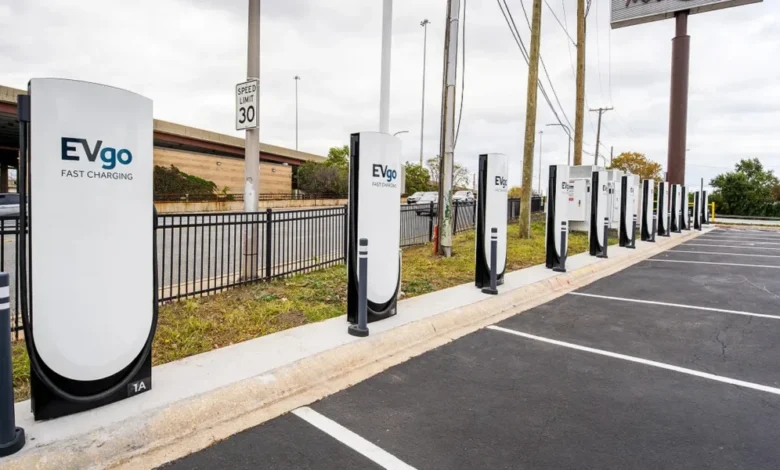
EVgo has officially launched its first-ever co-branded Tesla Supercharger station, located strategically within a busy grocery store parking lot in Chicago, Illinois. This 12-stall high-speed charging installation represents a significant leap forward in the ongoing consolidation and interoperability of North American electric vehicle (EV) charging networks. Featuring both North American Charging Standard (NACS) and Combined Charging System (CCS) plugs, the newly opened hub at the Riverside Square and River’s Edge shopping plaza on 3145 S. Ashland Avenue is the inaugural site of a much larger national rollout. Over the coming months, EVgo plans to integrate hundreds of Tesla Supercharger stalls into its expansive network, bridging a critical gap for drivers regardless of the vehicle brand they operate.
The rollout of these co-branded stations underscores a transformative shift in the EV ecosystem, moving away from proprietary, brand-restricted infrastructure toward a unified charging experience. By combining EVgo’s market presence with Tesla’s robust Supercharger deployment capabilities, the partnership aims to alleviate range anxiety and streamline access for millions of drivers transitioning to sustainable transportation.
Chronology and Strategic Rollout of the Partnership
The realization of the Chicago Supercharger station follows a carefully orchestrated timeline of announcements and technological integrations between EVgo and Tesla. The foundation for this collaboration was laid as legacy automakers and charging operators increasingly adopted Tesla’s NACS plug design as the dominant North American standard.

In August, EVgo formally announced its intention to roll out EVgo-branded Tesla Superchargers, initially teasing potential power outputs reaching up to 500 kW. While the Chicago location currently delivers a robust 325 kW via its advanced hardware, it sets a high benchmark for subsequent installations. This milestone comes on the heels of broader network adaptations; earlier in September, EVgo began integrating its existing NACS-compatible fast chargers into Tesla’s native in-car navigation systems, provided drivers enabled third-party charging visibility.
The strategy behind these deployments relies heavily on strategic real estate partnerships. EVgo has targeted high-traffic commercial zones, specifically partnering with Regency Centers to place these Supercharger stalls in shopping plazas anchored by grocery stores. This placement strategy ensures that drivers can efficiently utilize their charging time for routine errands, maximizing convenience and optimizing the utility of public charging infrastructure.
Technological Integration: Magic Dock and Seamless Navigation
A defining feature of the new Chicago Supercharger station is the incorporation of Tesla’s innovative Magic Dock technology. This built-in adapter system allows drivers of both NACS-equipped and CCS-equipped electric vehicles to seamlessly initiate a charging session without needing to carry a third-party physical adapter.
For non-Tesla EV owners utilizing the CCS standard, initiating a charge is handled smoothly through the Tesla mobile application. Conversely, Tesla drivers benefit from native ecosystem integration; the charging station automatically populates within the vehicle’s onboard navigation system and Trip Planner, allowing for automated battery pre-conditioning and efficient route management.

Badar Khan, Chief Executive Officer of EVgo, emphasized the strategic importance of this dual-compatibility approach during the launch. "By serving both Tesla and non-Tesla NACS drivers, we’re doubling EVgo’s addressable market and continuing to meet EV drivers where they are and where they want to charge," Khan stated. This sentiment highlights the commercial imperative for charging operators to capture market share across all major EV segments rather than relying on a single automotive manufacturer’s customer base.
Broader Network Expansion and Future Infrastructure Goals
The Chicago site is merely the vanguard of a much larger infrastructure deployment plan slated for the next several years. EVgo is executing a multi-pronged approach to modernize and expand its nationwide footprint. In tandem with the Tesla Supercharger deployment, the company has been actively retrofitting its traditional fast-charging network with NACS plugs—an initiative that commenced in 2025.
EVgo’s corporate roadmap projects the installation of 500 NACS-enabled stalls across the United States by the close of 2026, a metric tracked separately from the newly minted Supercharger stalls. Furthermore, the company has committed to a long-term infrastructure standard: over the next two years, every new EVgo site constructed will feature at least one NACS plug, ensuring future-proofing for vehicles rolling off assembly lines with native NACS ports.
Looking further ahead on the horizon of ultra-fast charging technology, EVgo has already signaled its next major milestone. In late September, the company announced plans to introduce a revolutionary 750 kW charging system by 2027. This anticipated leap in power delivery aims to drastically reduce charging times, bringing refueling experiences closer to the duration of a traditional internal combustion engine fill-up.

Market Implications and the Future of EV Interoperability
The opening of the EVgo-managed Tesla Supercharger station in Chicago carries profound implications for the broader automotive and energy sectors. For years, the lack of a unified charging standard created consumer confusion, restricted market access, and hindered broader EV adoption rates. Proprietary networks acted as walled gardens, forcing drivers to navigate a fragmented landscape of apps, subscription models, and incompatible plugs.
The convergence symbolized by the EVgo and Tesla partnership signals a maturation of the North American EV market. By pooling resources and standardizing hardware interfaces, industry leaders are successfully transitioning the charging grid into a reliable, public utility model akin to traditional retail fuel stations.
Economically, this collaboration enhances the return on investment for charging operators while maximizing station uptime and utilization rates. For consumers, the removal of friction points—such as adapter scarcity and software incompatibility—lowering the psychological barriers to EV adoption. As these co-branded stations multiply across retail plazas and highway corridors nationwide, the infrastructure backbone required to support widespread electrification is finally solidifying into a cohesive, user-centric network.