Electrek Podcast: Tesla Roadster Reveal Date, Volkswagen XL1 Electric Comeback, and BYD’s New Tesla Challenger

The electric vehicle and sustainable energy sectors are experiencing an unprecedented wave of transformation, marked by aggressive manufacturing timelines, unexpected vehicle revivals, and intense global competition. In this week’s comprehensive episode of the Electrek Podcast, hosted by Editor-in-Chief Fred Lambert, the panel dissects the most critical developments shaping the future of zero-emission transportation. Major industry milestones dominating the discourse include the highly anticipated scheduling of the next-generation Tesla Roadster’s official reveal, the rumored all-electric resurgence of Volkswagen’s hyper-efficient XL1, and Chinese automotive giant BYD’s latest strategic maneuvers to challenge Tesla’s global market dominance.
As the global automotive industry transitions away from internal combustion engines under tightening environmental regulations, legacy automakers and pure-play EV manufacturers alike are forced to adapt rapidly. This week’s discussion encapsulates the current pressure points of the market: extreme performance benchmarks, aerodynamics and efficiency engineering, and fierce pricing and technology competition originating from the Chinese domestic market.
The Long-Awaited Tesla Roadster: Setting a Reveal Date
The saga of the second-generation Tesla Roadster has been one of the most protracted in modern automotive history. Originally unveiled as a surprise concept in November 2017, Tesla CEO Elon Musk initially promised that the supercar would hit production by 2020. However, the vehicle faced numerous delays, pushed back repeatedly as Tesla prioritized scaling production of high-volume vehicles like the Model Y, navigating global supply chain disruptions, and developing the Cybertruck and the company’s autonomous driving technology suite.
During the podcast, the Electrek team analyzes the latest announcements regarding a concrete reveal date for the production-intent prototype. For years, enthusiasts and industry analysts have debated whether the Roadster’s staggering performance metrics—including a 0 to 60 mph acceleration time of 1.9 seconds, a top speed exceeding 250 miles per hour, and a 620-mile range from a 200 kWh battery pack—were engineering milestones attainable in a commercial vehicle.
Furthermore, Musk’s past hints regarding a SpaceX package, which would purportedly utilize cold gas thrusters to enhance handling and acceleration, have kept public interest at a fever pitch. The establishment of a firm reveal date signals that Tesla may finally be ready to transition the halo vehicle from a prolonged concept phase into manufacturing reality. Industry experts suggest that bringing the Roadster to market serves a dual purpose: demonstrating technological supremacy over emerging electric hypercars from rival brands like Rimac and Lotus, and reinvigorating enthusiast excitement around the Tesla brand.

Volkswagen XL1: The Icon of Efficiency Returns as an EV
In a surprising turn of events, discussions have intensified around the potential return of the Volkswagen XL1, reimagined as a fully electric vehicle. Originally introduced as a limited-production plug-in diesel hybrid, the original XL1 was heralded as the world’s most fuel-efficient production car, boasting an astonishing fuel consumption rate equivalent to 261 miles per gallon.
The vehicle’s extraordinary efficiency was primarily the result of radical aerodynamic design, featuring a drag coefficient ($C_d$) of just 0.189, alongside extensive use of carbon-fiber-reinforced polymer (CFRP) to keep the total weight down to a mere 1,753 pounds. However, the original project faced severe commercial limitations. With a production run capped at just 250 units and a staggering price tag of approximately €111,000 upon its release in 2014, the XL1 functioned more as a rolling laboratory for Volkswagen’s engineering prowess than a viable consumer product.
The podcast explores Volkswagen’s motivation for potentially reviving the XL1 philosophy in the modern era of battery-electric vehicles. As automotive manufacturers grapple with the realities of battery weight and aerodynamic drag—both of which heavily impact highway range—the foundational principles of the XL1 are arguably more relevant today than they were a decade ago. Transitioning the vehicle from a diesel hybrid to a pure battery-electric powertrain addresses contemporary consumer demands for zero tailpipe emissions while leveraging extreme aerodynamics to maximize range from a smaller, lighter, and more environmentally sustainable battery pack.

BYD’s Escalating Offensive: The New Tesla Fighter
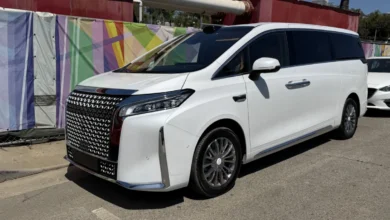
While Western automakers navigate the complexities of scaling EV production while maintaining profitability, Chinese manufacturers are aggressively expanding their product portfolios to capture global market share. BYD (Build Your Dreams), currently the world’s largest manufacturer of plug-in hybrid and battery-electric vehicles, has unveiled its latest strategic challenge to Tesla.
The podcast details the specifications and market positioning of BYD’s newest vehicle, engineered explicitly to compete with Tesla’s core high-volume offerings, such as the Model 3 and Model Y. BYD has capitalized on vertical integration, manufacturing its own semiconductors, batteries, and vehicle architectures, allowing the company to undercut Western competitors on price without sacrificing technological sophistication.
Industry analysts note that BYD’s aggressive pricing strategy, combined with advancements in proprietary battery technologies such as the Blade Battery—known for its exceptional safety profile and spatial efficiency—presents a formidable challenge to Tesla’s profit margins and market share, particularly in international markets across Europe, Southeast Asia, and Latin America. The discussion evaluates how Tesla plans to respond to this intensifying pressure, especially as demand for affordable electric vehicles becomes the primary driver of the next phase of EV adoption.

The Broader Implications for Sustainable Transport
The convergence of these three major topics—hypercar performance, hyper-efficient aerodynamic design, and mass-market pricing wars—illustrates the multifaceted nature of the current automotive landscape. The transition to sustainable transport is no longer merely about replacing internal combustion engines with electric motors; it is a fundamental reimagining of vehicle architecture, manufacturing efficiency, and global supply chains.
- Performance and Prestige: The Tesla Roadster represents the pinnacle of consumer EV capability, pushing the boundaries of physics and challenging the traditional supremacy of petrol-powered exotic supercars.
- Efficiency and Innovation: The rumored return of the Volkswagen XL1 highlights a critical engineering frontier: maximizing range through advanced aerodynamics and lightweight materials rather than simply installing larger, heavier battery packs.
- Market Dynamics and Competition: BYD’s expansion underscores the globalized nature of the EV market, where rapid innovation and cost-effective manufacturing are dictating the pace of the green energy transition.
As the Electrek Podcast continues to monitor these developments, the automotive industry stands at a crucial crossroads. The decisions made by companies like Tesla, Volkswagen, and BYD over the coming months will establish the trajectory of sustainable transport for the next decade, influencing everything from daily commuter vehicles to high-performance engineering marvels. Listeners and industry observers can access the full archive of this week’s discussion across major podcast platforms and via the official Electrek YouTube channel.
Related posts: