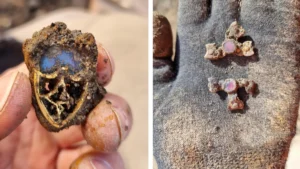
Did human sacrifice help lower violence? New research in Peru leaves intriguing question

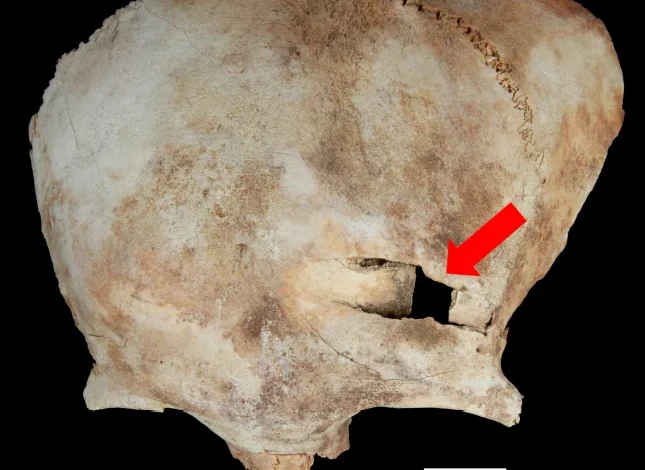
The investigation, which synthesized years of excavation data and osteological analysis, provides a nuanced portrait of a society that compartmentalized violence. By distinguishing between ritualized state-sponsored death and community-level strife, archaeologists have gained a clearer understanding of how these ancient people managed social cohesion in an environment defined by extreme climatic volatility.
The Geography of Ritual and Resilience
The Lambayeque Valley, located on the arid northern coast of Peru, served as the cradle for several prominent civilizations, most notably the Sicán (or Lambayeque) culture, which flourished between 750 and 1350 CE. This region was characterized by monumental architecture, including massive earthen pyramids known as huacas, and an intricate network of canals that allowed for agricultural prosperity in a desert environment.
However, the region was also at the mercy of the El Niño-Southern Oscillation (ENSO). These periodic weather events brought torrential rains, catastrophic flooding, and the destruction of the very infrastructure upon which the Lambayeque people depended. The new study suggests that human sacrifice was not an act of wanton cruelty, but rather a desperate, calculated social response to these climate-induced crises. When the irrigation systems failed and the crops withered, the political and religious elite turned to the divine, offering human lives to appease gods believed to control the turbulent weather.
Chronology of Archaeological Findings
The archaeological record in the Lambayeque Valley reveals a long history of ritualized activity. Excavations at sites like Huaca Las Ventanas and Huaca Lercanlech have uncovered layers of burials that point to a multi-generational commitment to ritual sacrifice.
- 750–900 CE: Early development of the Sicán cultural identity; evidence of small-scale ritual offerings.
- 900–1100 CE: Peak of the Middle Sicán period; construction of massive ceremonial platforms and increased evidence of state-organized sacrifices.
- 1100–1250 CE: A period of significant climatic instability, characterized by severe El Niño events; evidence suggests a marked increase in sacrificial frequency during this era.
- 1250–1350 CE: Societal reorganization following environmental collapse, leading to the eventual transition of power in the region.
The researchers categorized remains into two distinct groups: those showing signs of ritual execution—often characterized by precise neck wounds, decapitation, or specialized burial positions—and those of the common population. While the ritual victims displayed significant perimortem trauma, the non-sacrificial skeletons showed an absence of blunt-force trauma, fractures, or wounds consistent with combat, domestic disputes, or systemic interpersonal violence.
Bioarchaeological Data and Methodology
To determine the levels of violence, the research team utilized advanced osteological analysis, looking for markers of trauma that would indicate a violent society. They examined crania for depression fractures caused by weapons and looked at the post-cranial skeleton for "parry fractures"—defensive injuries sustained on the ulna during a physical struggle.
The findings were stark: the rate of such injuries among the non-sacrificial population was less than 5%, a figure substantially lower than that observed in many contemporary societies of the same period in other parts of the world. Even in societies often cited for their stability, such as medieval Europe or parts of Mesoamerica, the frequency of traumatic injury is typically higher.
"The contrast is striking," notes one lead researcher associated with the study. "We see a society that practiced what we would consider extreme forms of ritual violence, yet the daily life of the average citizen was relatively peaceful. This suggests that the ‘violence’ was tightly regulated, controlled by the state, and performed only under specific conditions—usually tied to the calendar or the climate."
Understanding the El Niño Connection
The correlation between El Niño events and sacrificial activity is not merely coincidental; it is foundational to understanding the Lambayeque worldview. In the Andean belief system, the environment was a living entity that required reciprocity. When the ocean warmed and the rains became destructive, the social contract between the gods and the people was seen as broken.
Scientific proxy data, including ice core samples from the Andes and tree-ring studies, have confirmed that the Lambayeque region experienced several "mega-Niño" events between the 10th and 12th centuries. These events caused the collapse of agricultural output, leading to food shortages and potential threats to the legitimacy of the ruling class. By engaging in sacrifice, the elites were likely performing a restorative act, attempting to reset the natural order and maintain their authority by demonstrating a direct, albeit brutal, line of communication with the divine.
Expert Perspectives and Theoretical Implications
The implications of these findings extend beyond the Lambayeque Valley. Anthropologists are now re-evaluating the "violence paradox"—the idea that a culture can be simultaneously peaceful and exceptionally violent.
Dr. Elena Vasquez, a specialist in Andean archaeology not involved in the study, noted that the research challenges the "Hobbesian" view of human nature. "We often assume that if a culture is violent in one area, it must be inherently aggressive across the board. This study proves that violence can be compartmentalized. It was a tool of the state, a mechanism for managing mass panic during climate disasters, and it did not bleed over into the interpersonal relationships of the people."
This perspective aligns with the "Ritualized Conflict" theory, which suggests that societies use controlled violence to sublimate the anxiety caused by uncontrollable variables. By centering the violence on the altar, the society may have effectively offloaded the psychological toll of the catastrophe, preventing the emergence of localized, disorganized violence between neighbors.
Broader Impact: Climate Change and Society
The Lambayeque case study offers a sobering look at how historical civilizations grappled with climate-induced instability. While modern society does not resort to human sacrifice, the psychological and political responses to environmental degradation remain relevant.
The study highlights how resource scarcity, combined with a lack of technological solutions to climate phenomena, forces societies to adopt extreme survival strategies. For the people of the Lambayeque Valley, the ritual sacrifice was not a sign of a "savage" society, but rather an indicator of a highly organized, albeit desperate, response to an existential threat.
As researchers continue to digitize and re-analyze the skeletal remains from northern Peru, the focus is shifting toward the genetic and dietary profiles of the sacrificial victims. Preliminary data suggests that victims were not always outsiders or prisoners of war, but sometimes individuals integrated into the community. This adds a layer of complexity to the social narrative, suggesting that the sacrifice may have been a communal sacrifice of "their own" to ensure the survival of the collective.
Conclusion: A Legacy of Controlled Order
The people of the Lambayeque Valley were not defined by the violence they performed at the altar, but by the stability they maintained in their everyday lives. Their ability to minimize interpersonal conflict while facing the repeated, devastating impact of El Niño weather patterns suggests a high degree of social integration and rule of law.
This study serves as a critical reminder of the diversity of human experience in the ancient world. It strips away the superficial labels of "barbarism" that have historically been applied to pre-Columbian cultures and replaces them with a more nuanced understanding of how civilizations—both ancient and modern—attempt to impose order on a chaotic, changing world. By compartmentalizing their most extreme rituals, the Lambayeque people fostered a society that, despite the tragedies at the huacas, remained remarkably cohesive and largely free from the scourge of daily violence. As climate change continues to alter our own global landscape, the story of the Lambayeque remains a poignant, if unsettling, example of the lengths to which humanity will go to preserve its existence.