Automotive AI Intelligence Brief: Xpeng Unifies Robotics Architectures While Aptiv and Nio Push Cost-Efficient Autonomous Systems Forward

The global automotive landscape is undergoing a profound paradigm shift, transitioning from traditional mechanical engineering toward software-defined mobility powered by advanced artificial intelligence. In the latest edition of the Automotive AI Intelligence Brief, industry analysts examine a pivotal juncture where automakers and tier-one suppliers are forced to reconcile monumental research and development expenditures with tangible, revenue-generating commercial applications. As legacy manufacturers and electric vehicle (EV) pure-plays alike pour billions of dollars into artificial intelligence, the pressure to justify these soaring investments has never been more intense.
At the center of this transformation are pioneering strategies from major global players such as Xpeng, Tesla, and Toyota, all of whom are aggressively expanding their technological footprint beyond standard Advanced Driver Assistance Systems (ADAS). By integrating vehicular AI platforms with humanoid robotics and cross-device machine ecosystems, these companies are betting that centralized computing architectures will unlock unprecedented operational efficiencies. Simultaneously, supply chain innovators like Aptiv and vehicle manufacturers including Nio and Hyundai are rolling out decentralized, cost-effective, and deeply integrated software solutions designed to democratize high-end automation for everyday consumers.
The Cross-Industry AI Ambitions of Xpeng, Tesla, and Toyota
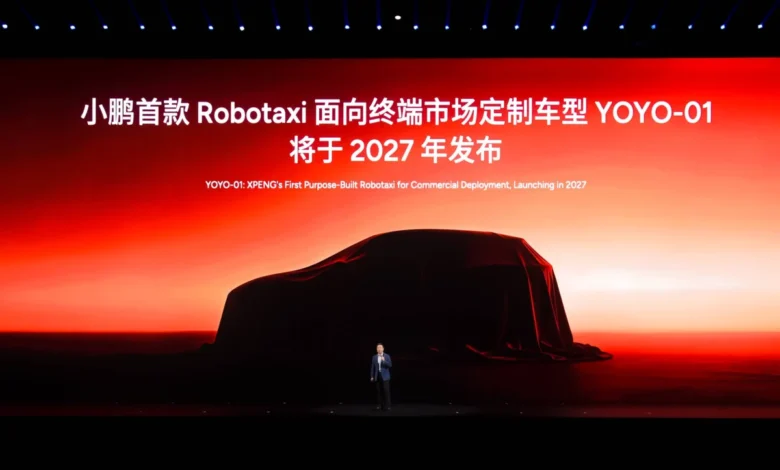
The race to dominate artificial intelligence in the automotive sector is increasingly defined by cross-domain integration. Chinese EV manufacturer Xpeng has emerged as a focal point of this trend following the unveiling of its next-generation unified AI architectures. Unlike conventional systems that are strictly localized to vehicular navigation, Xpeng’s newly developed architecture is engineered to run seamlessly across automobiles, humanoid robots, and other autonomous hardware as a single, cohesive operating ecosystem.
This ambitious strategy mirrors maneuvers executed by Western and Japanese counterparts. Tesla, long considered a pioneer in vertically integrated AI through its Full Self-Driving (FSD) software and Optimus humanoid robot project, has similarly championed the concept of a generalized neural network capable of navigating physical environments regardless of the physical chassis it inhabits. Similarly, Toyota has steadily increased its investments in robotics and artificial intelligence research through its Woven Planet subsidiary, aiming to establish an interoperable software backbone that spans urban mobility, personal robotics, and connected infrastructure.
However, industry analysts remain deeply cautious regarding the immediate viability of these expanded deployments. While the long-term vision of a unified robotic and automotive ecosystem offers alluring efficiency gains, robotics use cases remain largely unproven in commercial consumer markets. Building and deploying general-purpose hardware requires immense capital expenditure, and for companies like Xpeng, these costly robotics ambitions remain heavily dependent on the steady, high-volume sales of traditional passenger vehicles to subsidize their expansive R&D pipelines.
Economic Realities and the Push for Cost-Efficient ADAS
While automakers experiment with multi-machine ecosystems, the core commercial battleground remains firmly rooted in vehicle-based autonomy and active safety systems. The financial burden of outfitting vehicles with expensive LiDAR arrays, high-resolution cameras, and high-performance computing chips has traditionally restricted advanced ADAS features to luxury or premium vehicle tiers. However, recent technological breakthroughs are threatening to upend this economic model.
Aptiv, a global technology company and major tier-one automotive supplier, recently claimed a major breakthrough with its map-free PRISM ADAS platform. According to company disclosures, PRISM is capable of matching the performance and reliability of leading hands-free autonomous driving systems while operating at roughly half the total system cost. By eliminating the heavy reliance on hyper-expensive, pre-mapped high-definition routing data—which is notoriously costly to acquire, maintain, and update—Aptiv’s map-free approach relies instead on real-time environmental perception and advanced neural networks. This reduction in hardware and data-maintenance overhead could pave the way for mass-market adoption of Level 2+ automated driving features across economy vehicle segments.
Chronology of Recent AI Developments in the Automotive Sector
To understand how the current wave of technological advancements materialized, it is essential to trace the rapid evolution of automotive artificial intelligence over the past several years:
- Late 2022 to Throughout 2023: The emergence of generative AI and end-to-end neural networks begins to reshape autonomous vehicle development. Companies abandon rigid, rule-based coding in favor of data-driven machine learning models capable of handling complex, edge-case driving scenarios.
- Early 2024: Automakers face mounting pressure from investors to demonstrate a clear return on investment for multi-billion-dollar AI budgets. This triggers a strategic pivot, with firms expanding their software capabilities into smart cockpits, voice assistants, and hardware diversification like robotics.
- Late 2024: Nio introduces advanced world models to its existing vehicle fleets via over-the-air (OTA) software updates, demonstrating that legacy hardware can be revitalized through superior software architecture without requiring costly physical retrofits.
- Mid-2025: Suppliers like Aptiv begin emphasizing cost reduction, introducing map-free architectures designed to slash the production expense of hands-free driving capabilities.
- Late 2026: OEMs like Xpeng formalize unified multi-machine AI systems, bridging the gap between automotive computing and robotics, while mass-market brands like Hyundai integrate sophisticated agentic assistants into entry-level commuter vehicles such as the Elantra.
Software-Defined Fleets and In-Cabin Intelligence
While autonomous driving captures significant media attention, the interior of the modern vehicle is undergoing an equally dramatic transformation. Automakers are increasingly leveraging over-the-air software updates to extend the lifecycle and capability of vehicles already sitting in customer driveways, shifting the industry away from the traditional model where a car’s technological capability is permanently locked to its manufacturing date.
A prime example of this trend is Nio’s deployment of its NWM 3.0 world model. Rather than reserving advanced spatial reasoning and predictive driving intelligence exclusively for upcoming factory models, Nio successfully delivered the NWM 3.0 upgrade to existing vehicles currently on the road. By updating the software stack via cloud-based OTA delivery, Nio demonstrated that modern vehicle longevity can be drastically extended through intelligent architectural design, offering a stark contrast to the planned obsolescence typical of consumer electronics.
Simultaneously, artificial intelligence is permeating entry-level vehicle segments, transforming how drivers interact with basic cabin controls. Hyundai’s recent integration of its Gleo agentic assistant into the affordable Elantra lineup underscores this democratization of technology. Historically, sophisticated conversational artificial intelligence and context-aware virtual assistants were restricted to flagship luxury sedans and high-end electric crossovers. By embedding agentic capabilities—systems capable of autonomous task execution and complex multi-turn reasoning—into an entry-level compact car, Hyundai is signaling that advanced in-cabin digital assistants are rapidly becoming baseline consumer expectations across all pricing tiers.
Data-Driven Analysis: The Financial and Strategic Implications
The convergence of multi-machine AI architectures, map-free ADAS systems, and ubiquitous software updates carries profound implications for the global automotive industry.
From a financial perspective, original equipment manufacturers are walking a precarious tightrope. The cost of developing proprietary foundational models, training massive neural networks, and maintaining high-performance cloud infrastructure requires astronomical capital expenditures. For emerging electric vehicle manufacturers, funding these operations depends entirely on maintaining strong vehicle delivery volumes and protecting profit margins in an increasingly cutthroat global market. If vehicle sales stall, the ambitious long-term R&D projects—such as humanoid robotics and generalized cross-device AI frameworks—risk facing severe budget constraints.
Conversely, the emergence of cost-saving innovations like Aptiv’s PRISM platform and software-driven updates like Nio’s world model point toward a more sustainable economic future for the supply chain. By lowering the financial barrier to entry for advanced safety features, suppliers can accelerate global regulatory compliance and consumer adoption. Map-free ADAS solutions reduce the geographical limitations that have long plagued autonomous driving rollouts, allowing systems to function reliably in unmapped rural areas or rapidly developing urban centers where high-definition mapping data is unavailable.
Furthermore, the integration of advanced agentic assistants into entry-level vehicles, as demonstrated by Hyundai’s Elantra deployment, highlights a broader industry shift toward software monetization and user experience differentiation. As mechanical performance and traditional styling metrics become increasingly commoditized, an automobile’s value proposition is decisively shifting toward its digital ecosystem, software update frequency, and artificial intelligence capabilities.
Broader Industry Outlook
As the automotive sector moves past the initial hype cycle of artificial intelligence, the coming years will likely be defined by consolidation, fiscal discipline, and practical deployment. Automakers that successfully balance their exploratory investments in robotics and cross-industry AI with immediate, cost-effective safety and comfort innovations will be best positioned to capture long-term market share.
The developments highlighted in this intelligence brief—from Xpeng’s unified machine ecosystems and Aptiv’s economical ADAS platforms to Nio’s fleet-wide world model updates and Hyundai’s accessible agentic assistants—demonstrate an industry maturing in real-time. The future of mobility will not be determined solely by who can build the most powerful computer, but by who can deploy intelligent, reliable, and economically viable software at a global scale.
Related posts: