The intersection of renewable energy and heavy machinery has reached a new milestone with the introduction of the Moonrider 27, an all-electric utility tractor equipped with integrated solar charging capabilities. Developed as a collaborative effort between Ohio-based clean energy innovator GoSun and established Indian agricultural machinery manufacturer Moonrider, the vehicle aims to address the persistent market resistance that electric farm equipment has historically faced. By combining zero-emission propulsion with autonomous solar replenishment, the companies hope to provide an economically viable and environmentally sustainable alternative to traditional diesel-powered utility vehicles for small-scale farms, homesteads, and municipal property management.
Market Context and the Evolution of Electric Agriculture
For decades, the agricultural sector has been heavily reliant on diesel combustion engines due to their high torque output, durability, and ability to operate continuously under heavy loads. While the electrification of passenger vehicles and light commercial transport has accelerated globally, the agricultural equipment sector has lagged. Early iterations of electric tractors often struggled with prohibitive upfront costs, limited battery lifespans, and a lack of robust charging infrastructure in rural areas where equipment is frequently deployed far from the nearest electrical grid.

Industry analysts have noted that while major agricultural equipment manufacturers have introduced high-horsepower electric prototypes, the market for compact and utility-scale electric tractors remains largely unstandardized. Small farms and property managers have expressed a demand for quiet, low-maintenance alternatives to diesel tractors, but practical concerns regarding downtime and charging logistics have slowed adoption. GoSun’s entry into the market represents a strategic pivot toward decentralized energy generation, attempting to eliminate range anxiety and charging friction by mounting photovoltaic infrastructure directly onto the machinery itself.
Engineering Specifications and Capabilities of the Moonrider 27
At the core of the Moonrider 27 is a 20-kilowatt electric motor, delivering approximately 27 horsepower. The powertrain utilizes a four-wheel-drive configuration designed to maximize traction and torque delivery across uneven terrain, muddy fields, and loose soil. To ensure compatibility with existing agricultural tools, the tractor features a standard 540 rpm mechanical power take-off (PTO) located at the rear. This integration allows operators to utilize pre-owned or conventional farm implements—such as rotary mowers, tillers, and post-hole diggers—without requiring specialized electric attachments, thereby lowering the barrier to entry for prospective buyers.
Energy storage is managed by a 24-kilowatt-hour lithium iron phosphate (LFP) battery pack. LFP chemistry was selected for its thermal stability, safety profile, and longevity compared to traditional nickel-manganese-cobalt chemistries. According to the manufacturer, a fully charged battery provides up to five hours of continuous operation under standard load conditions. For many hobby farms, orchards, and landscaping operations, this operational window covers a full day of routine maintenance and light chores.
Integrated Solar Charging and Energy Independence
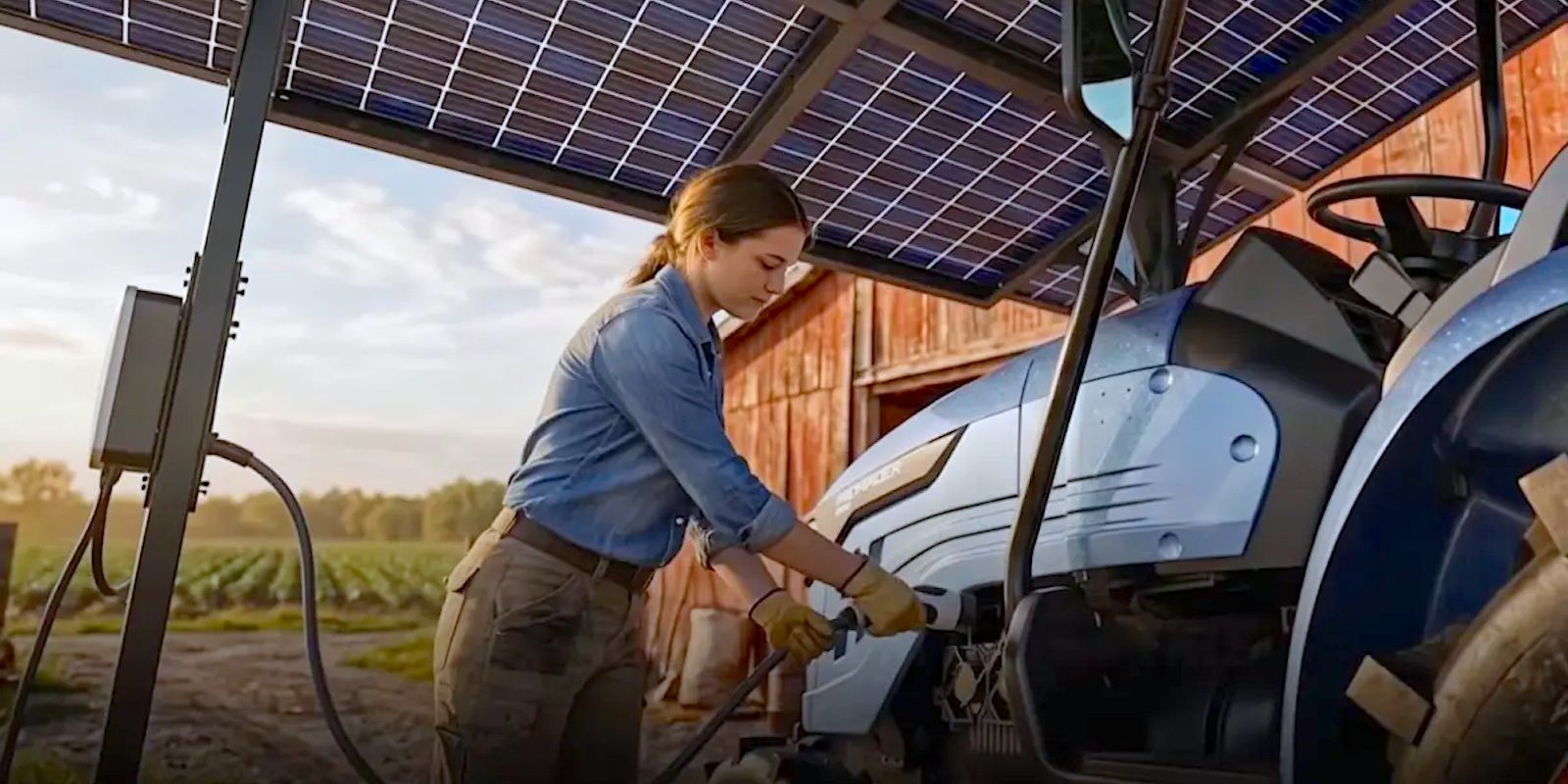
The defining characteristic of the Moonrider 27 is its optional 1.1-kilowatt integrated solar array. While the vehicle can be recharged conventionally using standard 220/240-volt alternating current Level 2 charging infrastructure, the onboard photovoltaic panels allow for passive energy generation while parked or during outdoor operations.
Under optimal sunlight conditions, the solar canopy can supplement the battery by providing approximately 1.5 hours of additional runtime per day. For operations that do not require continuous, maximum-capacity usage every day, the solar integration significantly reduces reliance on grid electricity or diesel generators. In scenarios where the tractor is used intermittently throughout the week, the passive charging system can theoretically extend intervals between plug-in charging sessions to weeks or even months, effectively minimizing operational overhead and energy expenses for the end user.
Official Perspectives and Industry Objectives

The commercial strategy behind the Moonrider 27 centers on reducing the total cost of ownership while mitigating environmental impacts associated with small-scale land management.
"Small-scale farming and property management have relied on noisy, costly diesel utility vehicles for far too long," said Patrick Sherwin, founder and chief executive officer of GoSun. "With our new All-Electric Tractor, we are empowering farmers and land managers to literally work in the sunshine—reducing operational costs while protecting the soil and air."
By eliminating internal combustion engines, the tractor produces zero local tailpipe emissions and operates at a significantly lower noise level than its diesel counterparts. This reduction in noise and vibration is expected to benefit livestock operations, greenhouse environments, and urban municipal spaces where acoustic pollution and exhaust fumes are tightly regulated. Furthermore, the absence of fluids such as engine oil, transmission fluid, and diesel exhaust fluid (DEF) drastically reduces routine maintenance requirements, minimizing potential environmental contamination from fluid leaks on agricultural land.
Broader Economic and Environmental Implications

The introduction of solar-chargeable utility equipment highlights a broader trend toward decentralized agricultural operations. In regions prone to power grid instability, or in remote agricultural sectors where electrical infrastructure is sparse, the ability to generate propulsion energy on-site offers a distinct logistical advantage.
Economic analyses of electric utility vehicles generally indicate that while initial capital expenditures can be higher than internal combustion equivalents, lifetime operational savings derived from lower fuel and maintenance costs offset the initial investment over time. The integration of photovoltaic charging further accelerates this return on investment by essentially capping or eliminating the variable fuel costs associated with equipment operation.
However, challenges remain for widespread market penetration. The 27-horsepower class is well-suited for light utility work, mowing, hauling, and light tillage, but it cannot replace heavy-duty row-crop tractors used in large-scale commercial agriculture. Consequently, GoSun and Moonrider have targeted a specific demographic: hobby farmers, vineyard operators, orchard managers, golf courses, and municipal parks departments.
As regulatory pressures mount and consumers demand greater sustainability throughout the supply chain, the success of the Moonrider 27 may serve as a bellwether for the viability of solar-integrated utility equipment. If small-scale operators embrace the promise of grid-independent agricultural machinery, the model could pave the way for broader electrification across heavier utility vehicle segments in the coming decade.
Related posts: