Nio’s Ambitious 2030 Battery Swap Vision Tests the Boundaries of Capital, Infrastructure, and Corporate Strategy

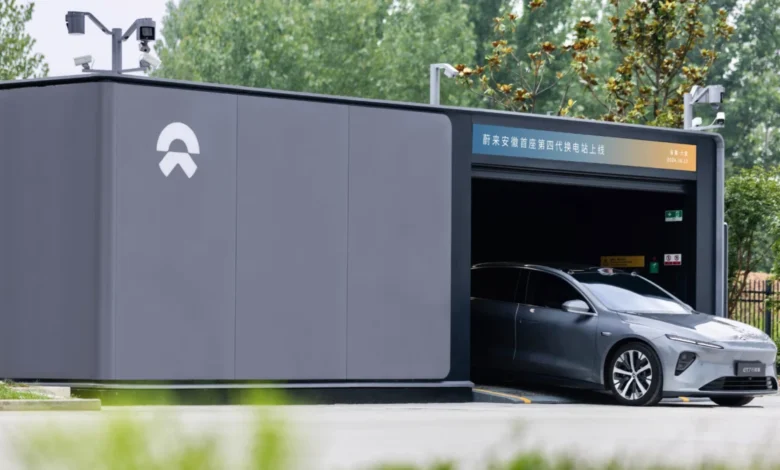
Chinese electric vehicle pioneer Nio has laid out an aggressive blueprint for the remainder of the decade, setting its sights on operating more than 10,000 battery swap stations and managing a staggering CN¥350 billion (US$52 billion) worth of battery packs by 2030. Unveiled during the company’s "Nio in 2026" annual technology event in Guangzhou—which also marked the company’s 12th founding anniversary—the strategy envisions a profound corporate evolution. Nio’s energy division, Nio Power, is slated to transform into an independent battery asset manager, pivoting away from a purely proprietary model toward an open infrastructure ecosystem backed by external capital and strategic partnerships, notably including a 30% stake acquisition by rival automaker Geely.
However, this grand vision arrives at a critical juncture for the company and the broader new energy vehicle (NEV) sector. While opening the swap network to external original equipment manufacturers (OEMs) strengthens the business model’s financial viability, it simultaneously erodes a key proprietary selling point that has historically compelled consumers to choose a Nio vehicle. As ultra-fast charging technologies advance rapidly across the industry, Nio’s high-stakes gamble on battery swapping faces immense scrutiny regarding infrastructure deployment rates, capital expenditure, and its evolving identity in an increasingly competitive market.
The 2030 Targets and Deployment Reality Check
To achieve its stated goal of more than 10,000 battery swap stations globally by the end of the decade, Nio will be forced to drastically accelerate its deployment velocity. As it stands, the automaker operates 4,285 swap stations and 5,611 regular charging stations globally, predominantly concentrated within mainland China, having completed more than 130 million battery swaps to date. Nio Power has also set an ambitious throughput target of delivering more than 10 billion kWh annually through its charging and swapping networks by 2030, a sharp escalation from the 5.28 billion kWh delivered in total over the roughly eight-year period leading up to February 2026.
Yet, historical deployment data suggests that reaching the 10,000-station milestone will be an uphill battle. Nio added 679 swap stations in 2024 and 681 in 2025. Meeting the 2030 objective demands a sustained average of approximately 1,400 new stations annually. The pace has yet to reflect this required acceleration; the automaker has added only around 550 stations since February against its internal goal of at least 1,000 installations for 2026.
This shortfall echoes previous missed projections. At its 2021 Power Day event, Nio pledged to establish more than 4,000 stations worldwide by the end of 2025, including roughly 1,000 stations outside of China. By February 2026, the actual count stood at approximately 3,700 stations, with the vast majority remaining confined to the domestic Chinese market. Industry analysts note that while Nio’s engineering capabilities in hardware deployment are formidable, matching ambitious corporate announcements with execution on the ground remains a persistent operational hurdle.
Shifting the Financial Burden: The Battery-as-a-Service Dilemma
The capital requirements underpinning Nio’s Battery-as-a-Service (BaaS) model present an even greater challenge than spatial expansion. Under the BaaS framework, consumers can purchase an electric vehicle without the upfront cost of the battery pack, renting the component on a monthly subscription basis instead. While this lowers the barrier to entry for buyers, it leaves a corporate balance sheet responsible for financing an enormous, capital-intensive fleet of batteries distributed across vehicles on the road and storage inventory within swap stations.
A managed portfolio valued at CN¥350 billion dwarfs Nio’s corporate revenue generation capacity—for perspective, the company reported second-quarter revenues of approximately US$4.7 billion. Recognizing the unsustainability of bearing this immense fiscal weight internally, Nio has aggressively pursued asset-light restructuring.
Under collaborative arrangements, external financial partners and energy firms shoulder the capital expenditure for station construction. A prime example is Nio’s agreement with Zhongan Energy to build 500 stations within a single year, contributing to a total of more than 900 co-built stations to date. Furthermore, the impending finalization of the September agreement granting Geely a 30% equity stake in Nio Power signals a decisive transition. Nio is successfully insulating its core automotive manufacturing division from the debilitating capital demands of heavy energy infrastructure, but it is doing so by diluting its exclusive control over its crown-jewel asset.

Technological Evolution and the Narrowing Speed Advantage
Nio continues to refine its hardware ecosystem. The introduction of fifth-generation swap stations in August marked a significant engineering milestone, serving as the first infrastructure iteration capable of servicing all three of Nio’s distinct brands—including the newly integrated compact Firefly brand. Furthermore, optimized battery management systems on Nio’s 900-volt vehicle architecture have reduced swap times to between 2.5 and 3 minutes.
Despite these efficiency gains, the underlying premise of battery swapping is facing a stiff competitive challenge from conventional fast-charging technologies. Nio has traditionally positioned the speed and convenience of swapping as its ultimate differentiator against plug-in charging. However, rival Chinese NEV manufacturers, spearheaded by market leader BYD and several other prominent OEMs, are aggressively deploying megawatt-level high-voltage charging networks. These next-generation chargers can replenish hundreds of kilometers of driving range in a timeframe that barely exceeds the duration of a mechanical battery swap.
Simultaneously, the utilization rate of Nio’s existing swap stations remains a point of operational concern. Current network data indicates that station throughput averages roughly 40 to 45 swaps per station on a daily basis. For the capital-intensive model to achieve sustainable profitability without heavy subsidization, station throughput must scale significantly, which in turn necessitates broader vehicle compatibility across the entire automotive industry—a standardization consensus that remains elusive.
Transforming into an AI-Native Organization
Beyond the heavy infrastructure and energy initiatives, the remainder of the Guangzhou technology event focused on Nio’s software and artificial intelligence roadmap. Chief Executive William Li detailed the company’s ongoing transition into an "AI-native organization," revealing that over 7,500 internal AI agents have been deployed across various operational, manufacturing, and administrative departments to drive efficiency.
On the consumer-facing front, Nio introduced the "NIO WorldModel 3.0" advanced driver-assistance system (ADAS), scheduled for a commercial rollout beginning in December, pending regulatory authorization. The automaker claims the new architecture requires 40% fewer driver interventions than its preceding iteration. However, mirroring similar claims made by industry players like Tesla regarding its Full Self-Driving (FSD) software, Nio did not provide a transparent baseline or standardized metrics to substantiate the improvement figure.
In tandem with WorldModel 3.0, Nio launched NOMI Intelligence 4.0. This updated in-car virtual assistant has been rebuilt around a sophisticated AI agent framework, designed to grant the vehicle interface advanced autonomous task-planning and execution capabilities to enhance the cabin experience.
Strategic Implications: A Utility Company in Disguise?
As Nio charts its course toward 2030, the fundamental identity of the enterprise is undergoing a quiet metamorphosis. By opening its proprietary swap network to competitors like Geely and relying on syndicated capital to fund station expansion, Nio is deliberately converting a closed competitive advantage into shared public infrastructure.
This strategic pivot makes profound financial sense, preventing the company from bleeding capital into real estate and battery inventory management amid a brutal price war in China’s automotive market. Yet, it introduces a profound brand paradox: as more automotive brands utilize Nio’s stations, the presence of the swap network becomes a neutral public utility rather than a compelling reason for a consumer to purchase a Nio automobile.
Over the long term, the trajectory suggests that Nio may increasingly resemble a specialized energy utility and battery asset management firm—albeit one saddled with the cyclical risks of the automotive sector—that simply happens to manufacture and sell premium electric vehicles on the side. Whether this hybrid model can successfully balance profitability, infrastructure scale, and brand differentiation will define the company’s legacy in the global energy transition.
Related posts: