Alo defies China’s retail slump with record-breaking Tmall debut and ambitious expansion plans

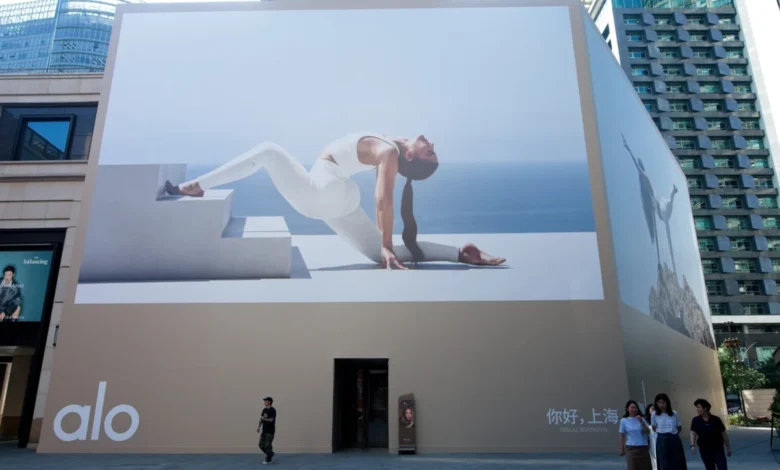
The Chinese retail landscape is currently defined by extreme caution, with households tightening their purse strings amidst a broader economic deceleration. Official data released for August showed a meager 0.4% year-over-year increase in retail sales, significantly trailing the expectations of economists surveyed by Reuters. This tepid consumer sentiment, exacerbated by a persistent property sector downturn and a cooling labor market, has contributed to a second-quarter GDP growth rate of just 4.3%—the lowest figure recorded in over three years. Yet, amidst this macroeconomic frost, Los Angeles-based activewear label Alo has emerged as a high-performing outlier, demonstrating that while the broader market may be stagnating, the appetite for premium, aspirational lifestyle brands remains robust.
A Tmall Debut for the Record Books
On August 12, at the stroke of 12:30 a.m., Alo officially entered the Chinese digital ecosystem by launching its flagship store on Alibaba’s Tmall, the country’s premier business-to-consumer marketplace. The response was instantaneous and overwhelming. Within the first sixty seconds of the presale checkout opening, Chinese consumers committed more than 10 million yuan—approximately $1.5 million—to the brand.
This performance was not merely a momentary flash of curiosity; it represented a new sales record for a newly launched brand within Tmall’s highly competitive sports and outdoor category. The launch, which followed an official announcement on Chinese social media platforms just two months prior, signaled a sophisticated level of brand penetration that most Western retailers struggle to achieve in their first year of market entry.
The Strategy of Pre-Existing Awareness
Alo’s ability to bypass the traditional "introductory period" in China is rooted in a deliberate, multi-year strategy that prioritized digital visibility before physical presence. Long before the Tmall store was operational, the brand had already established a firm foothold in the country through a combination of cross-border e-commerce channels and a network of unauthorized resellers. This gray-market activity, while often a challenge for brand control, served as a primary research tool, allowing Alo to gauge product demand and regional preferences.
By the time the official launch date arrived, the brand was already a fixture in the digital discourse of China’s Gen Z and millennial cohorts. According to data provided by the consumer trends firm Dao Insights, Alo-related content garnered over 240 million views on RedNote (Xiaohongshu) in the days preceding the Tmall opening. By leveraging high-profile celebrity endorsements—including partnerships with actress Zhao Lusi, actor Wang Yibo, and supermodel Sui He—Alo successfully bypassed the need to explain its identity. Instead, the company moved directly into the phase of curating the "Alosphere," its signature lifestyle ecosystem that merges wellness, social community, and fashion-forward aesthetics.
Community-Centric Engagement
The brand’s strategy in China is predicated on the belief that physical interaction is a prerequisite for long-term loyalty. Before the Tmall launch, Alo initiated an intensive eight-week series of "community activation" events across Shanghai. These included city walks, outdoor yoga sessions, running clubs, and specialized wellness classes. This grassroots approach was designed to familiarize the local market with the brand’s holistic philosophy.
This emphasis on the "Alosphere" is a deliberate departure from the performance-first messaging of traditional sports brands. By positioning itself as a lifestyle curator, Alo has managed to elevate its products from mere athletic gear to essential components of a modern, wellness-oriented wardrobe.
Analyzing the Sales Mix: Beyond the Yoga Mat
An examination of the early sales data reveals a surprising trend: the brand’s most successful products are not its performance leggings, but rather its high-end casual wear. As of August 14, two days after the launch, the top-performing item was the 1,150-yuan ($170) "Suit Up" straight-leg trouser, which saw more than 10,000 units sold. Similarly, a 1,750-yuan ($260) sneaker sold over 3,000 pairs.
Crucially, these transactions were completed at full price, suggesting that the brand’s "premium" positioning is resonating with a specific segment of the Chinese consumer base that remains insulated from the broader economic downturn. This consumption pattern aligns with the "two-speed" economic theory observed in China, where overall discretionary spending is down, but specific categories—such as premium wellness, specialized sports, and luxury goods—continue to see consistent growth. Other industry players, such as the Swiss running brand On and the technical outdoor brand Arc’teryx, have reported similar success, with On’s Asia-Pacific sales surging by 43.1% in the second quarter and Arc’teryx significantly expanding its retail footprint to 79 stores by the end of 2025.
The Competitive Landscape and the Lululemon Factor
Alo’s arrival occurs at a critical juncture for the incumbent, Lululemon Athletica. Having long defined the "athleisure" category in the Chinese market, Lululemon is now showing signs of potential fatigue. While the Canadian retailer operated 174 stores in mainland China as of August 2, it reported an 8% decline in comparable sales in the region on a constant-dollar basis during its fiscal second quarter.
Analysts suggest that Lululemon’s challenge stems from a combination of market saturation and a shift in consumer preference toward newer, more fashion-forward entrants. Alo’s "fashion-heavy" aesthetic, which transitions seamlessly from the yoga studio to the office or social settings, appears to be effectively capturing market share from legacy players who are struggling to maintain their momentum.
Future Expansion and Operational Risks
Despite the successful launch, industry analysts urge caution. The "opening rush" was likely amplified by the availability of limited-edition merchandise, such as the branded tote bag, and the concentrated purchasing power of a pre-existing fan base. Whether this velocity can be sustained remains to be seen.
Alo, however, is not waiting for long-term validation before committing to a massive physical expansion. On September 16, the company confirmed an aggressive rollout plan for eight new flagship stores across seven cities—including Beijing, Hong Kong, Macau, Shenzhen, Chengdu, Hangzhou, and two additional locations in Shanghai—to be completed by 2027. This follows the previously announced flagship at Hong Kong’s K11 Musea.
"Our ambition goes beyond opening stores: we are building an Alosphere," stated Benedetta Petruzzo, Alo’s international CEO. This declaration underscores a commitment to long-term integration within the Chinese market.
Implications for the Retail Sector
The success of Alo provides a compelling case study for multinational corporations navigating the current Chinese economic climate. It suggests that success is no longer guaranteed by brand history or global reach; rather, it is predicated on three key factors:
- Digital Primacy: Building deep, authentic community engagement on local social platforms like RedNote before formal market entry.
- Localization through Influencers: Utilizing localized celebrity ambassadors who possess genuine, long-term alignment with the brand’s image, rather than superficial endorsements.
- The "Lifestyle" Premium: Shifting the focus from technical performance to comprehensive lifestyle integration.
As the brand moves into the next phase of its China strategy, the primary risk will be the scalability of the "Alosphere" model. Maintaining the exclusivity and community feel of a boutique wellness brand while operating a significant brick-and-mortar network in major urban centers requires a delicate balance.
For now, Alo stands as a rare example of a company that has successfully decoded the current Chinese consumer psyche. By focusing on premium pricing, aesthetic versatility, and a community-centric ecosystem, the brand has effectively insulated itself from the broader retail stagnation, setting the stage for what will be one of the most closely watched retail expansions in the Asia-Pacific region over the coming years. Whether this growth can be sustained against a backdrop of macroeconomic uncertainty will serve as a bellwether for other Western brands seeking to maintain relevance in the world’s most complex consumer market.
Related posts: