President Donald Trump Announces Major Audi Manufacturing Expansion in Georgia to Bolster American Industrial Capacity


In a move designed to underscore his administration’s focus on domestic manufacturing, President Donald Trump announced on Saturday that German luxury automaker Audi, a subsidiary of the Volkswagen Group, will construct a significant new automobile production facility in Macon, Georgia. The announcement, delivered to a crowd of supporters at a campaign rally in Perry, Georgia, represents a $4.2 billion capital commitment that promises to reshape the economic landscape of the region. As the midterm elections approach, the development serves as a focal point for the administration’s trade and economic policy, which has been characterized by aggressive tariff implementation and a persistent push for "onshoring" global supply chains.
The proposed facility is expected to produce approximately 200,000 vehicles annually, focusing on the brand’s flagship luxury SUV models. According to official projections, the project is slated to create 4,500 permanent jobs, offering a substantial boost to the local labor market. While construction is not scheduled to commence until 2027, with full-scale production expected in the early 2030s, the announcement provides a tangible economic narrative for Republican candidates in the battleground state, including Representative Mike Collins, who is currently engaged in a high-stakes campaign to unseat Democratic Senator Jon Ossoff.
The Strategic Significance of the Macon Facility
The choice of Georgia as the site for this investment is part of a broader trend of industrial growth in the Southeastern United States, often referred to as the "Automotive Corridor." Georgia, in particular, has seen a surge in interest from global manufacturers due to its robust logistics infrastructure, access to the Port of Savannah, and a business-friendly regulatory environment.
For Audi, the Macon plant represents a long-term strategic pivot. By establishing a massive production footprint within the United States, the company aims to mitigate the volatility of international shipping costs and navigate the complexities of global trade barriers. Audi CEO Gernot Döllner, who joined President Trump on stage, emphasized the company’s commitment to the American consumer. "This is a long-term investment, because we believe in the American market," Döllner stated. He clarified that the facility would be tasked with the assembly of the company’s largest and most premium SUV models, vehicles that currently command high demand among American buyers but are traditionally imported from European assembly lines.
A Chronology of the Investment Decision
The journey to this announcement has been marked by months of high-level negotiations between the Trump administration and Volkswagen Group executives. The administration’s tariff policies, which have been both controversial and a central pillar of Trump’s economic platform, appear to have been a primary catalyst for the negotiations.
- Early 2026: Initial dialogues begin between the White House economic advisory team and Volkswagen Group management regarding potential expansion into the U.S. South.
- Mid-2026: Detailed feasibility studies are conducted by Audi to evaluate the logistical benefits of Macon, Georgia, compared to other potential sites in the region.
- September 2026: Finalization of tax incentives and infrastructure support packages by state and local officials in Georgia.
- October 2026: The official public announcement is coordinated to coincide with the final weeks of the midterm election cycle, providing a boost to Republican candidates.
- 2027: Anticipated groundbreaking for the Macon site.
- Early 2030s: Targeted date for the first vehicles to roll off the production line.
Economic Implications and Tariff Policy Analysis
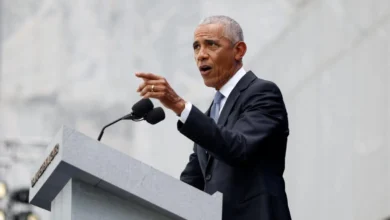
President Trump attributed the decision directly to his administration’s trade strategy, suggesting that the threat and application of tariffs on foreign-made vehicles compelled international firms to relocate production to American soil. "Think of that. 200,000 cars a year. That’s incredible," Trump remarked during his speech.
Economists are divided on the long-term impact of this approach. Proponents argue that by forcing companies to build domestic plants, the administration is securing high-paying manufacturing jobs and reducing the trade deficit. Skeptics, however, point to the potential for higher vehicle prices for consumers and the risk of retaliatory tariffs from European and Asian trading partners. Furthermore, the reliance on foreign direct investment—even if the plant is located in the U.S.—creates a complex web of corporate ownership that may not always align with domestic economic interests during global downturns.
Nevertheless, the scale of the $4.2 billion investment cannot be understated. It represents one of the largest single industrial investments in Georgia’s history, rivaling recent investments by the electric vehicle (EV) sector, which has also been aggressively targeting the state for battery and assembly plants.
Political Context and Midterm Election Dynamics
The announcement was strategically timed as the Republican Party works to maintain its legislative majorities amidst a challenging political climate. With voters expressing significant concerns over persistent inflation, high interest rates, and the geopolitical instability caused by the ongoing war in Iran, the Trump campaign has sought to shift the conversation toward domestic economic growth.
The rally in Perry served as a platform for local leaders to highlight the success of the administration’s partnership with the private sector. Rick Jackson, the Republican candidate for Georgia governor, lauded the move as a transformative moment for the state. "Thank you on behalf of Georgia for putting the biggest economic deal in Georgia history right here today," Jackson said, framing the deal as a testament to the effectiveness of the current administration’s economic agenda.
Despite this win, the broader electoral landscape remains fraught with uncertainty. Recent polling from AP-NORC suggests a frustrated electorate that is seeking substantial changes in Washington, regardless of party affiliation. The success of candidates like Representative Mike Collins may hinge on whether voters view this investment as a harbinger of a broader economic recovery or as an isolated event in an otherwise difficult economic term.
Industry Outlook: The Future of Premium SUV Manufacturing
The focus on "premium SUVs" reflects the evolving preferences of the American automotive market. Luxury SUVs have seen consistent growth in market share over the last decade, consistently outperforming sedans and compact cars in terms of profitability per unit. By producing these vehicles in Georgia, Audi can drastically reduce "time-to-market" for the U.S. dealership network, cutting down on the weeks-long logistics delays currently required to transport high-end vehicles across the Atlantic.
Moreover, the construction of this plant is expected to foster a secondary supply chain in the Macon area. Automotive manufacturing is a high-multiplier industry; for every job created within the assembly plant, analysts typically estimate the creation of three to five additional jobs in the local service, logistics, and parts-manufacturing sectors. The regional economic impact will likely extend well beyond the 4,500 direct employees of the plant.
Conclusion and Future Considerations
As the United States moves closer to the 2030s, the Audi plant in Macon will serve as a bellwether for the efficacy of protectionist trade policies in an era of globalized production. Whether this project leads to a sustained renaissance in domestic manufacturing remains to be seen, but its immediate impact on the Georgia political scene is undeniable.
The coming months will likely see increased scrutiny of the specific tax subsidies and infrastructure commitments made by the state of Georgia to secure this deal. While the immediate political optics are positive for the incumbent party, the long-term success of the project will depend on the stability of the global automotive market, the continued demand for luxury SUVs, and the ability of the region to provide a skilled workforce capable of operating high-tech, automated assembly lines.
For now, the announcement serves as a hallmark of the administration’s strategy: leveraging the strength of the American market to compel global industrial players to invest in the domestic economy, aiming to turn the tide in both the electoral battleground and the industrial landscape. The path from the podium in Perry to the first luxury SUV rolling off the Macon line is long, but the groundwork has now been firmly established.
Related posts: