A Newly Discovered Fossilized Egg Reveals Mammal Ancestors Laid Eggs, Solving a Long-Standing Scientific Enigma

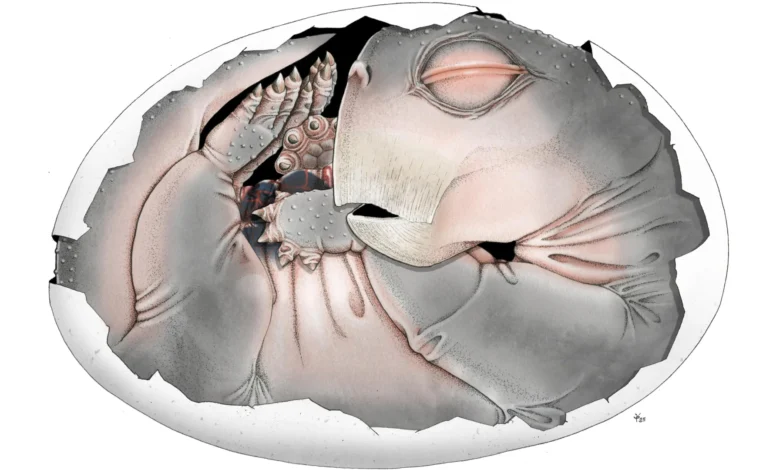
The fossilized remains of an ancient embryo, meticulously preserved within what is believed to be its eggshell, are rewriting our understanding of early mammalian evolution and offering profound insights into one of Earth’s most dramatic periods of recovery. This remarkable discovery, detailed in a new study published in the journal PLOS ONE, provides the first definitive proof that the ancestors of mammals, specifically the hardy reptile-like creature Lystrosaurus, reproduced by laying eggs. This finding not only resolves a scientific mystery that has puzzled paleontologists for decades but also sheds light on the extraordinary resilience of life in the wake of the most devastating extinction event in our planet’s history.
The End-Permian Extinction: A World Remade
Around 252 million years ago, the Earth plunged into a period of unprecedented cataclysm. The End-Permian Mass Extinction, often referred to as the "Great Dying," annihilated an estimated 96% of all marine species and 70% of terrestrial vertebrate species. The primary driver of this devastation is believed to be a colossal volcanic event in the Siberian Traps, which released vast quantities of greenhouse gases, leading to extreme global warming, ocean acidification, and widespread anoxia (lack of oxygen). The planet’s surface became a hostile wasteland, characterized by scorching temperatures, volatile atmospheric conditions, and prolonged droughts.
In this desolate aftermath, a unique assemblage of life began to emerge and adapt. Among the survivors, one creature, Lystrosaurus, rose to extraordinary prominence. This pig-sized, herbivorous animal, a synapsid belonging to the group that would eventually give rise to mammals, proved exceptionally adept at navigating the harsh new world. Its ability to endure extreme conditions and rapidly colonize the barren landscapes made it one of the most dominant terrestrial vertebrates of the Triassic period. However, the precise reproductive strategies that facilitated its remarkable success remained a subject of intense scientific debate.
Unearthing a Prehistoric Mystery: The Lystrosaurus Egg
The groundbreaking discovery centers on a fossil unearthed during a field excursion in South Africa led by Professor Jennifer Botha of the Evolutionary Studies Institute at the University of the Witwatersrand. Nearly 17 years ago, in 2008, a keen-eyed preparator and fossil finder, John Nyaphuli, identified a small nodule containing what initially appeared to be mere fragments of bone. Through painstaking preparation, it became evident that the nodule encased a perfectly curled-up Lystrosaurus hatchling. Professor Botha, even at the time, suspected the creature had died within its egg, but the technological limitations of the era prevented definitive confirmation.
This suspicion was finally validated through the application of cutting-edge scientific techniques. An international team, spearheaded by Professor Botha, Professor Julien Benoit of the University of the Witwatersrand, and Dr. Vincent Fernandez of the European Synchrotron Radiation Facility (ESRF) in France, utilized advanced synchrotron X-ray computed tomography (CT) scanning. This powerful technology allowed researchers to peer inside the fossilized specimen with unprecedented detail, resolving the ancient enigma.
"This fossil was discovered during a field excursion I led in 2008, nearly 17 years ago," Professor Botha recounted. "My preparator and exceptional fossil finder, John Nyaphuli, identified a small nodule that at first revealed only tiny flecks of bone. As he carefully prepared the specimen, it became clear that it was a perfectly curled-up Lystrosaurus hatchling. I suspected even then that it had died within the egg, but at the time, we simply didn’t have the technology to confirm it."
The Power of Synchrotron Imaging
The ESRF, a leading global facility for synchrotron science, provided the crucial tools for this breakthrough. Synchrotron X-rays offer a far more intense and focused beam than conventional X-rays, enabling the imaging of incredibly fine structures. Dr. Vincent Fernandez described the scanning process as a pivotal moment in his career.
"Understanding reproduction in mammal ancestors has been a long-lasting enigma, and this fossil provides a key piece to this puzzle," Dr. Fernandez stated. "It was essential that we scanned the fossil just right to capture the level of detail needed to resolve such tiny, delicate bones."
The detailed scans revealed not only the presence of the embryo but also critical developmental indicators. Professor Julien Benoit identified a particularly significant feature: an incomplete mandibular symphysis. The mandible, or lower jaw, in vertebrates is typically formed from two halves that fuse as the animal matures. The absence of this fusion in the embryo indicated that it was not yet capable of independent feeding.
"When I saw the incomplete mandibular symphysis, I was genuinely excited," Professor Benoit shared. "The mandible, the lower jaw, is made up of two halves that must fuse before the animal can feed. The fact that this fusion had not yet occurred shows that the individual would have been incapable of feeding itself."
Unraveling Reproductive Strategies
The discovery of the Lystrosaurus embryo within its presumed eggshell has profound implications for understanding its reproductive strategy and, by extension, the evolution of mammalian reproduction. The researchers concluded that Lystrosaurus likely produced relatively large eggs for its body size. In extant animals, larger eggs are typically rich in yolk, providing sufficient nourishment for the embryo to develop to an advanced stage without requiring post-hatching parental provisioning. This directly challenges the notion that early mammal ancestors might have already been nurturing their young with milk, a hallmark of modern mammals.
The findings suggest that Lystrosaurus hatchlings were likely precocial. This means they were born at a highly developed stage, capable of fending for themselves shortly after hatching. Such an adaptation would have been immensely advantageous in the volatile and resource-scarce environment of the early Triassic. Being able to forage, avoid predators, and grow rapidly would have significantly increased their chances of survival and successful reproduction.
Furthermore, the researchers posit that the eggs themselves were likely soft-shelled, a characteristic that explains their extreme rarity in the fossil record. Unlike the hard, calcified eggs of dinosaurs that readily fossilize, soft-shelled eggs are far more prone to decay before mineralization can occur. This makes the current find exceptionally valuable and a testament to the unique preservation conditions at the discovery site.
The large size of the eggs also offered a crucial advantage in the arid climate. They would have been more resistant to desiccation, preventing the developing embryo from drying out, a critical factor for survival in the harsh, dry conditions that persisted for millions of years after the End-Permian extinction.
A Strategy for Survival in a Devastated World
The evidence points to a highly effective survival strategy for Lystrosaurus: rapid growth and early reproduction facilitated by large, yolk-rich eggs and precocial young. This reproductive approach allowed them to exploit the newly available ecological niches in the post-extinction world with remarkable speed and efficiency. Their ability to reproduce quickly and produce self-sufficient offspring meant that populations could recover and expand even under challenging environmental pressures.
This reproductive strategy, combined with their physiological adaptability to extreme heat and arid conditions, explains why Lystrosaurus became so ubiquitous. They were not just survivors; they were pioneers, repopulating a planet in recovery.
Broader Implications for Paleontology and Climate Science
The confirmation that mammal ancestors laid eggs is a monumental step in paleontology. For over 150 years, the fossil record of South African paleontology had yielded no conclusively identified therapsid egg. This discovery marks a true milestone, filling a significant gap in our understanding of vertebrate evolution.
"This research is important because it provides the first direct evidence that mammal ancestors, such as Lystrosaurus, laid eggs, resolving a long-standing question about the origins of mammalian reproduction," Professor Benoit elaborated. "Beyond this fundamental insight, it reveals how reproductive strategies can shape survival in extreme environments: by producing large, yolk-rich eggs and precocial young, Lystrosaurus was able to thrive in the harsh, unpredictable conditions following the end-Permian mass extinction."
The implications of this discovery extend far beyond the realm of paleontology, offering valuable lessons for contemporary environmental challenges. In an era of accelerating climate change and increasing ecological instability, understanding how past organisms navigated similar global crises is of paramount importance.
"In a modern context, this work is highly impactful because it offers a deep-time perspective on resilience and adaptability in the face of rapid climate change and ecological crisis," Professor Benoit continued. "Understanding how past organisms survived global upheaval helps scientists better predict how species today might respond to ongoing environmental stress, making this discovery not just a breakthrough in paleontology, but also highly relevant to current biodiversity and climate challenges."
Professor Botha echoed this sentiment, highlighting the journey of discovery and its significance. "What makes this work especially exciting is that we were able to quite literally follow in John Nyaphuli’s footsteps, returning to a specimen he discovered nearly two decades ago and finally solve the puzzle he uncovered," she stated. "It is also thrilling because this discovery breaks entirely new ground. For over 150 years of South African paleontology, no fossil had ever been conclusively identified as a therapsid egg. This is the first time we can say, with confidence, that mammal ancestors like Lystrosaurus laid eggs, making it a true milestone in the field."
The study serves as a powerful reminder that life’s most remarkable successes are often forged in the crucible of adversity. The resilience and adaptability demonstrated by Lystrosaurus in the aftermath of the End-Permian extinction offer a profound historical parallel to the challenges facing biodiversity today, underscoring the critical role of evolutionary strategies in navigating a changing planet. The ability of this ancient creature to not only survive but flourish under extreme duress provides a compelling case study in the long-term consequences of reproductive innovation and ecological opportunism.