Millions of individuals applying for or seeking to retain Medicaid coverage in the coming years will face new hurdles, as a federal law, signed into effect last July, mandates proof of work, education, or volunteer activity for at least one month. However, Republican lawmakers in several states are pushing for stricter interpretations of these rules, extending the required activity period to three months and seeking to limit state-level flexibility in implementing the federal guidelines. Indiana has emerged as a frontrunner in this movement, enacting legislation that demands a three-month commitment to work or a similar engagement for benefit eligibility, setting the longest possible requirement under the federal law.
The federal legislation, part of a broader budget act, empowers states to decide on the duration of the work requirement, offering options of one, two, or three months. While many states are opting for the less stringent one-month period, Idaho has joined Indiana in mandating a three-month requirement, with its governor signing the bill into law on April 10. Similar legislative actions are underway or have been implemented in Arizona, Missouri, and Kentucky, reflecting a coordinated effort by some Republican lawmakers to impose more rigorous conditions on Medicaid recipients.
The Scope of the New Rules
The nonpartisan Congressional Budget Office (CBO) has projected that approximately 18.5 million adults across 42 states and the District of Columbia will be subject to these new work requirements. Indiana, for instance, anticipates that these rules will impact roughly 33% of its Medicaid population. It is important to note that these requirements generally do not apply to children, individuals aged 65 and older, or those with disabilities or significant health conditions that prevent them from working. The exemptions are designed to protect the most vulnerable populations who are inherently unable to meet work-related criteria.
Historically, the specifics of complying with federal standards for programs like Medicaid have been the purview of state administrators, who typically seek guidance from federal regulators. However, officials at the Centers for Medicare & Medicaid Services (CMS) have yet to provide comprehensive guidance on many aspects of the new budget law, creating a vacuum that state legislators are now filling with their own policy decisions. This has led to a situation where state lawmakers are directly intervening in the operational details of Medicaid eligibility, a departure from typical administrative processes.
Indiana’s Lead in Stricter Enforcement
In Indiana, Governor Mike Braun, a Republican, signed a bill into law on March 4, establishing the state as the first to implement a three-month Medicaid work requirement. This decision aligns with the longest duration permitted by the federal legislation. The bill was introduced by Republican State Senator Chris Garten, who argued that the measure was necessary to "align" state law with the new federal Medicaid rules. Senator Garten also framed the legislation as a crucial step in combating "waste, fraud, and abuse" within public assistance programs.
During a January committee hearing, Senator Garten articulated his rationale, stating that when ineligible individuals receive benefits, it "robs the truly vulnerable Hoosier who actually needs the help." This perspective suggests a belief among proponents that stricter eligibility criteria will ensure that resources are directed towards those most in need.
However, the necessity and impact of such stringent requirements have been met with skepticism. Democratic State Senator Fady Qaddoura questioned the rationale behind the legislation, asking Indiana Family and Social Services Administration Secretary Mitch Roob for an estimate of ineligible individuals enrolled in the state’s Medicaid program. Secretary Roob responded that the number was likely "very few," adding, "It’ll never be none."
Following this response, Senator Qaddoura expressed concern that the Republican push for stricter rules was not supported by evidence of widespread fraud. He accused Republicans of using the justification of "waste, fraud, and abuse" to potentially deny essential health and food aid to vulnerable residents. Senator Garten later refuted this accusation, calling it a "fundamental mischaracterization" of the bill’s intent.
Proponents of these stricter measures argue that they are vital for the long-term sustainability of the Medicaid program. Senator Garten stated, "We believe in a safety net for our most vulnerable, not a hammock for able-bodied adults that choose not to work. By tightening these screws, we ensure that our safety net remains sustainable."
An analysis conducted by Indiana’s nonpartisan Legislative Services Agency indicates that the state’s Medicaid enrollment is expected to decrease as a direct result of Senator Garten’s legislation. This prediction raises concerns about potential coverage gaps for individuals who may struggle to navigate the new requirements.
Concerns Over Bureaucratic Hurdles and Unpaid Labor
Advocates for low-income individuals express significant apprehension about the practical implications of these work requirements. Adam Mueller, executive director of the Indiana Justice Project, a nonpartisan legal advocacy organization, highlighted that Medicaid plays a crucial role in maintaining recipients’ health, which in turn enables them to work. He worries that individuals, particularly those in non-traditional employment, will face difficulties in documenting their work history.
"If the point is to get people engaged, the one month would do it," Mueller suggested, implying that a shorter requirement might be more effective in encouraging participation without creating undue barriers. He fears that the new law will disproportionately harm those most in need of assistance, who may become "tripped up by the bureaucratic hurdles."
The Center on Budget and Policy Priorities (CBPP), a left-leaning think tank, has also predicted that these work rules will "impose new barriers to coverage" and that the extent to which individuals lose coverage will "significantly affect the number of people who lose coverage." The CBPP’s analysis emphasizes that state policy decisions will determine "how intense the burden is" and that opting for a shorter look-back period "will enable more people to enroll."
The role of unpaid labor, such as caregiving for children or elderly family members, is also a significant concern. These essential activities, while not compensated, are critical for household functioning and societal well-being. Critics argue that the current framing of work requirements fails to recognize the value and demands of such unpaid labor, potentially penalizing individuals who are actively contributing to their families and communities in vital ways.
The Influence of Advocacy Groups and Varying State Approaches
The push for stricter Medicaid work requirements appears to be influenced by a coordinated effort from certain advocacy groups. The Foundation for Government Accountability (FGA), a right-leaning lobbying organization, has actively testified in favor of these measures in states including Arizona, Indiana, and Missouri. In Missouri, FGA lobbyist James Harris stated that the intent of such measures is to "move people from dependency and give them back that dignity and pride of work."
In Missouri, state Representative Darin Chappell initially proposed a three-month look-back period, similar to Indiana’s legislation. However, the most recent version of his bill would require applicants to demonstrate only one month of work before enrolling. Representative Chappell described his initiative as an effort to encourage a "working mindset."
The implications of these policies are felt by individuals directly. Anna Meyer, a small bakery owner in Columbia, Missouri, expressed her offense at the perceived implication that individuals on Medicaid are lazy. "I have been working since I was 15 years old. I’m 43 now," Meyer stated, highlighting her own long history of employment. Meyer, who opposes the new requirements, has experienced difficulties with the state Medicaid agency in the past and fears that new reporting mandates will put her and others at risk of losing coverage, even if they meet the work rule. She relies on Medicaid to manage her fibromyalgia and food allergies, enabling her to continue working. "I work very hard," she asserted.
Healthcare Providers Voice Concerns
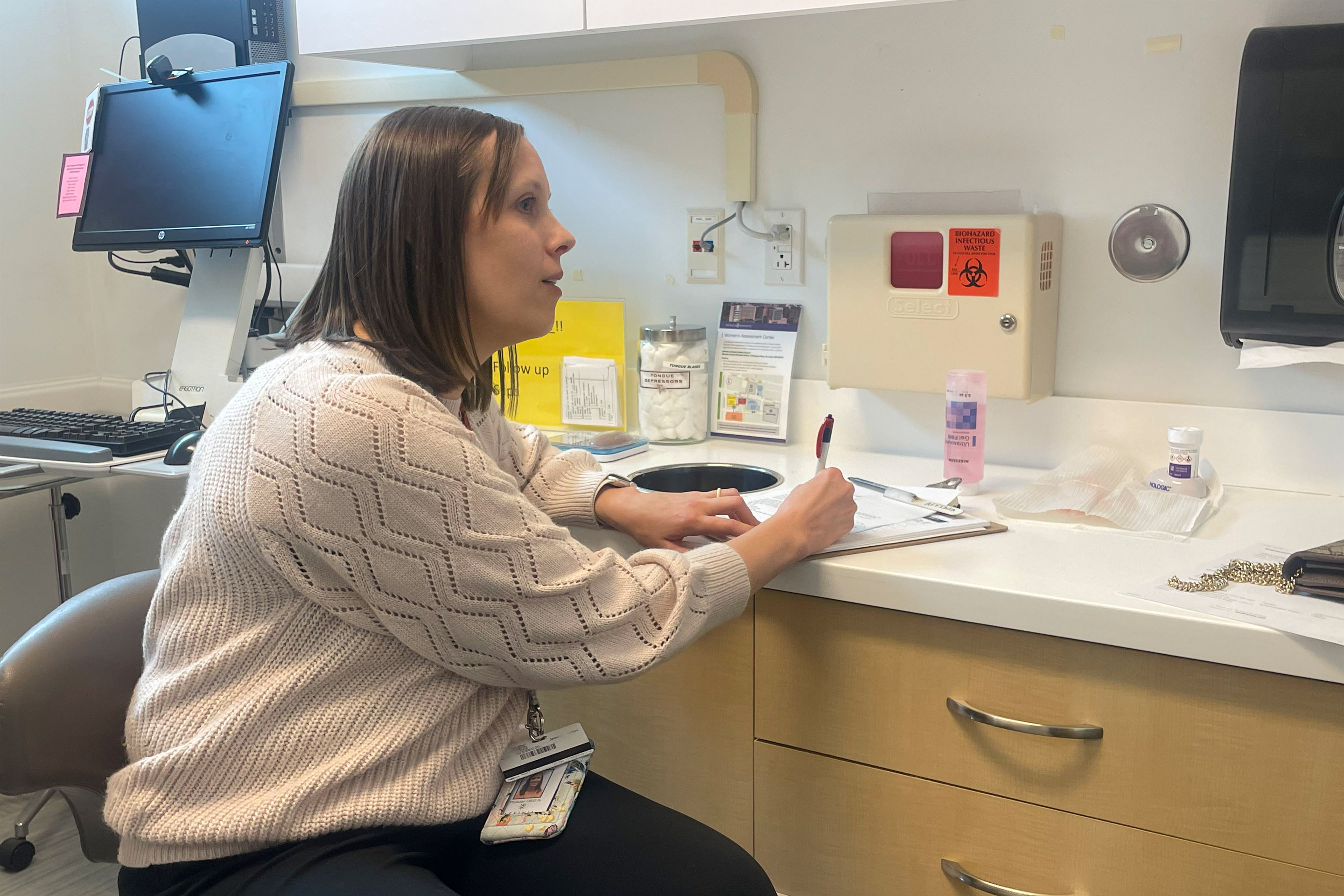
Healthcare professionals are also raising alarms about the potential impact of these work requirements on their patients. In St. Louis, Dr. Jessica Norton, an OB-GYN at an Affinia Healthcare clinic, treats many Medicaid patients. She has observed patients losing coverage inexplicably, even within the extended one-year period typically provided to new mothers in Missouri. Dr. Norton fears that the added "red tape" from the new work requirements will exacerbate these issues, making it even harder for women to maintain insurance, particularly during the critical postpartum period.
Dr. Norton criticized the message these policies send to vulnerable patients, stating, "Oh, actually, health care is a privilege, and you have to earn it." This perspective suggests that such requirements shift the view of healthcare from a right to a conditional benefit earned through specific activities.
Exemptions and Potential Loopholes
The federal law does allow for additional exemptions beyond those for age, disability, or serious health conditions. States can choose to implement optional leniency, such as allowing individuals to claim a "short-term hardship" exemption for medical conditions that temporarily prevent them from working. However, in Missouri, lawmakers are pursuing a constitutional amendment to prohibit the state from offering such optional exemptions. Patient advocates warn that this move would critically harm vulnerable residents, particularly cancer patients in rural areas who often face significant travel burdens for treatment.
Emily Kalmer, a lobbyist for the American Cancer Society’s advocacy arm, testified that for cancer patients, "time is very important." She explained that the need to travel for treatment can disrupt their ability to work, and that the federal law’s short-term hardship exemption is designed to accommodate such circumstances. By removing this option, Missouri risks leaving its most vulnerable patients without necessary coverage during critical treatment periods.
Broader Implications for Health Access
The trend towards stricter Medicaid work requirements raises significant questions about the future of health insurance access for low-income populations. While proponents argue for the necessity of these measures to ensure program sustainability and encourage self-sufficiency, critics contend that they will create unnecessary barriers to care, disproportionately affecting those who are already struggling. The complex interplay between federal mandates, state-level policy decisions, and the realities faced by individuals seeking to maintain coverage will undoubtedly shape the landscape of American healthcare for years to come. The differing approaches taken by states, from Indiana’s stringent three-month rule to the potential elimination of optional exemptions in Missouri, underscore the ongoing debate about who should be eligible for government-funded health insurance and under what conditions.