The Logistics of Gratitude: How the U.S. Military Has Delivered Thanksgiving to the Front Lines for Generations

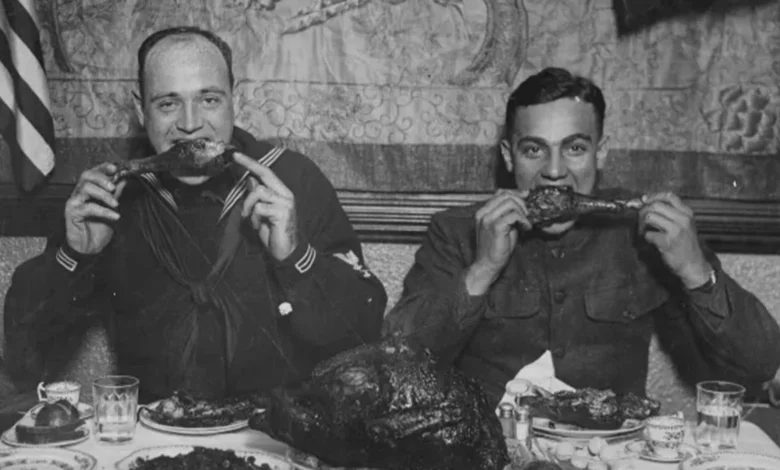
In November 1966, twelve American soldiers stationed at an isolated, razor-wire-ringed outpost deep inside a contested Vietnamese war zone were about as far removed from a traditional, domestic Thanksgiving as geography and conflict would allow. Surrounded by dense jungle and vulnerable to hostile infiltration, their only umbilical cord to the outside world was by air. Yet, despite the tactical hazards and logistical nightmares of a raging counterinsurgency, the United States military was utterly determined to deliver a semblance of home directly to their doorstep.
A military mess sergeant stationed at Bien Hoa meticulously prepared traditional roasted turkey accompanied by all the standard holiday trimmings. The meal was packed securely into heavy-duty insulated thermal containers and loaded onto a UH-1 Huey helicopter. The aircraft braved hostile skies to touch down in War Zone D, where three officers and nine enlisted men belonging to a 5th Special Forces detachment sat down to a remarkably intact Thanksgiving dinner, according to historical Defense Department records preserved by the National Archives.
This daring delivery was merely a single micro-operation within a massive, complex logistical undertaking. For generations spanning the American Civil War, World War I, World War II, the Korean War, and the post-9/11 conflicts in Iraq and Afghanistan, the U.S. military—often aided by patriotic civilian organizations on the home front—has orchestrated continent-spanning supply chains to ensure that service members in combat zones experience a taste of home on the fourth Thursday of November.
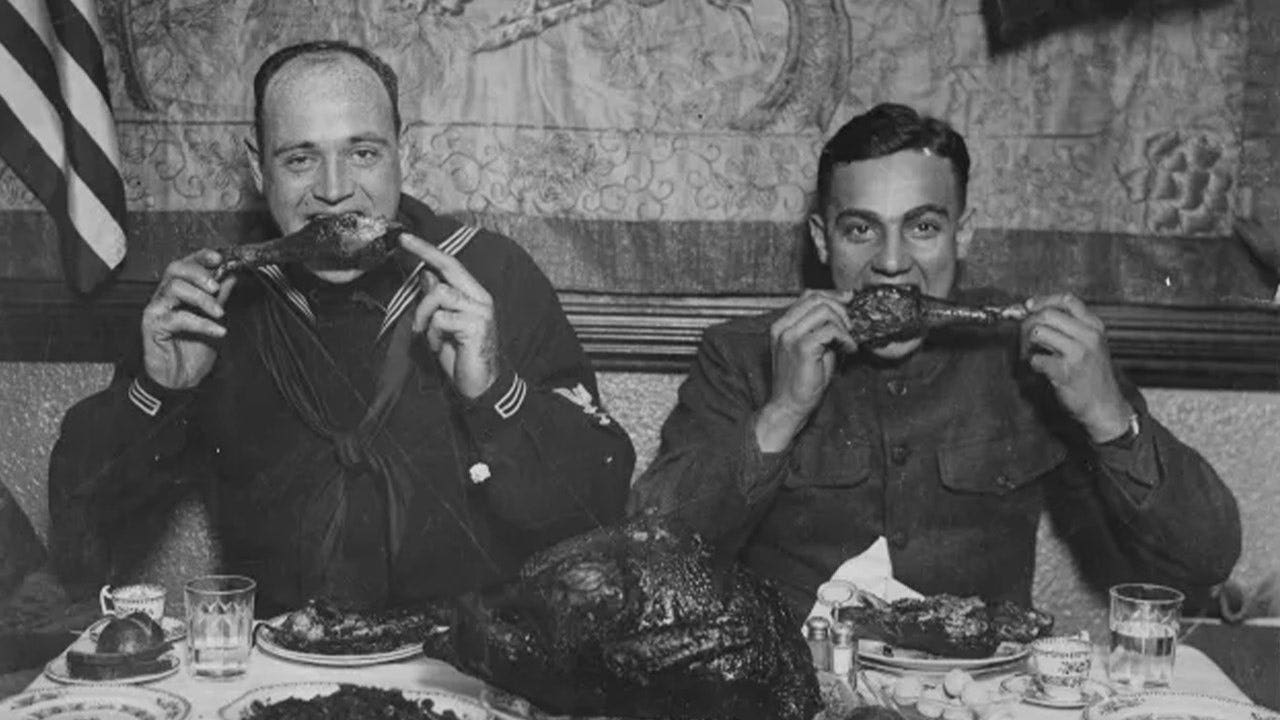
The Civil War Roots of a National Tradition
While Thanksgiving was celebrated sporadically throughout early American history as a localized or state-mandated observance, the holiday as it is recognized today was forged in the crucible of national division. In October 1863, with the American Civil War grinding through its third catastrophic year, President Abraham Lincoln issued a formal presidential proclamation establishing a national day of Thanksgiving and Praise, urging citizens to set aside the final Thursday of November to express gratitude.
By the autumn of 1864, the observance had transformed into a monumental civilian-military mobilization designed to lift the morale of Union soldiers encamped on active campaign. Former War Department official Charles A. Dana later documented the scope of this unprecedented humanitarian effort, famously recalling the "great turkey movement" of November 1864.
Civilians and charitable aid committees across the North worked tirelessly to procure, slaughter, freeze, and transport poultry across rudimentary rail networks and rutted wagon roads. In New York alone, local civic organizers reported having 20,000 dressed turkeys prepped and ready for immediate shipment to the front lines. Concurrently, a dedicated citizens’ committee in Philadelphia scrambled to secure transportation for an additional 4,000 birds destined specifically for troops serving directly under the command of General Philip Sheridan in the Shenandoah Valley.
This early integration of holiday morale-building into military operations established a powerful precedent: sustaining the psychological resilience of an army at war was deemed nearly as vital as supplying its ammunition.

World War II: The Scale of Global Sustenance
As the United States mobilized millions of citizens for a global two-front war during World War II, the logistical footprint required to provide holiday meals expanded exponentially. By 1943, the sheer volume of poultry required by the armed forces began to significantly impact the domestic agricultural market, forcing direct government intervention.
In August 1943, the federal War Food Administration enacted stringent restrictions halting most civilian turkey sales across the United States. The federal government sought to hoard millions of pounds of poultry explicitly for the armed forces stationed globally. The initial procurement target of at least 10 million pounds earmarked for overseas troops was quickly revised upward to encompass domestic military installations as well. By the time the restrictive order was lifted in October 1943, federal authorities had successfully acquired approximately 30 million pounds of turkey, severely limiting holiday availability for everyday American families on the home front.
Delivering these multi-million-pound supplies to the actual front lines, however, frequently placed logistically minded personnel directly in the crosshairs of enemy fire. In November 1944, during the grueling and bloody winter fighting in Germany’s Hürtgen Forest, Lieutenant Paul Boesch of the 121st Infantry Regiment received word that hot turkey dinners had finally arrived for his exhausted infantrymen.
Boesch strongly protested the order, arguing that sending soldiers out of their defensive foxholes to retrieve the hot food would expose them directly to lethal German artillery observation and fire. Despite his tactical objections, the directive to distribute the meal stood. Boesch’s fears were tragically realized moments later; as troops congregated to collect the provisions, enemy artillery shells impacted the distribution point, killing and wounding several men.

The Subzero Reality of Korea
Just six years later, American and United Nations forces confronted an even more hostile environment on the Korean Peninsula. In late November 1950, Marines and infantrymen dug into the bitter, subzero valleys around the Chosin Reservoir were served a traditional Thanksgiving menu featuring roasted turkey, cranberry sauce, candied sweet potatoes, fruitcake, and mince pie.
However, the physics of the Korean winter intervened rapidly. Within minutes of being served in the open air, the moisture in the food froze solid, transforming the comfort food into an icy challenge.
At the time, U.S. military leadership maintained widespread strategic optimism that the conflict was drawing to a rapid close. The very next day, General Douglas MacArthur launched the ill-fated "Home-by-Christmas" offensive. That optimism evaporated almost immediately as hundreds of thousands of Chinese People’s Volunteer Army troops launched massive, coordinated counter-offensives. Within days of their frozen Thanksgiving meals, the encircled Marines at Chosin found themselves fighting for survival in one of the most brutal, freezing engagements in modern military history.
Subsequent years in Korea saw continued dedication to the mess line, regardless of tactical proximity to the enemy. By November 1951, frontline chow lines were regularly established just hundreds of yards from the main line of resistance, providing hot meals to combatants under perpetual observation.

Modern Conflicts: Iraq, Afghanistan, and High-Tech Logistics
More than half a century after the armistice in Korea, a new generation of American service members found themselves observing Thanksgiving amidst the protracted counterinsurgency campaigns of the Global War on Terrorism in Iraq and Afghanistan.
In November 2003, President George W. Bush executed a high-security, clandestine operation to visit troops deployed to Iraq. Flying aboard Air Force One with cabin window shades completely drawn and internal lights dimmed to evade potential surface-to-air threats, the president landed secretly at Baghdad International Airport. Stepping before an assembly of roughly 600 stunned troops gathered for Thanksgiving dinner, Bush delivered a brief, morale-boosting address before physically assisting mess personnel in serving the meal.
While major airbases in Iraq and Afghanistan possessed the infrastructure to host large-scale holiday feasts, reaching isolated outposts required creative, high-risk aviation maneuvers. On Thanksgiving Day in 2007, U.S. Army logistically assigned helicopters at Bagram Airfield loaded thousands of pounds of roasted turkey and traditional fixings into cargo bays, flying them through treacherous mountain passes to remote firebases perched in Afghanistan’s Tagab Valley.
For many soldiers stationed at these forward operating bases, it marked the first fresh, hot meal they had consumed in months. Because tactical security could never be relaxed, units were forced to rotate in shifts, dividing their time evenly between eating hot food and manning defensive perimeter watches.

"The white meat was magnificent," recalled Private First Class Matt Lorimer of the 82nd Airborne Division, encapsulating the profound psychological value that a simple, hot meal carried in a desolate combat zone.
Similarly, in 2009, soldiers at an isolated mountain outpost in Afghanistan spent an entire month raising and caring for five locally purchased turkeys in an effort to secure a fresh holiday meal. When it became clear that five birds were drastically insufficient to feed a company of 150 troops, the military supply apparatus stepped in. Additional poultry was flown internationally from the United States to Bagram Airfield, transferred by tactical transport to a regional base, and finally loaded onto a helicopter to scale a 6,900-foot-high mountain peak, ensuring that even the most remote sentries shared in the national tradition.
The Strategic and Psychological Implications
Military historians and sociologists note that the multi-generational practice of serving Thanksgiving dinner in war zones transcends mere dietary comfort. Beyond the nutritional value of a fresh meal, these complex logistical operations serve as a vital psychological bridge between the active-duty military and the civilian society they defend.
By prioritizing the delivery of traditional holiday meals—often at significant financial, material, and operational risk—the Department of Defense reinforces institutional cohesion and demonstrates a tangible commitment to the welfare of individual service members. Whether transported by horse-drawn wagon in 1864, Huey helicopter in Vietnam, or modern transport rotorcraft in the Hindu Kush, the institutional effort to provide a traditional Thanksgiving remains a cornerstone of military morale, affirming that those standing watch on the furthest frontiers are never forgotten by the nation at home.