James Webb Space Telescope detects the earliest known little red dot in the primordial universe

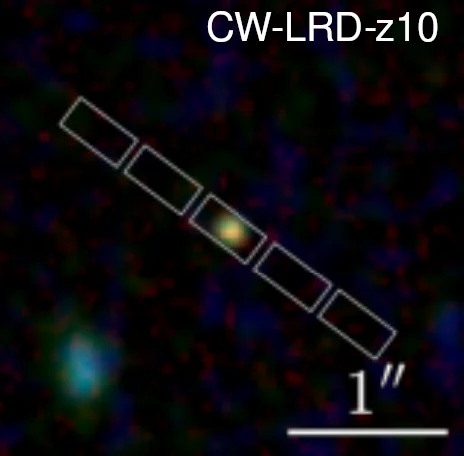
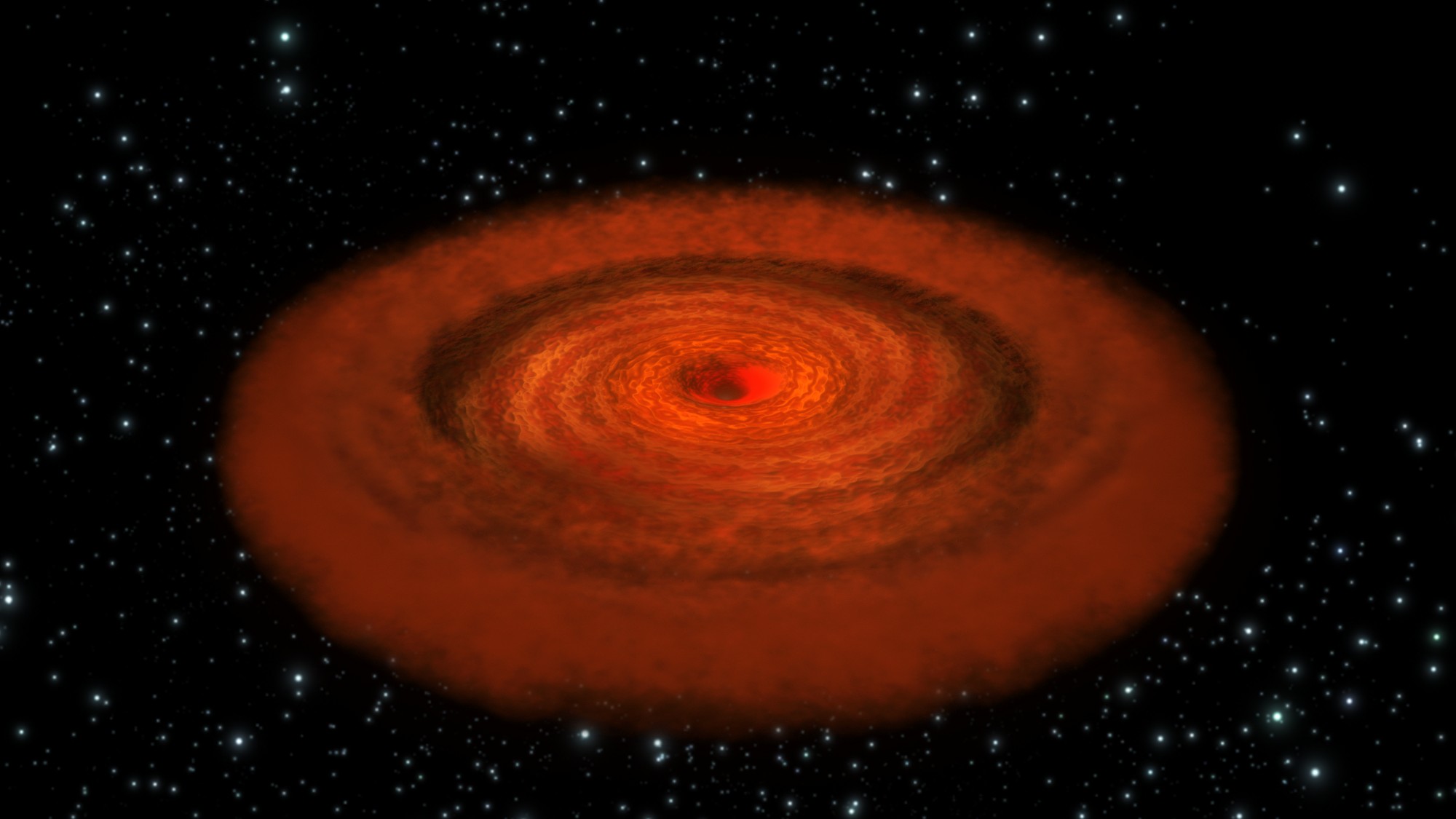
Astronomers using the James Webb Space Telescope (JWST) have identified an extraordinarily small, intensely red celestial object that dates back to a mere 450 million years after the Big Bang. Designated as CW-LRD-z10, this discovery represents a significant milestone in observational cosmology, as the object belongs to a mysterious class of astronomical entities colloquially referred to as "little red dots." These objects are characterized by their compact size and distinct spectral signatures, which many researchers suspect are the result of supermassive black holes actively feeding within dense, obscuring cocoons of primordial dust and gas.
If the nature of CW-LRD-z10 is confirmed through subsequent spectroscopic analysis, it will stand as the earliest known example of such an object. The detection provides a rare, albeit brief, window into the formative epoch of the universe, offering clues as to how massive black holes managed to grow to such significant sizes during the very infancy of the cosmos.
The Mystery of the Little Red Dots
The term "little red dot" has gained traction within the astronomical community since the deployment of the James Webb Space Telescope. Unlike the brilliant, blue-shifted light typically associated with quasars—active galactic nuclei fueled by supermassive black holes—these objects appear remarkably compact and unusually red.
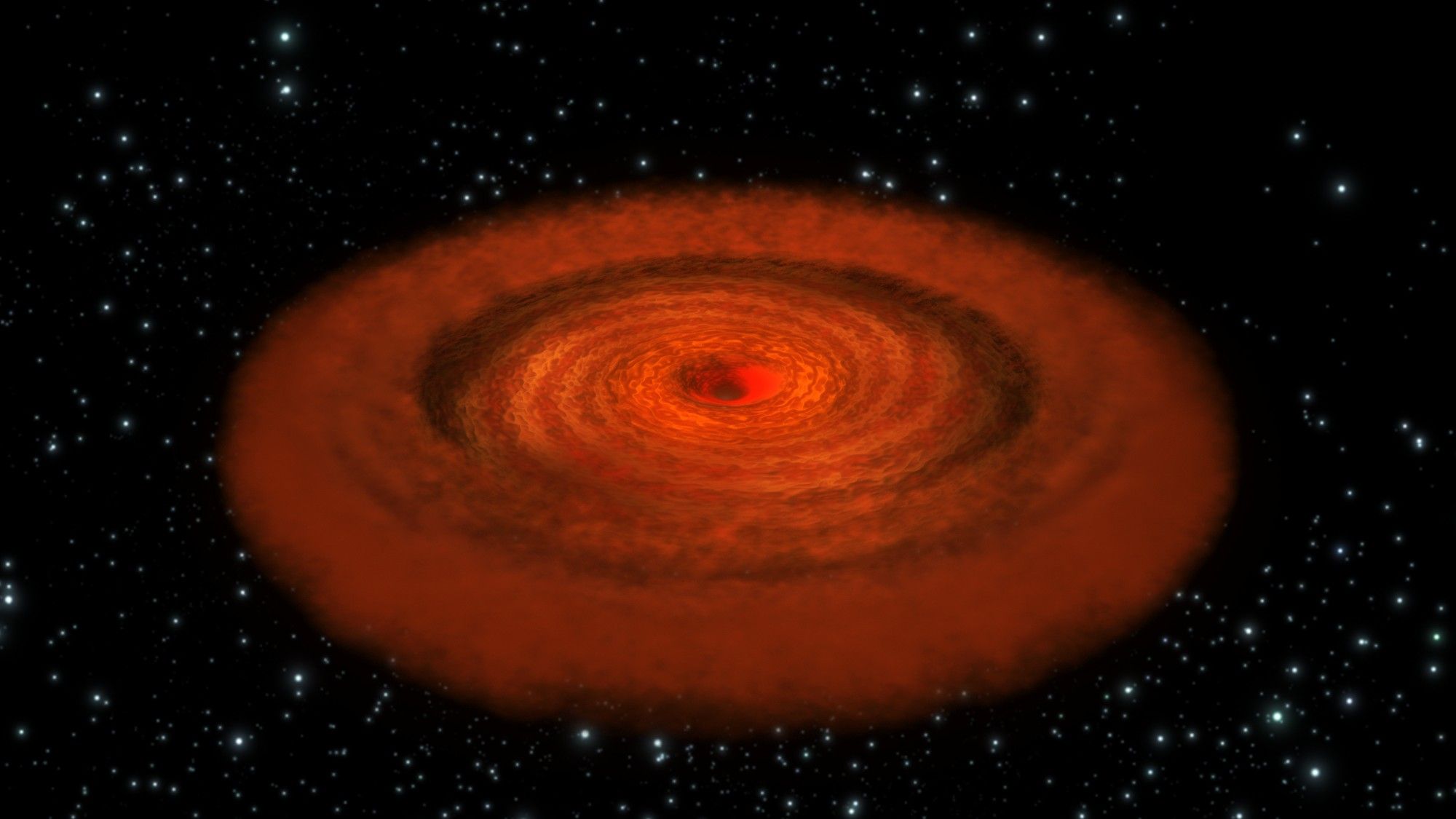
The color of these objects is primarily attributed to high levels of "reddening." In astrophysics, this occurs when light from a distant source is filtered through significant amounts of interstellar dust. The dust particles effectively scatter shorter, bluer wavelengths of light while allowing longer, redder wavelengths to pass through. Consequently, these "little red dots" may not be intrinsically red; rather, they are likely powerful black holes obscured by massive, thick shrouds of gas and dust that prevent the more energetic blue light from reaching our sensors.
The emergence of these objects in JWST data has challenged existing models of galactic evolution. Conventional theories suggest that black holes require billions of years to accumulate the mass observed in many early galaxies. However, finding such massive, active engines so close to the dawn of time suggests that the growth mechanisms of black holes may be far more efficient—or occur much earlier—than previously theorized.
Chronology of Early Universe Observations
The timeline of the early universe is generally categorized by the period shortly after the Big Bang, approximately 13.8 billion years ago. The first few hundred million years represent the "Cosmic Dawn," a period when the first stars and galaxies began to illuminate the dark, cooling universe.
- The Recombination Era: Roughly 380,000 years after the Big Bang, the universe cooled enough for protons and electrons to form neutral hydrogen, marking the end of the opaque plasma phase.
- The Dark Ages: A period lasting several hundred million years where no stars existed.
- The Cosmic Dawn: Around 200 to 500 million years after the Big Bang, the first stars ignited, leading to the formation of the first protogalaxies.
- JWST Detection (2022–Present): With the launch and commissioning of the James Webb Space Telescope, astronomers gained the infrared sensitivity required to peer through the thick dust clouds of the early universe. CW-LRD-z10 exists at a redshift (z) of approximately 10, placing it squarely within this critical 450-million-year mark.
Analytical Data and Spectroscopic Significance
The data provided by the JWST’s Near-Infrared Spectrograph (NIRSpec) and Near-Infrared Camera (NIRCam) instruments are vital to this discovery. The spectral energy distribution of CW-LRD-z10 shows a sharp rise in the infrared, a characteristic signature of a heavily reddened active galactic nucleus.
Supporting data indicates that these objects are not simply small, distant galaxies, but are characterized by high luminosity despite their compact appearance. If the light is indeed coming from a central black hole, the energy output suggests a mass that is disproportionately large compared to its host galaxy. This "over-massive" black hole scenario is a recurring theme in recent JWST observations, pushing researchers to consider alternative formation theories, such as "direct collapse" black holes—where massive clouds of gas collapse directly into a black hole without first forming stars.
Theoretical Implications and Scientific Context
The existence of CW-LRD-z10 poses a fundamental question for modern astrophysics: How did such massive structures emerge so rapidly? There are two primary schools of thought regarding the growth of these early supermassive black holes.
The first involves "stellar seeds." In this model, the first generation of stars (Population III stars) dies and leaves behind a black hole, which then consumes nearby gas to grow. However, this process is generally thought to be too slow to account for the supermassive black holes observed at such early epochs.
The second, and increasingly popular, theory involves "direct collapse." In this scenario, massive primordial gas clouds, under the influence of strong gravitational pressure and lack of cooling agents like metals, bypass the stellar phase entirely and collapse into a massive black hole "seed." This would provide the necessary "head start" for these black holes to grow into the giants we observe in the centers of modern galaxies, including our own Milky Way.
Expert Perspectives and Future Research
While the scientific community is excited by the detection, researchers maintain a level of cautious optimism. Astronomer observations of "little red dots" are still in the early stages of interpretation. Some skeptics suggest that these objects could be extremely dense, compact clusters of stars that appear red due to high metallicity or unique stellar populations, rather than black holes.
"The identification of CW-LRD-z10 is a testament to the unprecedented sensitivity of the James Webb Space Telescope," noted a lead researcher involved in deep-field survey projects. "However, the next step involves deep spectroscopic follow-up to confirm the presence of broad emission lines, which would definitively signal an active supermassive black hole. Until we have that kinematic data, we are examining a very compelling, yet still unproven, piece of the cosmic puzzle."
Future cycles of JWST observation are already being planned to target similar objects. By comparing the population density and distribution of these "little red dots" across different regions of the sky, astronomers hope to determine whether CW-LRD-z10 is an outlier or representative of a common phase of galactic development.
Broader Impact on Cosmology
The discovery of CW-LRD-z10 has implications that extend far beyond the classification of a single object. It serves as a stress test for the Lambda-CDM (Cold Dark Matter) model of cosmology. If these black holes are as common and as massive as early data suggests, our current understanding of how dark matter structures formed in the early universe may require significant revision.
Furthermore, these findings underscore the importance of the infrared spectrum in understanding the history of the cosmos. As the universe expands, the light from these ancient events is stretched—or redshifted—into the infrared. Without the JWST’s ability to observe in these wavelengths, the "little red dots" would remain hidden behind the veil of cosmic dust, leaving a significant gap in our chronicle of the universe’s early history.
As investigations continue, the scientific community expects that CW-LRD-z10 will be the first of many such discoveries. Each new "little red dot" acts as a data point, allowing astrophysicists to map the growth of structure in the infant universe. Whether these objects turn out to be the "seeds" of the modern cosmos or a unique, short-lived phenomenon, their existence confirms that the early universe was a far more active, energetic, and complex environment than previous generations of scientists ever dared to imagine.
The era of high-precision early-universe cosmology has truly begun, and with the James Webb Space Telescope leading the charge, the next decade promises to redefine our understanding of the origins of the structures that define our reality today.
Related posts: