From Trash to Engine Oil: Virginia Tech Researchers Unlock Groundbreaking Method to Upcycle Problematic PVC Plastics

The global crisis of plastic pollution has long defied simple solutions, yet a team of chemical engineers and researchers at Virginia Tech may have forged a transformative pathway forward. By targeting polyvinyl chloride (PVC)—widely regarded as one of the most stubborn and environmentally hazardous polymers to recycle—scientists have successfully developed a novel chemical process that converts discarded everyday items, including old plumbing pipes, weather-worn window frames, and expired credit cards, into high-performance synthetic lubricants.
Published in the peer-reviewed journal Nature, this milestone discovery bridges two distinct environmental and industrial challenges: mitigating the accumulation of persistent municipal solid waste and generating sustainable, high-grade base oils vital for modern mechanical infrastructure. Led by Guoliang "Greg" Liu, a chemist and chemical engineer at Virginia Tech, the research introduces an innovative upcycling methodology that yields polyalphaolefins (PAOs), the premium foundational ingredients relied upon by automotive, aerospace, and heavy industrial sectors for synthetic engine oils.
The Mechanics of PVC Recycling and the Polymeric Hurdle
Polyvinyl chloride is ubiquitous in modern society, prized for its durability, weather resistance, and chemical stability. It is the material of choice for residential plumbing infrastructure, architectural window casings, rigid siding, medical tubing, and various consumer goods. However, these very characteristics render PVC exceptionally difficult to process through traditional mechanical or chemical recycling streams.
Unlike polyethylene or polyethylene terephthalate (PET), which dominate standard municipal recycling programs, PVC contains roughly 56 percent chlorine by weight. Furthermore, manufacturing processes frequently incorporate a diverse array of chemical plasticizers, thermal stabilizers, and fillers tailored to grant the final product varying degrees of flexibility or rigidity. When heated or mechanically processed, these additives degrade, release toxic hydrogen chloride gas, and foul recycling machinery. Consequently, the vast majority of discarded PVC bypasses recycling facilities entirely, accumulating in global landfills or degrading slowly in natural environments.
At the same time, global demand for industrial and automotive lubricants remains robust. Lubricants are the unseen workhorses of mechanical engineering, tasked with minimizing friction, dissipating thermal energy, and reducing wear between moving metallic surfaces. From lawn care equipment and passenger vehicles to commercial freight liners and jet turbine engines, modern industrial society depends entirely on the continuous performance of lubricating oils. Historically, the production of these base stocks has relied heavily on virgin fossil fuels, carrying a significant carbon footprint. By utilizing waste PVC as a viable chemical feedstock, the Virginia Tech methodology proposes a dual-benefit framework: reducing the volume of hazardous plastic waste while concurrently greening the supply chain for critical industrial fluids.
From Initial Dead-Ends to an Unexpected Chemical Breakthrough
The trajectory toward this discovery represents a multi-year evolutionary effort within Liu’s laboratory at Virginia Tech. The foundational concepts grew out of previous exploratory research, published in prominent scientific journals including Science and Nature Sustainability, wherein the team demonstrated that various classes of plastic waste could be successfully degraded and structurally rearranged into valuable surfactants—chemical compounds essential to the production of industrial soaps and detergents.
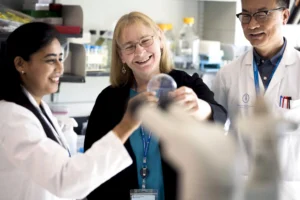
Encouraged by those milestones, Liu challenged his research group to confront the notoriously difficult problem of PVC waste upcycling. To spearhead the initiative, Liu assembled a tight-knit team of graduate researchers whom he affectionately dubbed the "three musketeers." The project was led by Eric Munyaneza Nuwayo, then in the final year of his doctoral program, alongside Connor S. Thompson, a chemistry graduate student who shifted his primary research focus to join the endeavor. They were soon joined by first-year graduate student Abby Civiello, whose experimental contributions proved vital to refining the laboratory protocols.
Initially, the research team operated under a conventional polymer modification framework. Because PVC represents a heavily activated form of polyethylene, the primary hypothesis was deceptively straightforward: researchers theorized that by stripping away the chlorine atoms from the long-chain polymer backbone and substituting them with alternative chemical groups, they could yield a functionalized material with high commercial utility.
However, repeated laboratory experiments yielded frustratingly consistent failures. Rather than producing a structurally sound, high-performance polymer derivative, the reactions consistently resulted in sticky, viscous, low-value substances possessing little to no practical application. For months, the team grappled with these gooey, intractable byproducts.
The turning point arrived during a critical juncture of reflection for the principal investigator. Recognizing that the targeted molecular substitution strategy was yielding dead ends, Liu inverted the analytical approach. Instead of attempting to preserve the integrity of the long molecular chains through substitution, he hypothesized that intentionally breaking those polymeric chains down into significantly smaller segments could unlock entirely different material properties.
"One day I realized—if this polymer is so gooey and so soft, why don’t I just keep breaking the polymer chains down to smaller segments?" Liu recounted.
Refining the Chemical Process in the Laboratory
With this conceptual pivot, the team restructured their experimental design. Rather than attempting to rescue the degraded polymer, they purposefully dismantled it.
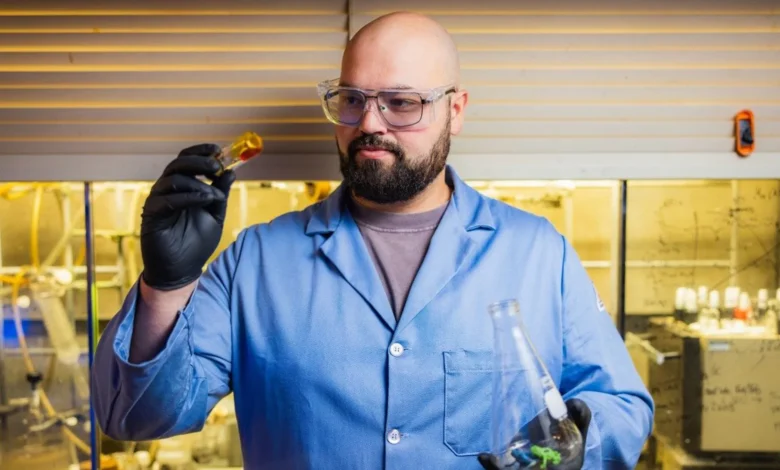
The optimized laboratory protocol involves submerging fragments of consumer-grade PVC—sourced from items such as plumbing pipes and expired credit cards—into a specialized liquid solvent. To this mixture, researchers introduce aluminum trichloride alongside alpha-olefins, a class of hydrocarbons routinely deployed in the manufacture of synthetic lubricants. The composite solution is subsequently heated to a controlled temperature of 158 degrees Fahrenheit (70 degrees Celsius) for a duration of three hours.
At the conclusion of the thermal and chemical reaction, the extraction process yields a relatively thick, highly stable lubricating base oil. Chemical analysis confirmed that the resulting substance is a polyalphaolefin (PAO), belonging to an elite family of synthetic base oils prized for their thermal oxidative stability, viscosity index, and capacity to function across extreme temperature ranges. These properties form the baseline requirement for premium synthetic motor oils utilized in high-stress operational environments.
"Number one, we have proved that it is feasible to use plastic waste to make high-performance lubricants. Number two, these lubricants are green, and they can meet the emerging needs for sustainability by the market," Liu emphasized.
Collaborative Validation and Economic Feasibility
To transition the discovery from a promising benchtop chemical reaction to a rigorously validated industrial prospect, Liu established a collaborative multi-institutional network to assess the oil’s physical characteristics and commercial scalability.
Samples of the synthesized lubricant were dispatched to tribology experts at Texas A&M University, led by researcher Ali Erdemir, where mechanical performance testing verified that the recycled-plastic-derived oil matched the friction-reduction and load-bearing parameters of conventional virgin-stock PAOs. Simultaneously, computational chemist William Goddard and his research group at the California Institute of Technology (Caltech) conducted advanced molecular dynamics simulations and quantum chemical computations to map out the underlying mechanistic pathways of the conversion process, providing atomic-level clarity on how the chlorine atoms are successfully cleaved and replaced by hydrocarbon chains.
On the economic front, Virginia Tech researcher Xi Chen undertook techno-economic assessments and supply-chain modeling. Chen’s evaluations focused on determining whether the chemical inputs, thermal requirements, and solvent recovery systems could be economically optimized to transition the laboratory process into a commercially viable industrial scale. While the initial findings confirm the technical viability of upcycling PVC into high-grade lubricants, scaling the methodology past the confines of an academic laboratory remains the primary hurdle for future development.
Broader Implications for Sustainability and Industrial Manufacturing
The implications of this breakthrough extend far beyond academic chemistry, offering a potential blueprint for a circular economy regarding difficult-to-recycle polymers. Municipal waste authorities and recycling facilities have historically operated at a loss when handling PVC due to sorting costs, incineration hazards, and landfill taxes. By establishing a mechanism that transforms a disposal liability into a high-value commodity, market incentives for PVC collection and recovery could shift dramatically.
Furthermore, lubricant manufacturers face escalating regulatory pressures to reduce their reliance on petroleum-derived base stocks and incorporate sustainable, bio-based or recycled content into their product portfolios. The Virginia Tech process provides an alternative pathway that bypasses the extraction of crude oil entirely for a portion of synthetic lubricant production, converting municipal and industrial plastic waste directly into high-value mechanical fluids.
As the research team looks toward the future, their immediate objective focuses on refining the chemical yields, minimizing energy consumption, and collaborating with industrial stakeholders to construct pilot-scale production facilities.
"Lubricants are the silent hero out there," Liu noted, reflecting on the ubiquitous yet invisible role these fluids play in global infrastructure. "We often don’t recognize they exist, but they are out there working quietly. We want to be able to produce the oil on a larger scale to reach more people in the world, giving problematic plastics a valuable second life while supporting a more sustainable industrial future."