The Comprehensive Guide to the Best Hair Clippers for Men in 2026: From DIY Buzz Cuts to Professional Fades

The global shift toward at-home grooming, catalyzed by economic shifts and a broader cultural appreciation for self-maintenance, has permanently altered the men’s personal care market. What began as a temporary necessity during pandemic-era lockdowns has evolved into a multi-billion-dollar DIY grooming movement. Consumers today are increasingly investing in professional-grade technology for domestic use, seeking to bypass the rising costs and scheduling constraints of traditional barbershop visits. Whether maintaining a standard half-inch buzz cut, managing a rapid transition from long locks to a clean slate, or executing intricate facial hair upkeep, selecting the correct hardware is essential for achieving consistent, salon-quality results at home.
Understanding the Mechanics: DIY Versus Professional Hardware
The engineering behind modern hair clippers dictates their specific use cases. Industry experts emphasize a fundamental distinction between equipment designed for domestic consumers and the machinery utilized by licensed barbers. Home-use clippers typically prioritize user-friendly interfaces, such as color-coded guard systems, lighter chassis weight, and simplified maintenance routines. Conversely, professional-grade tools require robust, high-torque motors capable of running continuously throughout a packed workday, alongside adjustable, zero-gap-capable carbon steel or titanium-coated blades.
Market analysis of grooming product lifecycles indicates that consumers who commit to regular self-haircuts—specifically bi-weekly buzz cuts—recoup the initial investment of a high-end device within three to four months, compared to the cumulative cost of standard commercial haircuts. Furthermore, advancements in lithium-ion battery technology have eliminated the traditional performance gap between corded and cordless models, allowing portable units to maintain consistent RPMs (revolutions per minute) even as power reserves diminish.
Top-Tier Hair Clippers for Every Grooming Objective
To navigate the expansive marketplace, grooming specialists have rigorously evaluated the leading models available to consumers and professionals alike. Each selected device serves a distinct purpose within the modern grooming routine.
The Best Overall: Wahl Color Pro Cordless Hair Clipper
For the vast majority of home users, simplicity and reliability trump unnecessary complexity. The Wahl Color Pro Cordless stands as the benchmark for domestic haircuts, driven by a redesigned lithium-ion battery that delivers a two-hour runtime—double the capacity of its predecessor—while retaining a nine-month idle charge without significant drainage. The defining feature remains its intuitive color-coded guide system, which eliminates guesswork for parents managing children’s haircuts or individuals executing routine buzz cuts. Featuring sturdy, inflexible guards that prevent uneven patches and an adjustable taper lever on the base blade, this model bridges the gap between novice accessibility and professional consistency.
The Best Professional Choice: BaBylissPRO FX+ Professional Cord/Cordless Clippers
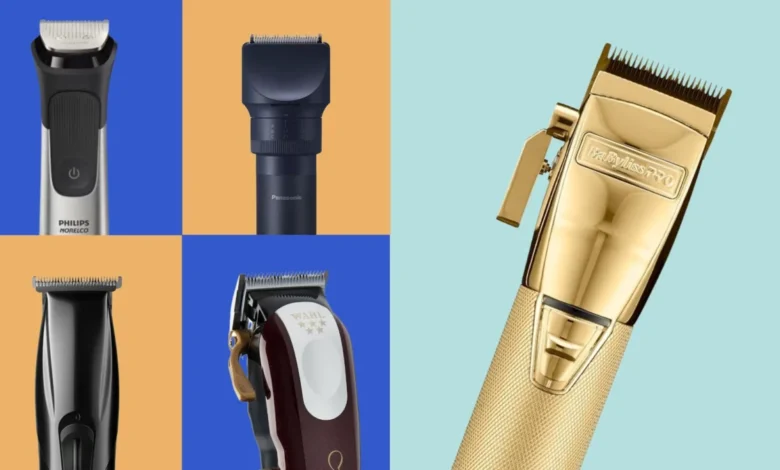
For users demanding commercial-grade power and aesthetic luxury, the BaBylissPRO FX+ represents the upper echelon of grooming technology. Endorsed by working professionals such as San Francisco-based barber JoAnn Noriega, this heavy-duty device features high-performance cutting architecture capable of shearing through dense, coily, or straight hair types with zero drag. Encased in a durable metallic housing, the clipper offers exceptional ergonomics paired with a long-lasting power source, making it a preferred asset for both high-volume barbershops and discerning home enthusiasts.

The Best Zero-Gap Innovation: Bevel Pro Clippers
Engineered specifically to address the challenges of textured, coily, and short hair maintenance, the Bevel Pro has earned widespread acclaim, including major industry accolades. Departing from traditional, manual blade adjustment methods that require tiny screwdrivers and precise physical calibration, the Bevel Pro utilizes an internal secondary motor controlled by push-buttons. This mechanism adjusts the graphite-coated stainless steel blade in microscopic 0.1mm increments. Combined with magnetic, click-fit comb guards and an LED smart display, it provides unmatched precision for lineups, necklines, and ultra-short fades.
The Best Mid-Range Professional Performance: Wahl Professional 5 Star Magic Clip
When users outgrow entry-level domestic clippers but wish to avoid the higher price tier of luxury models, the Wahl 5 Star Magic Clip serves as the ultimate intermediate solution. Widely recognized as one of the best-selling professional clippers globally, it features a retro-inspired aesthetic housing a powerful pro-level motor. Its titanium-coated high-carbon steel blades effortlessly process hair in a single pass, drastically reducing the time required to complete a self-haircut while maintaining crisp, clean lines.
The Best Multi-Functional Systems: Philips Norelco Multigroom and Panasonic MultiShape
Consumers whose grooming routines extend far beyond simple hair clipping often benefit from modular all-in-one systems. The Philips Norelco All-in-One 9000 Series and its predecessor, the 7000, cater to individuals who primarily maintain beards and body hair while occasionally tidying head hair. These kits include wide clipper heads, fading combs, and dedicated body-shaving attachments. Similarly, the Panasonic MultiShape offers an adaptable ecosystem where a single cordless handle accepts swappable heads, transforming from a hair clipper and beard trimmer into an electric shaver, nose hair trimmer, and even an electric toothbrush. While these systems offer unmatched versatility, purists maintaining frequent, full-head buzz cuts generally still favor dedicated, single-purpose clippers for long-term durability.
Specialized Tools for Specific Grooming Needs
-
Remington Shortcut Pro HC4250: Designed explicitly for head-shave preparation, this palm-sized unit features a wide, curved blade that contours naturally to the scalp. Its compact chassis minimizes wrist strain when reaching the obscured regions at the back of the head, making it ideal for shearing down overgrown hair into stubble before a final pass with an electric foil shaver.
-
Andis Slimline Pro Trimmer: Operating primarily as a detail trimmer rather than a bulk hair clipper, this device is the industry standard for clean lineups, sharp sideburns, and intricate neckline detailing. Its T-blade configuration allows for exceptionally close trimming with minimal risk of skin abrasion.
Comparative Analysis of Leading Hair Clippers
| Model | Primary Use Case | Motor Type / Power | Notable Feature | Estimated Price Range |
|---|---|---|---|---|
| Wahl Color Pro Cordless | General DIY Buzz Cuts | Standard Lithium-Ion | Color-coded guide system | $60 – $88 |
| BaBylissPRO FX+ | Professional & Advanced Home | High-Torque Pro Motor | Luxury metal housing, rapid charge | $190 – $250 |
| Bevel Pro | Textured Hair, Fades, Lineups | Dual-Motor Digital | Automated 0.1mm blade adjustment | $260 |
| Wahl 5 Star Magic Clip | Mid-Range Professional Fades | Commercial Rotary Motor | Titanium-coated high-carbon blades | $140 |
| Philips Norelco 9000 | Hair, Beard, and Body Grooming | Multi-Attachment Rotary | Extensive modular accessory kit | $75 – $90 |
| Remington Shortcut Pro | Solo Head Shaving | Curved Ergonomic Motor | Palm-grip chassis, wide scalp blade | $50 – $60 |
Technical Criteria: What to Look for When Buying

Industry professionals emphasize several key specifications when selecting a hair clipper:
- Motor Power (RPM): Measured in revolutions per minute, higher RPM motors prevent hair pulling and stalling when processing thick or wet hair. Professional units typically range from 6,000 to over 8,000 RPM.
- Blade Material: High-carbon steel, ceramic, titanium-coated, and DLC (diamond-like carbon) blades retain their sharpness significantly longer than standard stainless steel and generate less friction-induced heat.
- Corded vs. Cordless: Modern lithium-ion batteries have made cordless clippers the standard. Buyers should verify battery runtime (aiming for a minimum of 90 minutes) and check whether the device can operate while plugged in (cord/cordless functionality).
- Guard Security: Flimsy plastic guards that flex during operation lead to uneven cutting lengths. Magnetic or snap-lock reinforced guards ensure structural integrity.
Methodology and Testing Protocols
The recommendations compiled in this guide are derived from extensive longitudinal testing protocols conducted by grooming journalists, industry analysts, and licensed barbers. Evaluators assess each device across multiple metrics: cutting efficiency on varying hair textures, ergonomic comfort during extended use, battery longevity, ease of blade cleaning, and the physical security of guide attachments. Field testing incorporates real-world DIY scenarios, such as self-administered buzz cuts and perimeter maintenance, alongside professional barbershop evaluations to verify long-term durability under commercial operating conditions.
Frequently Asked Questions
What distinguishes a hair clipper from a beard trimmer?
Hair clippers are engineered with heavier, higher-torque motors designed to shear through dense volumes of scalp hair rapidly. They typically feature wider blades and utilize snap-on guards for longer lengths. Beard trimmers prioritize precision, narrower blade profiles, and shorter cutting increments (often down to stubble lengths), and are frequently waterproof to accommodate wet facial shaving.
What does zero-gapping mean, and is it safe for home use?
Zero-gapping involves aligning the moving blade flush with the stationary blade so that the teeth sit on the exact same plane. This allows the tool to cut hair right down to the skin surface. While popular among professional barbers for crisp fades and sharp outlines, amateur users should exercise extreme caution, as improper zero-gapping significantly increases the risk of skin cuts and razor burn.
Are hair clippers permitted in airline luggage?
According to international aviation security regulations, hair clippers and electric trimmers are permitted in both carry-on luggage and checked baggage. However, devices containing non-removable, high-capacity lithium-ion batteries must generally be kept in the cabin (carry-on) to comply with safety protocols governing cargo hold fire risks. Users should verify specific regional airline policies prior to international travel.
Broader Industry Implications
The continuous evolution of consumer-grade grooming technology reflects a broader cultural shift toward self-reliance and personalized wellness management. As manufacturers integrate digital precision controls—such as automated blade micro-adjustments and brushless motors—into consumer devices, the boundary between domestic tools and professional equipment continues to blur. This democratization of high-performance hardware empowers individuals to maintain their personal presentation with professional precision, permanently transforming the economics of modern men’s grooming.