Tiana Lowe Doescher Slams California Leadership Over New State Law Shielding Individuals From Media Scrutiny

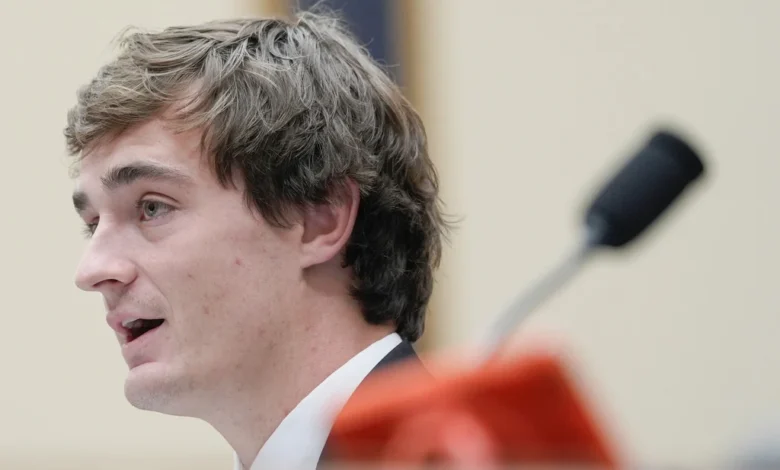
The landscape of investigative journalism and public accountability in California has faced renewed scrutiny following the enactment of a controversial state law that critics argue severely curtails the ability of reporters and citizens to document potential fraud involving taxpayer-funded resources. The legislative measure, which expands the parameters of the state’s existing confidentiality frameworks, has drawn sharp rebukes from media analysts and political commentators. Among the most vocal critics is Washington Examiner economics columnist Tiana Lowe Doescher, who recently appeared on Newsmax’s The Right Squad to denounce the policy. Doescher argued that the statute effectively provides a protective shield for individuals misusing public programs by criminalizing or legally restricting the publication of visual evidence, provided the subjects claim a reasonable fear for their safety.
The debate over the intersection of privacy rights, journalistic freedom, and the oversight of government-administered benefits highlights an escalating tension within California governance. Proponents of the expansion maintain that safeguarding vulnerable populations from harassment and ensuring personal safety remain paramount. Conversely, opponents contend that the legislation introduces dangerous loopholes that can be exploited by bad actors to evade public exposure, thereby undermining the integrity of safety-net programs designed to support society’s most in-need residents.
Background and Legislative Context of California’s Confidentiality Frameworks
To understand the weight of the recent legislative changes, it is necessary to examine the evolution of California’s privacy and protection statutes. The state has long maintained robust programs intended to shield victims of domestic violence, stalking, sexual assault, and reproductive health care workers from potential harm. Among these initiatives is the Safe At Home Address Confidentiality Program, administered by the California Secretary of State’s office. Established decades ago, the program provides participants with a substitute mailing address and confidential voter registration to prevent abusers, stalkers, or hostile parties from locating them through public records.
Over the years, however, the scope and application of these confidentiality mechanisms have expanded. Lawmakers have periodically introduced amendments to address emerging concerns regarding digital harassment, doxxing, and public safety in an era of ubiquitous smartphones and social media. The most recent legislative iteration builds upon these foundational safeguards by intersecting directly with the dissemination of digital media—specifically photographs and video recordings taken in public or semi-public spaces where public assistance programs are utilized.
Critics argue that while the original intent of programs like Safe At Home was to protect genuine victims of violent crime, the latest statutory expansion inadvertently creates a broad protective umbrella. Under this interpretation, individuals who misuse government benefits—such as fraudulent claims within assistance programs—could potentially invoke safety concerns to halt the publication of visual proof documenting their illicit activities. This dynamic places investigative journalists, independent auditors, and concerned taxpayers in a difficult legal and ethical position, as recording or broadcasting evidence of wrongdoing could expose them to liability or legal challenges.
Tiana Lowe Doescher’s Critique on Newsmax
The controversy reached a national platform during a segment on Newsmax’s The Right Squad, where Tiana Lowe Doescher delivered a scathing assessment of California Governor Gavin Newsom and the state’s Democratic legislative majority. Doescher zeroed in on the practical implications of the newly passed law, emphasizing how it alters the daily realities of accountability reporting.
"They are extending the state’s Safe At Home Address Confidentiality program, basically saying, you can’t post a video or a photo of someone, obviously committing fraud using taxpayer-funded services, as long as they say they have a ‘reasonable fear for their safety,’" Doescher stated during the broadcast.
Doescher’s critique resonated with broader conservative and libertarian arguments concerning government transparency and the oversight of public expenditures. In her analysis, shielding individuals who are actively engaged in illicit behavior from visual identification fundamentally compromises the democratic principle of public accountability. When taxpayer dollars are funneled into welfare, housing, or other social support initiatives, the public maintains a vested interest in ensuring those funds are distributed correctly and ethically. By complicating the documentation of fraud, Doescher and other critics argue that the state is inadvertently fostering an environment where systemic inefficiencies and dishonest practices can persist unchecked.
Broader Implications for Investigative Journalism and Accountability
The implications of California’s legislative action extend far beyond the borders of the Golden State, serving as a focal point in the ongoing national debate over the boundaries of free speech, the press, and personal privacy. Investigative journalism relies heavily on the ability to capture, verify, and publish visual and documentary evidence of wrongdoing. In the digital age, citizen journalism—where everyday individuals record and share instances of public corruption, misuse of resources, or illegal acts—has also become a vital component of accountability.
Media law experts note that creating legal frameworks where subjective claims of fear can restrict the publication of factual occurrences creates a chilling effect on the press. If reporters must navigate ambiguous statutory thresholds regarding whether a subject caught on camera committing fraud might claim a "reasonable fear for their safety," news organizations may choose to forgo publishing important investigations out of caution. This potential self-censorship diminishes the watchdog role traditionally played by the media.
Furthermore, the tension between privacy and transparency is particularly acute in programs funded by taxpayers. State-administered assistance programs handle billions of dollars annually. Ensuring that these funds reach intended beneficiaries requires rigorous oversight, which historically has included tips, undercover investigations, and media exposés. When laws restrict the tools available to uncover systemic abuse, the burden of detection shifts entirely to overburdened state agencies, which may lack the resources or the incentive to root out every instance of fraud.
Official Responses and Defense of the Legislation
While critics like Doescher view the law as an overreach that protects wrongdoers, defenders and legislative sponsors offer a starkly different perspective. Proponents of the measure maintain that the primary objective is the protection of vulnerable individuals from harassment, doxxing, and potential physical violence in an increasingly polarized digital landscape.
Supporters argue that public shaming via viral videos often leads to severe collateral damage, including targeted harassment, threats, and invasions of privacy that extend beyond the individual accused of misconduct. In many cases, participants in state programs may be dealing with complex personal hardships, trauma, or precarious living situations that make them uniquely susceptible to real-world harm if their identities and locations are broadcast widely online.
Furthermore, legislative advocates contend that the law does not provide blanket immunity for criminal behavior. Law enforcement agencies and authorized investigators retain the legal pathways necessary to investigate, charge, and prosecute fraud within state programs. The restrictions, according to supporters, are narrowly tailored to prevent the extrajudicial publication of identifying details by third parties—such as internet commentators or media outlets—whose actions could compromise safety without adhering to formal judicial processes.
A Timeline of Recent Policy Shifts in California Governance
To fully contextualize the current debate, it is helpful to review the chronological sequence of policy adjustments and legislative priorities that have characterized California’s approach to public data, privacy, and media regulations over recent years:
- Phase One: Strengthening Victim Protections (Early 2010s–2020): California legislators progressively expanded traditional confidentiality programs, integrating digital safety measures to protect victims of cyberstalking, doxxing, and domestic abuse. These laws were broadly supported across the political spectrum as essential modernizations of privacy rights.
- Phase Two: The Rise of Citizen Journalism and Social Media Scrutiny (2021–2024): With the proliferation of smartphones and social media platforms, viral videos capturing alleged public misconduct, civil unrest, and social service misuse became commonplace. This era saw growing friction between the desire for public accountability and the right to personal privacy in public spaces.
- Phase Three: Legislative Expansion and National Debate (2025–Present): The recent passage of the expanded confidentiality statute marked a significant escalation, explicitly touching upon scenarios involving public benefits and media documentation. The law immediately drew national attention, prompting fierce commentary from media figures and economists regarding its impact on transparency.
Economic and Administrative Challenges Facing State Programs
Beyond the First Amendment and journalistic concerns, the debate over California’s confidentiality laws intersects with pressing economic realities. California administers some of the largest social safety net programs in the nation, including Medi-Cal, CalWORKs, and various state-funded housing and food assistance initiatives. Managing these programs efficiently requires robust verification mechanisms to prevent fraudulent enrollment and ensure that funds are directed solely to qualified recipients.
Economists and public policy analysts frequently debate the optimal balance between administrative accessibility and fraud prevention. Measures that make it easier for individuals to enroll without bureaucratic hurdles are often praised for reducing poverty and ensuring timely assistance. However, critics argue that lax oversight or policies that impede the exposure of fraudulent activities can lead to significant financial waste, straining state budgets at a time when California faces notable fiscal challenges.
When investigative reports or media outlets uncover instances of systemic fraud, they often serve as catalysts for administrative reform, prompting state agencies to tighten their verification protocols. If legal barriers make it exceedingly difficult or legally perilous to document and broadcast such instances, the feedback loop that holds administrative bodies accountable to taxpayers can be severely disrupted.
Conclusion and Future Outlook
The legislative clash in California underscores a fundamental dilemma facing modern democratic societies: how to balance the imperative of government transparency and public accountability with the legitimate need to protect individual privacy and safety. As the newly enacted law takes effect, its long-term consequences will likely be tested in the courts, where media organizations, civil liberties advocates, and state attorneys will debate the constitutional boundaries of restricting visual documentation in the name of safety.
For now, commentators like Tiana Lowe Doescher and various media watchdogs continue to sound the alarm over what they perceive as a dangerous precedent for press freedom. At the same time, state lawmakers and proponents remain steadfast in their defense of policies designed to shield vulnerable individuals from digital harassment. As these opposing forces navigate the evolving legal landscape, the outcome will have profound implications not only for California, but for the broader national conversation surrounding the future of investigative journalism, public oversight, and the protection of taxpayer funds.
Related posts: